
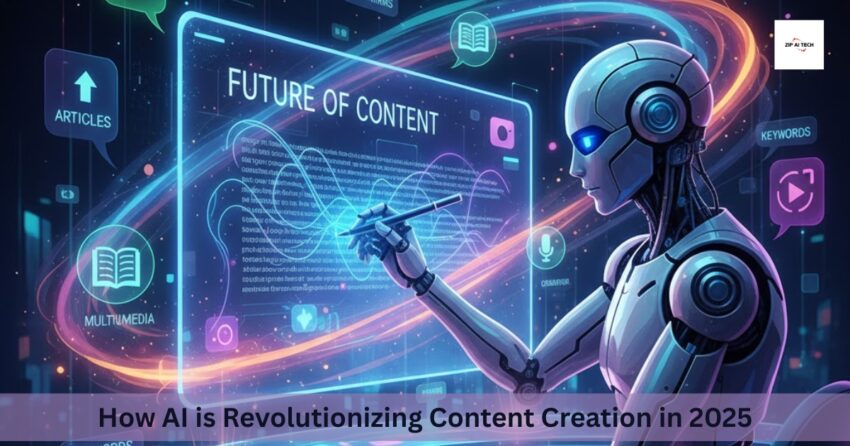
Why 2025 Feels Different for AI
We’re living through a rare moment where three big shifts — generative models that create, cross-domain systems that combine modalities, and autonomous agents that act on behalf of people — are arriving at once.
The result? Tools that don’t just help you search or summarize; they ideate, personalize, and execute tasks across text, images, audio, and code.
This post explains what’s changing, why it matters for professionals and creators, and how you can adapt. (You’ll also find helpful resources from Zipaitech woven throughout for deeper exploration.)
What “Generative AI” Really Means Today
Generative AI is the family of models that produce new content — not just classify or predict. That includes large language models (LLMs) that write coherent text, diffusion models that create images, and multimodal systems that combine those abilities.
In practice, this means a single prompt can generate an article draft, an accompanying image, and even a video storyboard.
For an in-depth look at this evolution, check out Generative AI Advances 2025.
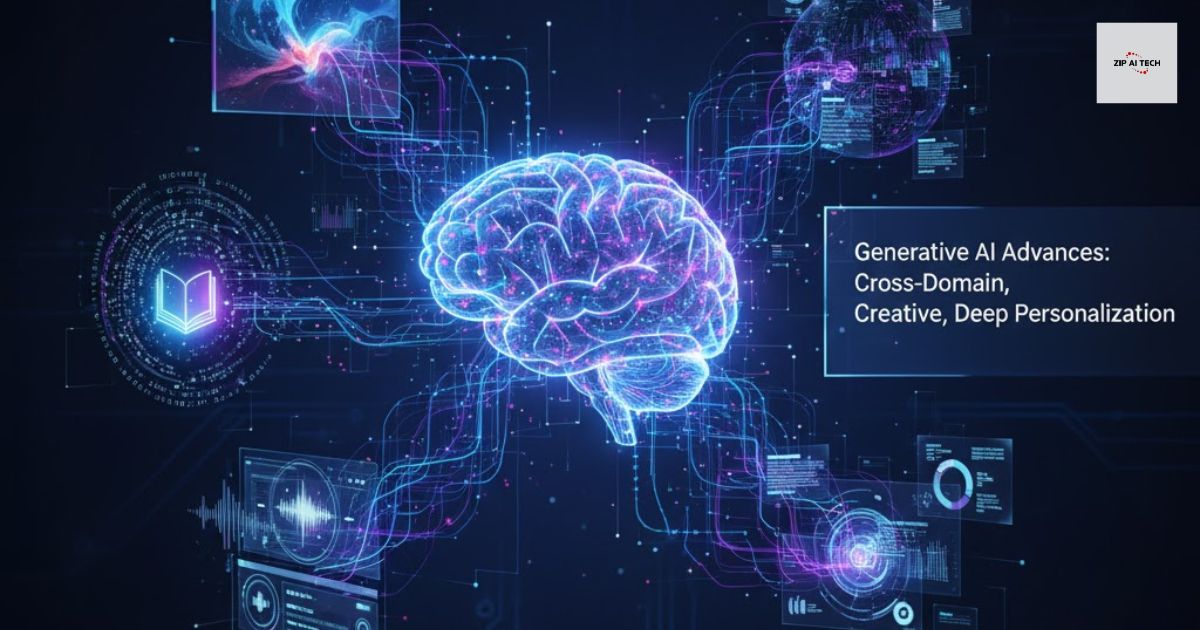
From classification to creation
Older AI analyzed or labeled. Newer models generate: they imagine possibilities from training data and produce usable outputs directly (drafts, ads, designs).
That shift — from analysis to creation — is why 2025 feels like a turning point.
Cross-Domain AI: Breaking Down Silos
What cross-domain means (multimodal learning)
Cross-domain or multimodal AI learns from different types of data simultaneously (like text + images + audio). This lets it map ideas across formats — turning a written concept into visuals and narration automatically.
Real-world examples
-
Product teams can instantly create full landing pages — copy, hero image, demo video — from one prompt.
-
Education tools generate text explanations and practice quizzes customized for each learner.
Technical challenges
Merging modalities increases compute load and alignment complexity. Engineers use modular architectures (shared encoders + domain adapters) to manage scale and maintain accuracy.
AI Agents: Autonomous Helpers at Work
From chatbots to agents — what’s new
AI agents are systems that take your goal and complete multi-step actions autonomously — from scheduling meetings to summarizing reports or sending follow-up emails.
They’re not just reactive chatbots anymore; they’re proactive digital coworkers. Explore this shift in AI Agents Explained: The Autonomous AI Future of Work 2025.
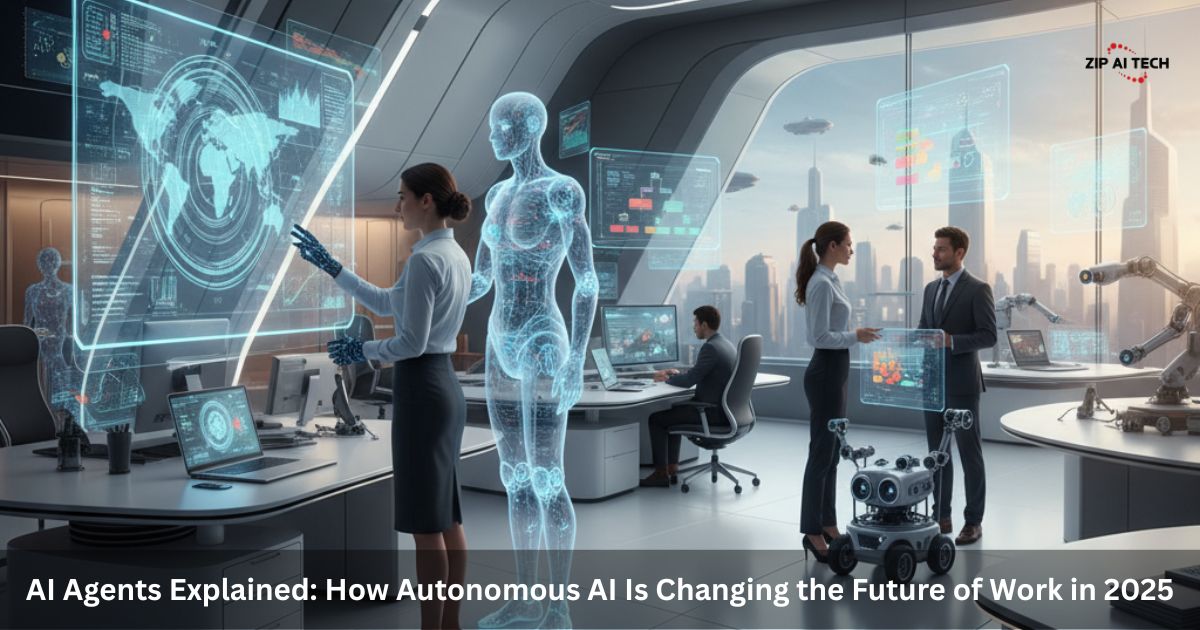
How agents change workflows
They reduce repetitive work and let humans focus on strategy. Managers spend less time on routine tasks and more on creativity and direction.
Guardrails: safety and control
To stay effective and ethical, AI agents need human oversight — review checkpoints, provenance tracking, and clear escalation paths to handle errors safely.
Creative Generation: AI as Co-Creator
Ideation and creative collaboration
Think of AI as your super-speed brainstorming partner. It can spin up dozens of ideas in seconds — campaign headlines, color palettes, or blog outlines — leaving you to pick and polish the best.
Cases: marketing, games, music, film
-
Marketers can A/B test AI-generated ads.
-
Game studios can produce procedural levels.
-
Musicians can remix melodies or textures effortlessly.
Pitfalls to watch
AI creativity can drift off-target or repeat patterns. Always verify originality, give proper attribution, and check data sources for ethical use.
AI-Powered Content Creation in Practice
A modern content pipeline now looks like this: brief → AI draft → human edit → SEO optimization → personalization → publish.
This structure saves hours per article without sacrificing quality. Learn more in AI Content Creation 2025.

Smart personalization at scale
AI can rewrite the same article for different audiences — tailoring tone, examples, or visuals based on reader intent or geography.
Example workflow
-
Create a reusable prompt template.
-
Generate three draft versions.
-
Human editor picks and improves one.
-
AI tests multiple headlines and CTAs.
-
Publish, measure engagement, iterate.
ChatGPT Atlas & The New AI Browser Experience
What an “AI browser” offers
Imagine a browser that reads the web for you, summarizes findings, and even takes actions — that’s where tools like ChatGPT Atlas come in. They turn browsing into a conversational, intelligent experience.
See how in ChatGPT Atlas: The AI Browser Changing Everything.

How browsers + agents shift research
Instead of opening 10 tabs, users now ask one question and get summarized answers with citations. This boosts productivity but also challenges how we discover new sources.
Implications for focus and productivity
It’s a double-edged sword — amazing for efficiency, but it can shorten attention spans. Use these tools as assistants, not replacements for critical thought.
SEO & Content Strategy in an AI-First World
Search Generative Experience (SGE) and AEO
Google and Bing now feature AI-generated summaries directly on results pages. To stay visible, marketers must optimize for Answer Engine Optimization (AEO) — structuring content so AI can reference it accurately.
Practical SEO tactics for 2025
-
Use clear headers, schema markup, and FAQ sections.
-
Focus on expertise and authenticity (E-E-A-T).
-
Create topic clusters, not one-off posts.
What to track
Beyond clicks, measure AI visibility — how often your brand is cited or summarized by AI engines.
Ethical, Privacy, and Regulatory Considerations
Personalization vs. privacy
Personalization can delight users — but only if data is handled responsibly. Use anonymization, transparency, and consent-based data collection.
Copyright and provenance
Keep logs of training sources and licenses for all generated content. Transparency builds trust and legal safety.
Practical compliance checklist
-
Maintain training dataset documentation.
-
Label AI-generated outputs clearly.
-
Offer user opt-outs.
-
Conduct fairness and bias audits regularly.
How Organizations Should Prepare
Build prototypes first
Don’t overinvest before you learn. Start with small pilots — an AI assistant for reports, or automated newsletter drafts.
Upskill your team
Train employees in prompt writing, quality control, and ethical review. The most valuable skill of 2025 isn’t coding — it’s collaborating with AI.
Plan your tech stack
Adopt flexible, modular systems so you can switch AI providers or models easily. Favor vendors who offer transparency and model explainability.
Quick Takeaways: What You Can Do This Week
-
Audit your existing content library.
-
Run a 1-week AI-assisted campaign test.
-
Add FAQ schema to top-performing pages.
-
Personalize email subject lines using AI.
-
Draft an internal AI-use policy.
-
Assign a team member to track AI visibility metrics.
-
Try an AI browser for research tasks.
Conclusion
AI in 2025 isn’t about replacing people — it’s about redefining how people create and work.
Generative models, cross-domain learning, content automation, and agent ecosystems together are reshaping productivity and creativity alike.
By treating AI as a co-creator — with human oversight and ethical safeguards — individuals and organizations can turn these tools into real innovation engines.
For a deeper dive into current breakthroughs, don’t miss Generative AI Advances 2025.
FAQs
Q1: Will AI replace creative jobs?
Not entirely. It’ll automate drafts and concepts, but humans still lead on taste, storytelling, and strategy.
Q2: Is it safe to let an AI agent handle emails or scheduling?
Yes — if you keep humans in the loop and define clear approval checkpoints.
Q3: How do I measure ROI from AI tools?
Track engagement rates, conversions, time saved, and brand mentions in AI summaries.
Q4: What legal risks exist with generative AI?
Mainly copyright, data privacy, and misattribution. Always document sources and obtain licenses.
Q5: How can small teams start cheaply?
Use open tools, free trials, and focus on one workflow first — like blog writing or social captions — before scaling.