
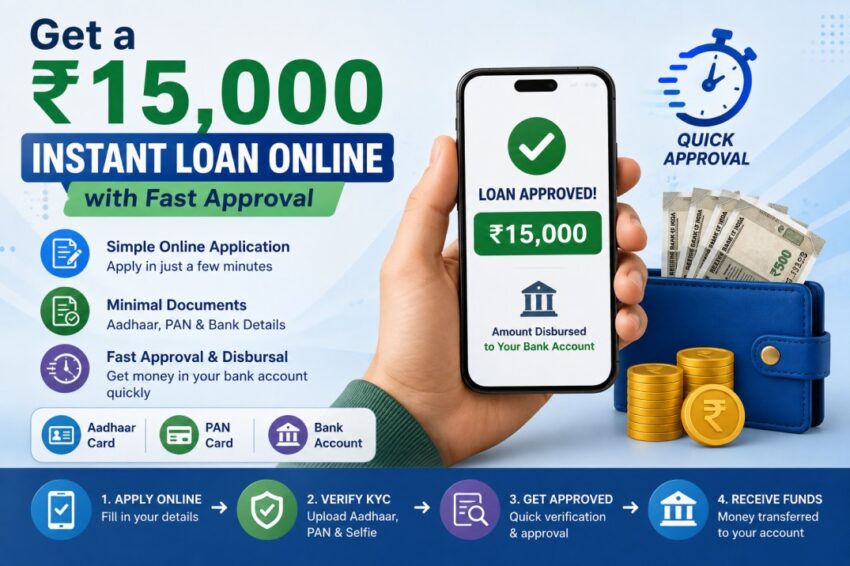
Need a ₹15,000 instant loan for an emergency, education, rent, medical expenses, or household needs? Small personal loans have become easier to access thanks to digital lending platforms. Many banks, NBFCs, and RBI-regulated lending partners now offer fully online applications with quick approvals and minimal paperwork.
However, approval isn’t automatic. Every lender evaluates your age, income, employment status, credit score, and KYC details before deciding whether to approve your application.
This guide explains the eligibility criteria for a ₹15,000 loan in India, compares eligibility for salaried and self-employed applicants, highlights common rejection reasons, and shares practical tips to improve your approval chances.
What Is a ₹15,000 Personal Loan?
A ₹15,000 personal loan is a small unsecured loan designed to help borrowers meet short-term financial needs without providing collateral.
Common uses include:
- Medical emergencies
- Rent payments
- Utility bills
- Education expenses
- Laptop purchases
- Home repairs
- Travel expenses
- Emergency household costs
Since the loan amount is relatively small, many lenders offer digital applications and faster approvals.
Basic Eligibility Criteria
Although every lender has its own policies, most applicants must meet some standard requirements.
1. Age Requirement
Most lenders require applicants to:
- Be at least 18 years old
- Some lenders may require applicants to be 21 years or older
- Meet the lender’s maximum age limit at loan maturity
Age is one of the first eligibility checks during the application process.
2. Indian Citizenship
Applicants are generally required to:
- Be Indian citizens
- Have valid identity proof
- Complete digital KYC verification
3. Income Requirement
Lenders evaluate whether you have sufficient repayment capacity.
Applicants generally need:
- Regular monthly income
- Stable source of earnings
- Income that satisfies the lender’s minimum requirement
The exact income threshold varies between lenders.
4. Employment Status
Both salaried and self-employed individuals may be eligible.
However, lenders assess each category differently.
Eligibility for Salaried Applicants
Salaried individuals are often evaluated based on:
- Monthly salary
- Employer details
- Employment stability
- Salary credits in bank account
- Work experience
Many lenders prefer applicants with a stable employment history.
Eligibility for Self-Employed Applicants
Self-employed applicants may need to demonstrate:
- Regular business income
- Bank transaction history
- Business continuity
- Income tax records (where applicable)
Freelancers, professionals, and business owners may also qualify depending on the lender’s policy.
5. Credit Score
A credit score reflects your repayment history and borrowing behaviour.
A healthy credit profile may help you:
- Improve approval chances
- Receive better loan terms
- Qualify for competitive interest rates
Some digital lenders also evaluate applicants using alternative credit assessment methods.
6. Valid KYC Documents
Most lenders require:
Identity Proof
- Aadhaar Card
- PAN Card
Address Proof
- Aadhaar Card
- Passport
- Driving Licence (if required)
Bank Account
Applicants generally need an active bank account for loan disbursal.
Documents Required
Preparing your documents in advance helps speed up the approval process.
Commonly required documents include:
- Aadhaar Card
- PAN Card
- Passport-size selfie
- Bank account details
- Salary slips (for salaried applicants)
- Bank statements
- Income proof (where applicable)
- Business proof (for self-employed applicants, if required)
Many digital lenders complete document verification online.
How the Approval Process Works
Understanding the process helps avoid delays.
Step 1: Submit an Online Application
Provide:
- Personal details
- Employment information
- Income details
- Loan amount required
Step 2: Complete Digital KYC
Upload:
- Aadhaar
- PAN
- Selfie verification
Most digital lenders verify KYC within minutes.
Step 3: Verification
The lender reviews:
- Identity
- Income
- Employment
- Bank account
- Credit profile
Step 4: Loan Approval
Eligible applicants receive a loan offer showing:
- Interest rate
- EMI
- Processing fee
- Loan tenure
Review the agreement carefully before accepting.
Step 5: Loan Disbursal
Once accepted, the approved loan amount is transferred directly to your registered bank account.
Many digital lenders complete disbursal within the same day after successful verification.
Common Reasons Loan Applications Get Rejected
Many applications are declined because of avoidable mistakes.
Incomplete KYC
Missing or incorrect documents can delay or reject your application.
Incorrect Personal Information
Errors in:
- Name
- Date of birth
- Address
- Mobile number
can result in verification failure.
Low or Unstable Income
Applicants without sufficient repayment capacity may not meet the lender’s eligibility requirements.
Poor Credit History
Past loan defaults, repeated late payments, or a low credit score may reduce approval chances.
Multiple Recent Loan Applications
Applying with several lenders within a short period may negatively affect your application.
Incorrect Bank Details
Invalid bank account information can delay both verification and disbursal.
Tips to Improve Your Approval Chances
A few simple steps can significantly improve your eligibility.
Keep Your Documents Ready
Upload clear copies of:
- Aadhaar Card
- PAN Card
- Income proof
- Bank statements
Proper documentation speeds up verification.
Maintain a Healthy Credit Profile
Pay:
- Existing EMIs
- Credit card bills
- Other loan repayments
on time to maintain a positive credit history.
Provide Accurate Information
Ensure every detail matches your official documents.
Incorrect information is one of the leading causes of rejection.
Apply for the Right Loan Amount
Borrow only the amount you genuinely need.
Smaller loan requests may undergo quicker assessment depending on the lender’s internal policies.
Compare Lenders
Different lenders have different:
- Eligibility criteria
- Income requirements
- Approval processes
- Interest rates
Comparing multiple options helps you find the lender best suited to your profile.
Can You Get Approved with a Low Credit Score?
Some lenders assess more than just your credit score.
They may also consider:
- Stable income
- Employment history
- Banking behaviour
- Existing relationship with the lender
Approval policies vary, so meeting other eligibility requirements can still improve your chances.
Things to Check Before Accepting the Loan
Before signing the agreement, review:
- Interest rate
- Processing fee
- EMI amount
- Loan tenure
- Late payment charges
- Prepayment rules
- Total repayment amount
Understanding these terms helps you make informed borrowing decisions.
Frequently Asked Questions
What is the minimum age for a ₹15,000 loan?
Most lenders require applicants to be at least 18 years old, while some require a minimum age of 21 years.
Can self-employed individuals apply?
Yes. Many lenders accept applications from self-employed professionals, freelancers, and business owners, subject to their eligibility criteria.
Is income proof mandatory?
It depends on the lender. Many lenders require proof of income, while some digital lenders may use simplified verification for smaller loans.
Does my credit score affect approval?
Yes. A healthy credit profile can improve approval chances and may help you receive better loan terms.
How quickly can I receive the loan?
Many digital lenders offer same-day approval and quick disbursal after successful verification. Actual timelines depend on the lender’s internal process and banking system.
Final Thoughts
Meeting the eligibility criteria for a ₹15,000 loan is the key to securing fast approval. Lenders typically evaluate your age, income, employment status, credit score, and KYC documents before making a lending decision.
Whether you’re a salaried employee or self-employed professional, maintaining a stable income, providing accurate information, and keeping your documents ready can significantly improve your chances of approval.
Before applying, compare multiple lenders, understand their eligibility requirements, and borrow only what you genuinely need. Responsible borrowing and timely repayments not only help you manage your finances but also strengthen your credit profile for future loan applications.