
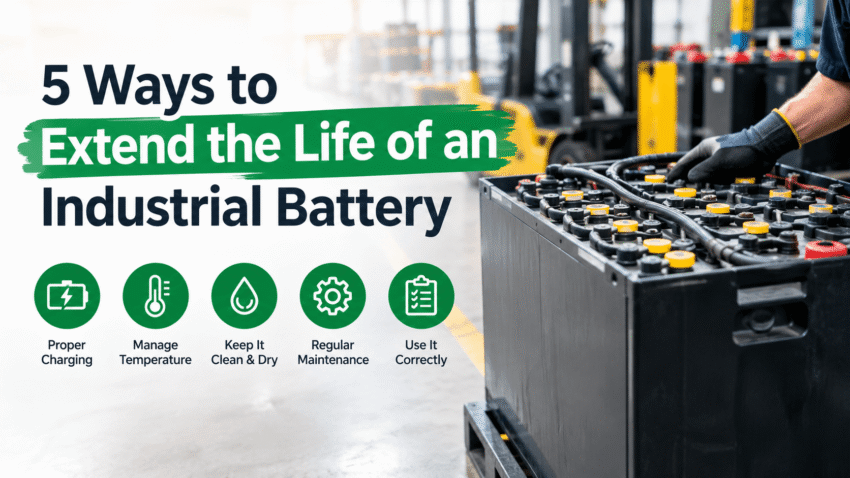
Industrial batteries play a critical role in keeping businesses, warehouses, manufacturing facilities, backup systems, and heavy equipment running smoothly. Unlike ordinary household batteries, industrial batteries are often expected to deliver reliable power under demanding conditions, sometimes for long hours and in challenging environments. When these batteries are neglected, their performance can decline quickly, leading to unexpected downtime, reduced productivity, and expensive replacements.
The good news is that many battery problems can be prevented with proper care. Whether you manage equipment in a warehouse, operate a fleet of industrial vehicles, or maintain backup power systems, working with a reliable battery shop dallas can help you choose the right battery and understand how to maintain it properly. More importantly, a consistent maintenance routine can significantly improve battery performance and service life.
Below are five practical ways to get more life out of an industrial battery while keeping your equipment dependable.
1. Follow a Consistent Charging Routine
One of the simplest and most effective ways to extend industrial battery life is to use the correct charging practices.
Industrial batteries are designed to operate within specific charging parameters. Frequently allowing a battery to become deeply discharged or repeatedly interrupting its charging cycle can put unnecessary stress on the battery. Over time, this can reduce its ability to hold a charge and shorten its overall service life.
Whenever possible, follow the charging recommendations provided by the battery manufacturer. Avoid guessing when it comes to charging voltage, current, and charging duration.
Avoid Overcharging
Overcharging can be just as harmful as undercharging. Excessive charging can generate heat and, depending on the battery type, may cause electrolyte loss, internal damage, or accelerated degradation.
Modern charging systems can help prevent this problem, but they still need to be properly matched to the battery. Using an incompatible charger may result in poor charging performance or premature battery failure.
Don’t Regularly Run the Battery Completely Flat
Deep discharges can be particularly damaging when they happen repeatedly. If your equipment allows you to monitor battery levels, establish a charging routine before the battery reaches a critically low state.
For applications where batteries are used throughout the day, planned charging periods can be much more effective than waiting until the battery is almost completely depleted.
2. Keep the Battery Clean and Inspect It Regularly
Industrial environments can be tough on batteries. Dust, dirt, oil, moisture, corrosion, and other contaminants can accumulate around battery terminals and connections.
A dirty battery may not look like a serious problem, but contamination can interfere with electrical connections and contribute to corrosion. In some cases, it can also create conditions that encourage current leakage.
Regular inspections allow you to identify small problems before they become expensive failures.
During routine checks, look for:
- Corrosion around terminals and connectors
- Loose cables or connections
- Cracked or damaged battery cases
- Swelling or unusual deformation
- Leakage or signs of electrolyte loss
- Excessive dirt or debris
- Unusual smells or excessive heat
- Loose mounting hardware
If you notice physical damage, unusual heating, leakage, or swelling, don’t continue using the battery simply because it still appears to work. These can be warning signs of a more serious issue.
Clean Connections Carefully
Battery terminals should remain clean and secure. A poor connection increases electrical resistance, which can cause heat buildup and reduce the efficiency of the system.
Cleaning procedures vary depending on the battery chemistry and design, so use the manufacturer’s recommended method. For maintenance-intensive battery systems, trained technicians can also help determine whether cleaning, terminal replacement, or other service is necessary.
3. Control Operating Temperature
Temperature has a major impact on battery performance and longevity.
Industrial batteries are often exposed to environments that are much hotter or colder than ideal. Extreme temperatures can affect chemical reactions inside a battery, changing how efficiently it stores and releases energy.
High temperatures are especially concerning because prolonged heat can accelerate battery degradation. In some battery types, excessive heat can contribute to electrolyte evaporation, internal deterioration, and reduced capacity.
Cold temperatures can also affect performance. A battery may temporarily deliver less power in extremely cold conditions, even when it is otherwise healthy.
Improve Battery Ventilation
If a battery is installed inside an enclosed area, make sure the system has appropriate ventilation according to the manufacturer’s requirements. Heat generated during operation and charging needs to be managed effectively.
Avoid placing batteries near unnecessary heat sources whenever possible. For equipment operating in hot environments, temperature monitoring can provide useful information about whether the battery is being pushed beyond its recommended operating range.
Temperature management isn’t just about protecting the battery. It can also help maintain more predictable equipment performance.
4. Avoid Overloading the Battery
Industrial batteries are designed for specific applications and operating conditions. Consistently demanding more power than a battery is designed to provide can significantly reduce its lifespan.
For example, using a battery in equipment that requires greater power than its rated capacity may cause deeper and more frequent discharge cycles. This puts additional strain on the battery and can accelerate wear.
Before installing a battery, make sure its specifications match the equipment’s requirements. Consider factors such as:
- Voltage
- Capacity
- Discharge requirements
- Operating environment
- Equipment load
- Duty cycle
- Charging requirements
- Expected operating hours
Pay Attention to Changes in Equipment Performance
If equipment that normally operates efficiently suddenly starts consuming more battery power, don’t automatically assume the battery is the problem.
Mechanical issues, increased loads, electrical faults, inefficient components, or changes in operating procedures can all increase energy consumption.
For this reason, battery maintenance should be considered part of a broader equipment maintenance program. A healthy battery can still drain quickly if the machinery connected to it is operating inefficiently.
5. Schedule Preventive Maintenance and Battery Testing
Waiting until an industrial battery fails is one of the most expensive ways to manage battery maintenance.
Preventive maintenance gives you an opportunity to identify declining performance before it causes an unexpected shutdown. Depending on the battery type and application, professional testing may reveal capacity loss, charging problems, voltage irregularities, or other signs of deterioration.
Establish a Maintenance Schedule
The right maintenance schedule depends on how often the battery is used, the type of battery, operating conditions, and the manufacturer’s recommendations.
A basic maintenance program might include:
Daily or routine checks:
Look for visible damage, unusual heat, leaks, or obvious connection problems.
Periodic inspections:
Check terminals, cables, battery condition, charging equipment, and mounting.
Performance testing:
Measure relevant electrical characteristics and compare results over time.
Professional servicing:
Have qualified technicians inspect batteries when problems appear or when scheduled maintenance calls for more detailed testing.
Keeping records can make this process even more useful. Documenting battery performance, charging patterns, maintenance work, and recurring issues can help you recognize trends.
For example, if a battery’s capacity has been gradually declining over several inspections, you can plan a replacement before it fails during an important operation.
Why Proper Battery Maintenance Saves Money
Extending battery life isn’t only about avoiding the cost of buying a replacement.
An industrial battery failure can have additional consequences. Equipment may be unavailable, employees may lose productive time, deliveries can be delayed, and emergency service may become necessary.
A proactive maintenance strategy can help reduce these risks.
Consider the difference between replacing a battery during a planned maintenance window and replacing one after an unexpected failure. Planned replacement allows you to budget for the expense, select the correct battery, and install it at a convenient time. An emergency failure can create pressure to find any available replacement immediately.
In other words, good battery maintenance is an investment in operational reliability.
Know When a Battery Should Be Replaced
Even the best-maintained industrial battery will eventually reach the end of its useful life. The goal isn’t to keep a failing battery in service indefinitely. Instead, proper maintenance helps you get the maximum safe and practical value from it.
Some common signs that replacement may be approaching include:
- Noticeably shorter operating time
- Frequent charging
- Difficulty reaching a full charge
- Significant voltage fluctuations
- Repeated performance problems
- Physical damage or swelling
- Excessive heat during normal operation
- Poor performance despite proper charging and maintenance
If a battery consistently struggles to meet the needs of the equipment, continuing to use it may create more problems than replacing it.
It’s also important to replace a battery with one that is correctly matched to the application. Choosing a battery solely because it is inexpensive can be a costly mistake if its specifications don’t meet the equipment’s requirements.
Final Thoughts
Industrial batteries are a significant investment, but proper care can help you get more reliable service from them while reducing unnecessary replacement and downtime. Start with the basics: charge the battery correctly, keep it clean, manage operating temperatures, avoid excessive loads, and schedule preventive inspections and testing. Just as importantly, pay attention to early warning signs instead of waiting for a complete failure.
If you’re unsure whether an industrial battery needs maintenance, testing, or replacement, getting advice from an experienced battery professional can help you make a more informed decision. Battery Rescue can be a useful resource for businesses looking for practical battery solutions and professional guidance. Ultimately, a little preventive care today can help keep your equipment powered, productive, and dependable for longer.