
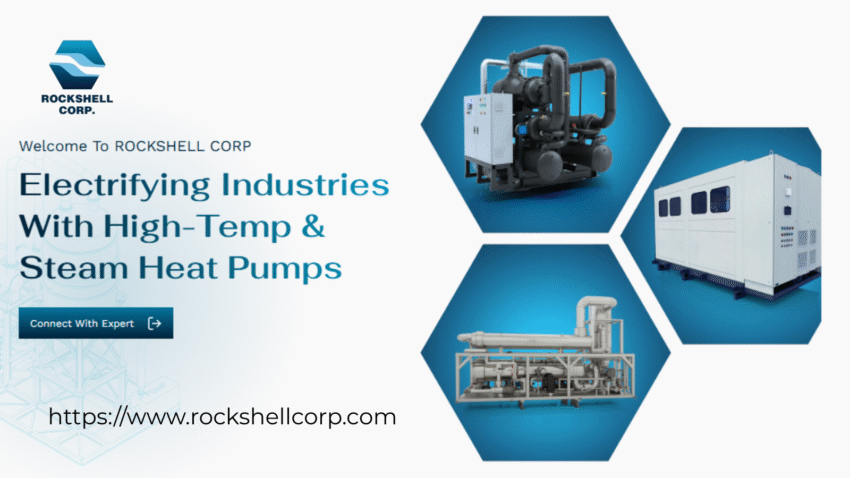
Modern manufacturing industries are rapidly adopting advanced heating and energy systems, and one of the most transformative technologies gaining momentum is the industrial heat pump. The demand for heat pumps has grown significantly across sectors such as food processing, pharmaceuticals, paper, chemicals, and textiles. Companies now look for reliable Industrial Heat Pump Manufacturer India partners who can engineer customized solutions for diverse operating conditions. With industrial automation and sustainability goals becoming mainstream, heat pumps offer both economic and environmental advantages for factories.
Rising Energy Costs and the Need for Efficient Heating
Energy consumption is a major cost component in manufacturing, especially in plants that require continuous heating, drying, boiling, or steam production. Traditional heating systems, such as fossil-fuel boilers, require high operational expenditure and frequent maintenance. Industrial heat pumps operate with remarkably higher thermal efficiency, often delivering 3–7 units of heat for every single unit of electricity consumed.
This substantial Coefficient of Performance (COP) makes heat pumps a preferred choice in modern plants looking to reduce fuel dependency and operational overheads. Manufacturing organizations are now comparing long-term ROI, and heat pumps consistently offer better energy savings and faster payback periods compared to conventional heating methods.
Shift Toward Electrification and Low-Carbon Manufacturing
Decarbonization has become a top priority for industries, especially those committed to ESG targets and green certifications. Heat pumps enable thermal heating using electricity instead of fossil fuels, which significantly reduces carbon emissions. Many industrial facilities are transitioning toward electrified heating systems not only for regulatory compliance but also to future-proof operations against tightening emission norms.
Industrial heat pumps support low-carbon manufacturing by converting ambient heat, waste heat, or process heat into usable thermal energy. This sustainability advantage has triggered a rapid acceleration in adoption, and forward-thinking manufacturers now prefer integrating heat pumps into both new and existing production lines.
Waste Heat Recovery and Resource Optimization
One of the biggest strengths of industrial heat pumps is their ability to recover heat that is otherwise wasted. Manufacturing plants generate a tremendous amount of low-grade heat during various operations, including drying, cooling, distillation, and washing. Instead of releasing this heat into the environment, heat pumps can capture and upgrade it to usable temperatures.
This capability is extremely valuable in industries like textiles, dairy, beverages, and chemicals where waste heat is abundant. By reusing existing heat, plants drastically reduce energy demand, lower utility bills, and minimize the load on conventional heating equipment. Waste heat recovery has become a strategic advantage for manufacturing organizations with high thermal cycles.
Increasing Demand for High-Temperature Heat Pumps
Technology advancements have expanded industrial heat pump applications across a wider temperature range. Earlier heat pumps were mostly limited to low to medium-temperature operations. Today, manufacturers can design high-temperature heat pumps capable of delivering 80°C to over 160°C based on engineering customization.
These high-temperature systems are now replacing traditional steam boilers in various applications such as pasteurization, curing, industrial washing, and thermal processing. As industries embrace higher-temperature electrified heating, the demand for experienced manufacturers and technology integrators has increased substantially.
Reduced Maintenance and Enhanced System Reliability
Traditional boilers and furnace systems involve frequent maintenance, safety inspections, and fuel handling challenges. Heat pumps, on the other hand, have fewer moving components and offer longer operational life with lower maintenance requirements. Automated controls, IoT monitoring, and smart diagnostics further improve system reliability and uptime.
Industrial facilities benefit from predictable maintenance costs, enhanced operator safety, and consistent output. This reliability factor is one of the major reasons heat pumps are becoming integral to modern continuous manufacturing lines.
Custom Engineering and Better Integration Possibilities
Modern industrial heat pumps can be engineered for application-specific requirements, temperature stages, and process flow characteristics. Manufacturers now offer customized designs that integrate seamlessly with existing tanks, dryers, evaporators, process heaters, and district heating circuits. Companies such as Rockshell provide tailored solutions suitable for different industry environments, energy conditions, and operational loads.
Customization has expanded adoption beyond niche applications and allowed heat pumps to serve large industries with high thermal output demands.
Government Incentives and Sustainability Regulations
In many regions, government policies encourage industries to adopt energy-efficient technology to reduce fossil-fuel dependency. Incentives, tax benefits, and sustainability-linked funding programs have made heat pump adoption more financially attractive. With climate commitments intensifying, industrial organizations are proactively implementing cleaner technologies ahead of regulatory timelines.
Conclusion
The rapid increase in heat pump demand is driven by energy savings, electrification goals, waste heat recovery potential, and overall sustainability performance. Modern industries want reliable partners who can engineer and install systems tailored to plant conditions, making the role of an experienced Industrial Heat Pump Manufacturer India highly significant. As more sectors embrace resource optimization and carbon-neutral manufacturing, industrial heat pumps will continue to be a central part of the thermal energy transformation.