
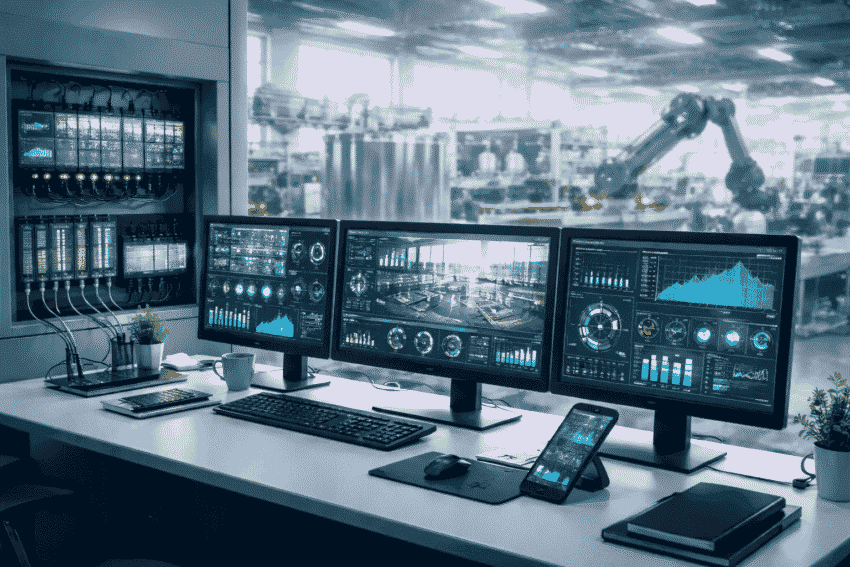
PLC control panels are becoming the backbone of industrial automation across India. As factories move toward smart manufacturing, the need for reliable, safe, and efficient automation systems has increased. A PLC control panel is designed to manage machines, motor systems, and industrial processes with accuracy and safety. These panels are used in industries like packaging, oil and gas, automotive, food processing, chemical production, and many more. Today, factories are not only using PLC systems for automation but also integrating them with IoT and SCADA to achieve real-time monitoring and remote control.
Why PLC Control Panels Matter in Modern Industries
Industrial plants work with high-speed machinery, motors, and moving equipment. Without control and supervision, failures can occur and may lead to downtime, accidents, and product loss. A PLC electrical panel helps industries prevent such issues by controlling processes and monitoring machine conditions. It allows machines to run according to set logic and improves safety by preventing overloads, short circuits, and incorrect commands.
PLC-based panels make automation smarter and more stable. They allow industries to collect data and analyze performance. When a machine fault occurs, the PLC can immediately stop the process to avoid damage. This is why PLC panels are considered more reliable than older relay-based systems.
How PLC Panels Improve Machine Safety
Machine safety is a major priority for industries because any fault can cause injury, production delays, and financial loss. PLC electrical panels help prevent unsafe actions through intelligent logic control. If a motor overheats, pressure rises, or a machine reaches a limit, the PLC can automatically shut down the system.
Safety sensors like limit switches, proximity sensors, and emergency stop buttons are connected to the PLC panel. This allows operators to react quickly and avoid hazards. The panel also improves electrical safety by controlling power flow and protecting motors from high current or voltage imbalance.
With IoT device control, industries are now monitoring safety conditions remotely. Managers can view alarms, machine condition, fault codes, and runtime data from their mobile phones. This reduces human error and ensures faster action during breakdowns.
How PLC Panels Improve Efficiency and Productivity
A major benefit of PLC automation is improved efficiency. Machines run faster, smoother, and without interruption. PLC logic controls motion, speed, temperature, timing, and many other process parameters. This allows industries to produce more in less time while reducing waste.
Through real-time data collection, PLC panels help operators understand how machines are performing. If a motor uses extra energy or a conveyor becomes slower, it becomes easy to find the cause. When efficiency increases, operating cost decreases. Production lines become more accurate and consistent.
Industries today are also using SCADA in IoT to visualize machine data. SCADA screens show plant performance in graphical form, making monitoring easier. When PLC and SCADA work together, plants achieve high visibility and better decision-making.
How IoT Enhances PLC Panel Performance
IoT integration has taken PLC automation to the next level. With IoT, PLC panels are no longer limited to local operation. They now communicate with cloud servers and mobile dashboards. Operators can access machine data from anywhere.
IoT also supports predictive maintenance. Instead of waiting for failure, industries can predict issues before breakdown occurs. This helps reduce downtime and increases machine reliability. Remote IoT access allows engineers to troubleshoot faults much faster.
When IoT device control works with PLC panels, every action becomes smarter and more connected. Factories are becoming digital plants with live data access, smart alarms, and faster communication.
Design and Structure of PLC Electrical Panels
PLC panels are available in many designs depending on industry needs. They include input modules, output modules, power supplies, relays, terminal blocks, communication ports, and protection devices. The entire panel works like a brain for the machine.
Good panel design improves both safety and performance. Neat wiring, quality components, and correct programming prevent errors and make maintenance easy. In modern panels, PLCs also work with VFD drives to control motor speed, which improves efficiency and protects the motor.
Future of PLC Panels in Indian Industries
Indian industries are moving quickly toward Industry 4.0. Automation is becoming necessary to stay competitive. In the coming years, more factories will upgrade old systems to PLC and IoT-based control. With rising demand for production, the need for real-time monitoring, safety automation, and remote access will continue to grow.
PLC panels will also play a major role in energy-saving systems. By controlling motors and machines more efficiently, factories will reduce electricity consumption and operating cost. Smart PLC panels will drive the future of Indian manufacturing and industrial automation.
Conclusion
PLC control panels are transforming industrial automation with better safety, performance, and reliability. They protect machines from failures, allow safe shutdown, improve production speed, and support data-driven decision-making. With IoT and SCADA integration, PLC systems are becoming more powerful and accessible. As industries continue to modernize, PLC electrical panels will remain the foundation of smart factory operations.