
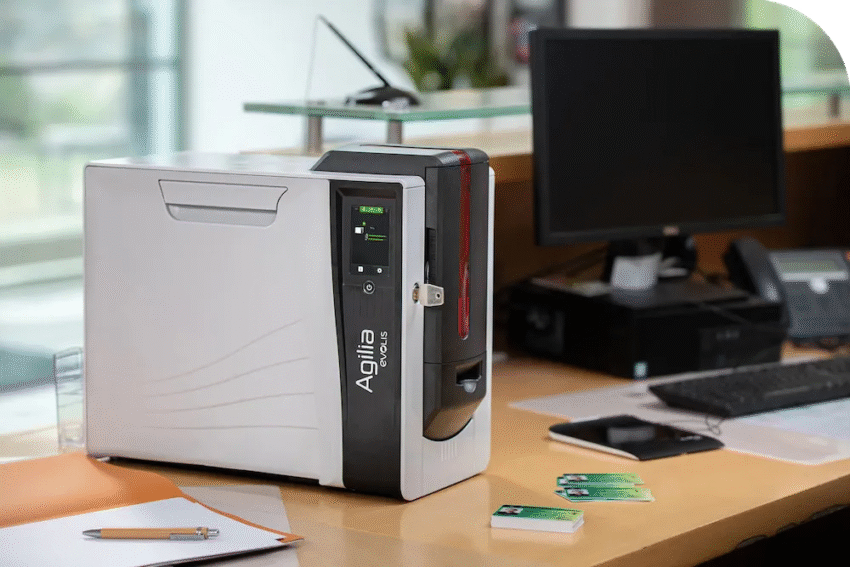
As Australian businesses continue to invest in security, identification, and branding, the demand for reliable card printers has grown significantly. From employee ID cards and visitor passes to loyalty cards and access control systems, a dependable plastic card printer plays a crucial role in modern operations.
Choosing the right solution, however, can be challenging. With a wide range of badge printers and card printing technologies available, understanding what to look for before making a purchase can save time, money, and frustration. This guide explores the most important factors Australian buyers should consider before investing in a card printer.
Why Businesses in Australia Use Card Printers
Across industries such as education, healthcare, corporate offices, and government, card printers provide an efficient way to produce secure identification. Using an in-house printer gives organizations greater control over data, branding, and turnaround time.
Common uses include:
- Employee ID and access cards
- Visitor badges and temporary passes
- Membership and loyalty cards
- Student identification cards
- Event and conference credentials
With increasing security requirements, investing in a high-quality plastic card printer has become a necessity rather than a luxury.
Understanding Different Types of Card Printers
Before purchasing, it’s important to understand the different categories of card printers available in the Australian market.
Entry-Level Card Printers
These printers are ideal for small businesses or offices with low-volume needs. They offer basic printing capabilities and are easy to operate.
Best for:
- Small offices
- Clubs and community groups
- Occasional card printing
Mid-Range Badge Printers
Designed for medium-volume use, these printers offer faster speeds, better durability, and optional encoding features.
Best for:
- Growing businesses
- Schools and training centres
- Gyms and membership organizations
High-End and Enterprise Card Printers
These advanced systems are built for high-volume environments and often include advanced security features such as RFID or smart card encoding.
Best for:
- Large corporations
- Government facilities
- Hospitals and universities
Choosing the right category ensures your printer meets current needs while allowing room for growth.
Key Features to Look for in a Plastic Card Printer
When comparing card printers Australia, it’s important to focus on the features that directly impact performance and usability.
Print Quality
A resolution of at least 300 dpi ensures sharp text, clear photos, and professional branding. Higher quality is especially important for ID cards with photos or barcodes.
Printing Speed
High-volume environments benefit from faster printers that can produce cards quickly without compromising quality.
Encoding Options
Many modern badge printers support magnetic stripe, RFID, or smart chip encoding. These features are essential for secure access systems and identity management.
Connectivity
Look for printers offering USB, Ethernet, or network connectivity to integrate smoothly with existing systems.
Durability and Maintenance
Reliable machines with easily replaceable parts reduce downtime and long-term operating costs.
Comparing Badge Printers vs Multi-Purpose Card Printers
When selecting a printer, it’s important to understand the difference between badge printers and multi-purpose card printers.
Badge printers are typically designed for basic ID cards and offer a cost-effective solution for organizations with simple requirements.
Multi-purpose card printers, on the other hand, support multiple card types, higher security features, and larger workloads. These are ideal for organisations that need flexibility and scalability.
Understanding your long-term usage needs will help determine which option delivers better value.
Importance of Local Support and Warranty in Australia
One of the most overlooked aspects of buying a plastic card printer is after-sales support. Purchasing from Australian suppliers ensures access to:
- Local technical support
- Faster replacement parts
- Warranty protection under Australian consumer laws
- Local compliance and safety standards
Local suppliers also offer expert advice tailored to Australian business needs, making them a reliable choice for long-term support.
Ongoing Costs to Consider
Beyond the initial purchase, several ongoing costs should be factored into your budget:
- Printer ribbons and cleaning kits
- Blank plastic cards or smart cards
- Maintenance and servicing
- Software licenses or upgrades
Understanding these ongoing expenses helps avoid unexpected costs and ensures sustainable operation.
Making the Right Choice for Your Business
Selecting the right card printer Australia businesses rely on requires careful evaluation of current and future needs. Ask yourself:
- How many cards will be printed monthly?
- Do I need security features like RFID or encryption?
- What level of print quality is required?
- Is scalability important for future growth?
Answering these questions will help narrow your options and ensure you invest in a solution that delivers long-term value.
Final Thoughts
Choosing the right plastic card printer is a strategic decision that impacts efficiency, security, and professionalism. With so many badge printers available on the Australian market, taking the time to assess features, support, and long-term costs will ensure the best return on investment.
Whether you’re a small business issuing staff IDs or a large organisation managing secure access systems, the right card printer will streamline operations and enhance security. With careful planning and informed decision-making, your investment will continue to deliver value well into the future.