
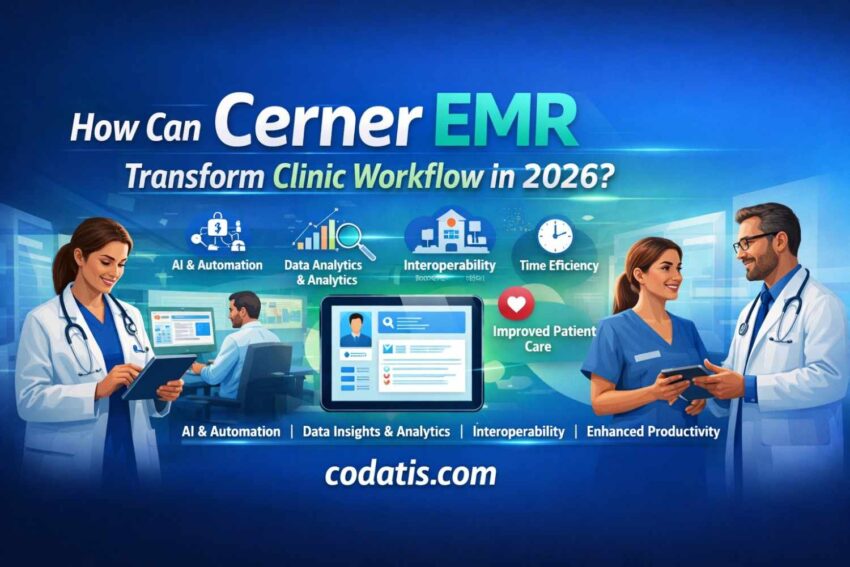
In today’s fast-evolving healthcare environment, selecting a powerful electronic medical record system can completely transform clinic and hospital workflows. Cerner EMR continues to be one of the most trusted and feature-rich platforms available, now strengthened under Oracle Health. It helps providers deliver safer care, reduce administrative burden, improve revenue cycles, and support data-driven clinical decisions.
This in-depth guide covers everything you need to know about Cerner EMR, Cerner EHR, its key features, pricing expectations for 2026, the latest product updates 2026, how Cerner Practice Management Software integrates, and why scheduling a Cerner EMR demo remains one of the smartest first steps.
What Exactly Is Cerner EMR and Cerner EHR?
Cerner EMR (Electronic Medical Record) and Cerner EHR (Electronic Health Record) are frequently used interchangeably, though technically EHR has a broader scope that includes data sharing across organizations.
The Cerner Electronic Medical Record System is a comprehensive, interoperable platform that captures, stores, and manages every aspect of a patient’s clinical and administrative journey in digital format. From progress notes, orders, medications, lab results, and imaging to allergies, immunizations, and discharge summaries — everything lives in one secure, real-time system.
Since Oracle acquired Cerner in 2022, the platform has received continuous cloud modernization, stronger AI capabilities, and deeper integration with Oracle’s enterprise tools. Most deployments today are cloud-based (or hybrid), giving practices secure remote access, automatic updates, and better disaster recovery — critical advantages in 2026.
Key Cerner EMR Features That Set It Apart
Cerner EMR features are designed for both clinical excellence and operational efficiency. Some of the most valued capabilities include:
-
AI-assisted documentation — smart phrases, auto-suggested text, and ambient listening reduce typing time
-
Clinical decision support — real-time alerts for drug interactions, duplicate orders, sepsis screening, fall risk, etc.
-
Integrated revenue cycle — charge capture, coding suggestions, clean claims, denial management
-
Population health & analytics — risk stratification, care gap identification, quality measure tracking
-
Patient portal & engagement tools — self-scheduling, bill pay, secure messaging, telehealth visits
-
Interoperability engine — FHIR APIs, Carequality / CommonWell participation, seamless exchange with labs, imaging centers, pharmacies
-
Mobile & tablet access — clinicians can chart, review results, and place orders from anywhere
When paired with Cerner Practice Management Software, the system also handles front-office tasks: appointment scheduling, eligibility verification, patient check-in kiosks, claims scrubbing, payment posting, and robust financial reporting.
These Cerner EMR features make the platform especially strong for multi-specialty groups, ambulatory surgery centers, community hospitals, and large integrated delivery networks.
Cerner EMR Pricing – Realistic Expectations for 2026
Cerner EMR pricing is always customized, so there is no public “one-size-fits-all” price list. However, industry benchmarks in early 2026 show the following ranges:
-
Small to mid-size practices (1–10 providers): $300–$700 per provider per month (cloud subscription model)
-
Larger organizations / enterprise: often $1,000+ per provider per month when including advanced modules, population health, and heavy customization
-
One-time implementation & data migration: $50,000 – $500,000+ depending on practice size and complexity
-
Add-on modules (telehealth, patient engagement, advanced analytics): $5,000–$50,000 annually
Many clients report that while Cerner EMR pricing appears higher upfront compared to some cloud-native competitors, the long-term total cost of ownership can be lower due to fewer third-party interfaces, better claim acceptance rates, and reduced clinician burnout.
The best way to receive accurate Cerner EMR pricing is to request a personalized quote after a discovery call and Cerner EMR demo.
Cerner EMR Product Updates 2026 – What’s New This Year
Oracle Health has accelerated innovation, and Cerner EMR product updates 2026 focus heavily on three areas:
-
Embedded generative AI & ambient clinical documentation — clinicians speak naturally; the system generates structured notes with 90%+ accuracy in many specialties
-
Unified Oracle Health Millennium platform enhancements — smoother workflows between inpatient, ambulatory, and revenue cycle modules
-
Next-generation interoperability & FHIR advancements — faster, more secure data exchange with external systems, payers, and public health agencies
-
Improved user experience — redesigned dashboards, faster load times, mobile-first design
These Cerner EMR product updates 2026 aim to reduce physician documentation time by up to 30% while improving data accuracy and patient safety — major priorities for value-based care models in 2026.
Why a Cerner EMR Demo Is Essential Before Deciding
No brochure or webinar can replace hands-on experience. A live Cerner EMR demo lets your team:
-
See real workflows tailored to your specialty
-
Test charting speed and mobile access
-
Understand how Cerner Practice Management Software integrates with clinical modules
-
Ask detailed questions about implementation timeline, training, and support
-
Get clarity on Cerner EMR pricing specific to your size and needs
Most authorized partners (including Codatis) offer free, no-obligation Cerner EMR demos — usually 45–60 minutes — and can be scheduled virtually or on-site.
How Cerner Practice Management Software Completes the Ecosystem
While Cerner EMR handles the clinical side, Cerner Practice Management Software manages the business side:
-
Intelligent scheduling with slot optimization
-
Automated patient reminders (SMS, email, voice) → lower no-show rates
-
Real-time insurance eligibility & benefit checks
-
Advanced billing & collections workflows
-
Robust reporting for financial KPIs, productivity, and denial trends
Together, the Cerner Electronic Medical Record System + Cerner Practice Management Software creates an end-to-end platform that minimizes duplicate data entry, accelerates cash flow, and supports practice growth.
Is Cerner EMR the Right Choice for Your Practice in 2026?
Cerner EMR (and its broader Cerner EHR ecosystem) remains a top-tier solution for practices that value deep clinical functionality, strong revenue cycle tools, scalability, and long-term innovation from Oracle Health.
Whether you run a single-specialty clinic, multi-site group, or community hospital, the combination of modern Cerner EMR features, realistic Cerner EMR pricing models, meaningful Cerner EMR product updates 2026, and excellent support makes it worth serious consideration.
The smartest next step? Book a personalized Cerner EMR demo and see the difference yourself.
Frequently Asked Questions (FAQs)
What are the main Cerner EMR features in 2026?
Key Cerner EMR features include AI-powered documentation, clinical decision support, integrated revenue cycle, population health analytics, patient portal, telehealth, and strong interoperability via FHIR.
How much does Cerner EMR pricing cost in 2026?
Cerner EMR pricing typically ranges from $300–$700 per provider per month for smaller practices (cloud model), with larger organizations paying more for advanced modules and customization.
What are the biggest Cerner EMR product updates 2026?
Cerner EMR product updates 2026 emphasize generative AI for ambient documentation, faster FHIR interoperability, redesigned user interfaces, and tighter integration across the Oracle Health Millennium platform.
How do I schedule a Cerner EMR demo?
Contact an authorized Cerner partner like Codatis to book a free, customized Cerner EMR demo. Most sessions are virtual and last 45–60 minutes.
Does Cerner Practice Management Software work with Cerner EMR?
Yes — Cerner Practice Management Software is natively integrated with Cerner EMR / Cerner EHR, creating a single database for clinical, scheduling, and billing workflows.