
A hidden water leak is stressful enough on its own. Navigating an insurance claim at the same time makes it worse. Many homeowners discover that their policy includes trace and access cover only after a leak has already caused damage, and then find the claims process unclear and difficult to move through quickly.
The good news is that a trace and access claim follows a logical sequence, and understanding that sequence in advance makes a significant difference to how smoothly things go. This article walks you through the process step by step, explains what your insurer needs from you, and tells you what specialist leak detection provides to support the claim.
A note on insurance wording: policy terms vary between insurers. This article explains how the process generally works. Always check your own policy documents and confirm requirements directly with your insurer before taking action.
What Is Trace and Access Cover?
Trace and access is a provision on many standard home insurance policies that covers the cost of locating a hidden water leak and gaining physical access to it. The ‘trace’ part covers the specialist detection work required to find the leak. The ‘access’ part covers opening up walls, floors, or ceilings to reach the pipe once its location is confirmed.
It is important to understand that trace and access cover is not the same as buildings or contents cover. It focuses specifically on the investigation and access stage. Whether the repair of the pipe itself and the reinstatement of any opened surfaces is covered depends on the additional provisions in your specific policy.
The financial limit for trace and access varies between policies. Many standard policies carry a limit between 1,000 and 5,000 pounds. Checking this figure before your claim begins helps you plan for any costs that fall outside the covered amount.
Step One: Notify Your Insurer Before You Do Anything Else
The most common mistake homeowners make is to commission a detection inspection or begin investigation work before contacting their insurer. Some policies require pre-authorisation before trace and access work begins. If you go ahead without this, you risk the insurer declining to reimburse the cost even if the work itself was necessary and professionally carried out.
Contact your insurer as soon as you suspect a hidden water leak. Describe the symptoms you have noticed: a rising water bill, a persistent damp patch, a musty smell, or repeated boiler pressure loss. Ask specifically whether your policy includes trace and access cover and what their preferred process is for making a claim.
|
What to ask your insurer when you call • Does my policy include trace and access cover? • What is the claim limit for trace and access? • What excess applies to this type of claim? • Do I need pre-authorisation before commissioning a detection inspection? • Do you have a preferred contractor, or can I choose my own specialist? • What documentation do I need to submit with the claim? |
Step Two: Commission a Specialist Leak Detection Inspection
Once your insurer confirms how you should proceed, you arrange a specialist leak detection inspection. This is the trace stage of the claim process, and it is the step that produces the documentation your insurer needs to assess and authorise the work.
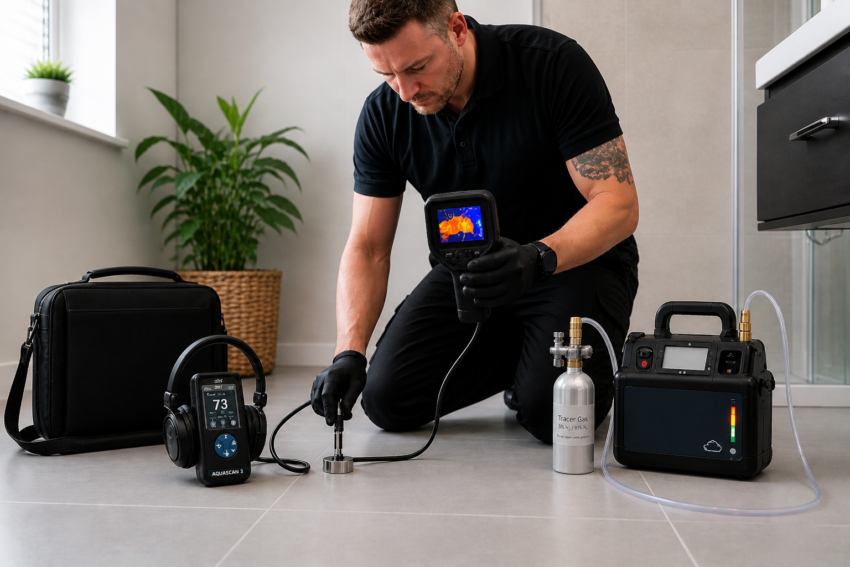
A specialist uses non-invasive technology to locate the leak without opening up surfaces unnecessarily. Acoustic listening devices detect the sound of escaping water within pressurised pipes. Thermal imaging cameras identify temperature changes caused by moisture behind walls and floors. Tracer gas detection pinpoints the exact location of a fault beneath concrete or screed. These methods allow a trained specialist to find the leak accurately and produce a confirmed result rather than a destructive search.
The inspection produces a written report that documents how the leak was found, where it is located, and what physical access is required to reach the pipe for repair. This report is the central piece of evidence that supports the trace and access claim.
Vortex Leak Detection carries out specialist inspections for both domestic and commercial properties and produces professional written reports accepted by insurers. Full details are available on the Vortex Leak Detection services page.
Step Three: Submit the Detection Report to Your Insurer
Once the inspection is complete and the written report is in your hands, you submit it to your insurer or loss adjuster as part of the claim. The report is the primary evidence that justifies the trace and access claim and the access work it recommends.
A strong detection report includes the inspection date and property address, the detection methods used, the confirmed location of the leak, a description of the access work required to reach the pipe, and any supporting data such as thermal images or moisture readings. An insurer reviewing a report of this quality has the information they need to make a straightforward decision.
If a loss adjuster is involved, they may visit the property to review the findings. In most cases, where the report is clear and the claim is within the policy limit, the process moves forward without significant delay once documentation is submitted.
Step Four: The Access Work Takes Place
Once the claim is authorised, the access stage begins. A plumber or contractor carries out the physical opening of the wall, floor, or ceiling surface above the confirmed leak location. Because the detection inspection has already pinpointed the fault precisely, this opening is targeted and proportionate rather than speculative.
The pipe is then repaired. Whether the cost of the repair itself and the reinstatement of the opened surface is covered by the trace and access provision or falls under a different part of your policy depends on the specific terms of your cover. Some policies include reinstatement; others treat it separately. This is worth clarifying with your insurer before the access work begins so that you understand the full financial picture before committing.
What Happens if the Claim Is Declined or Partially Covered?
If your insurer declines the trace and access claim, or if the cost of the work exceeds the policy limit, you meet the shortfall directly. This is more common with older or more basic policies that carry low trace and access limits or that exclude the provision entirely.
In this situation, the detection report still has value. It tells you exactly where the leak is, what access is required, and what the repair involves. This information saves time and money on the repair itself and prevents the exploratory opening-up work that costs more and causes greater disruption than a targeted access.
It is also worth considering that some insurers that do not cover trace and access costs still cover water damage to the building under the buildings section of the policy, provided the leak is confirmed and documented. A professionally produced detection report supports this part of the claim even when the detection cost itself is not reimbursed.
Is It Worth Arranging Detection Without Insurance Cover?
Yes. The cost of a specialist leak detection inspection is consistently lower than the cost of the damage a hidden leak produces if it continues undetected. Structural damage to joists and plasterwork, mould remediation, flooring replacement, and the extended disruption of a serious water damage event all cost significantly more than a detection visit.
Many homeowners in Hertfordshire and North West London arrange detection inspections independently, either because their policy does not include trace and access cover or because they want to resolve the problem quickly without waiting for the insurance process to run its full course. The written report produced by the inspection gives them a clear picture of the problem and a confirmed location for the repair, which makes the subsequent work faster and more straightforward.
To arrange an inspection or to ask about the process before making a decision, use the Vortex Leak Detection contact page.
Frequently Asked Questions
- Does trace and access cover pay for the repair of the leak?
Not automatically. Trace and access cover focuses on the cost of finding and gaining physical access to the leak, not on repairing it. Whether the pipe repair and the reinstatement of opened surfaces is covered depends on the wording of your specific policy. Check your policy documents or contact your insurer directly to confirm what is included.
- Do I need to contact my insurer before booking a leak detection inspection?
Yes, if you intend to make a trace and access claim. Some insurers require pre-authorisation before detection work begins. Going ahead without this can risk the insurer declining to reimburse the cost even if the work was necessary. Contact your insurer first, confirm cover and the preferred process, and then commission the inspection.
- What does a leak detection report need to include to support an insurance claim?
A report that supports a trace and access claim typically includes the date and address of the inspection, the detection methods used, the confirmed location of the leak, a description of the access work required, and supporting data such as thermal images or moisture readings. A professionally produced report gives the insurer the factual basis to assess and authorise the claim.
- How long does a trace and access claim usually take?
The duration depends on the insurer’s internal process and whether a loss adjuster visit is required. Where documentation is clear and complete, many straightforward claims are assessed within a few days to a couple of weeks. Complex claims or those involving significant damage may take longer. Submitting a detailed, professionally produced detection report at the start of the process reduces delays.
- Can I choose my own leak detection specialist or does the insurer decide?
This depends on your policy. Some insurers have a panel of approved contractors they prefer to use for trace and access work. Others allow you to commission an independent specialist, provided the work is professionally carried out and a suitable report is produced. Ask your insurer when you first make contact so you know which route applies to your claim.