
Pancreatic cancer, particularly pancreatic ductal adenocarcinoma (PDAC), has posed significant challenges in oncology, with a five-year survival rate of approximately 13% and limited treatment options. The disease’s aggressive nature and resistance to conventional therapies have long hindered progress (1). However, advancements in precision oncology are leading to a transformation in care, shifting from generalized treatments to those based on molecular insights and targeted therapies.
Explores Essential Molecular Targets for Breaking Genetic Codes:
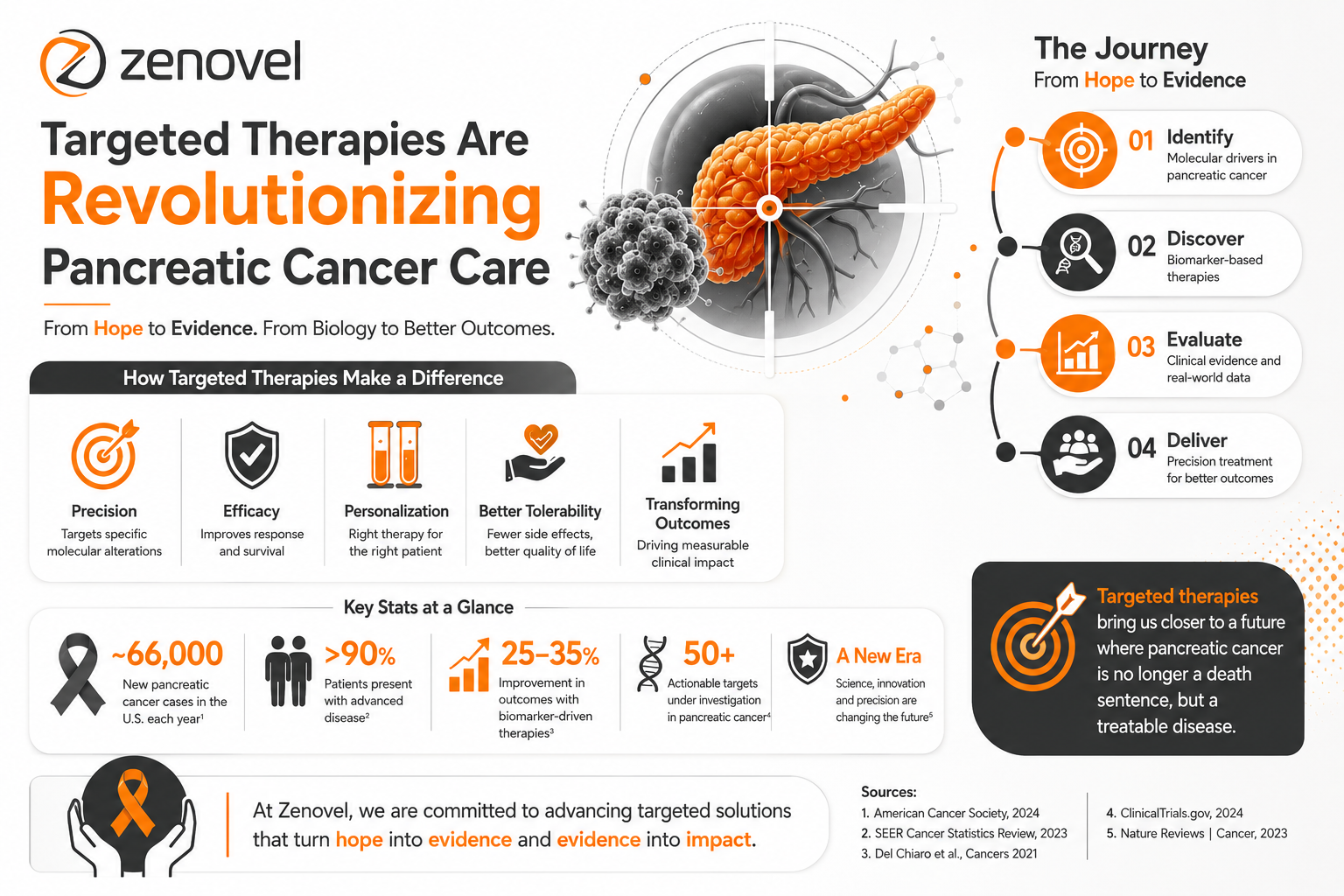
The genetic landscape of pancreatic cancer is primarily characterized by mutations in the KRAS oncogene, present in approximately 90% of cases. Once deemed “undruggable,” research is now revealing potential therapies targeting KRAS. Additionally, other actionable mutations have been identified, including those in BRCA1/2 (5-10% of patients), along with high microsatellite instability (MSI-High) and rare gene fusions such as NRG1, FGFR2, and NTRK, providing pathways for biomarker-driven treatments (1,2).
Transition from Laboratory Discoveries to Tangible Patient Benefits:
Recent clinical trials are demonstrating the efficacy of molecular insights, resulting in tangible benefits for patients.
-
Targeting the KRAS Goliath
The RAS inhibitor daraxonrasib (RMC-6236) has shown strong efficacy against RAS-mutant pancreatic cancer in a Phase 1/2 trial, yielding an objective response rate of 35% and a median overall survival of 15.6 months. These promising results surpass historical outcomes for second-line chemotherapy, leading to its advancement into Phase 3 trials for both metastatic and adjuvant applications (3).
-
Novel Modalities: siRNA and Cell Therapies
Innovative approaches in cancer treatment are showing promise. An implantable siRNA targeting KRAS G12D/G12V mutations suggests potential for improved survival and response in selected patients. Additionally, autologous T cell therapy against various cancer antigens has demonstrated feasibility, safety, and the ability to induce clinical responses, including antigen spreading, where the immune system targets the tumor more broadly (1).
-
The Evolution of Clinical Trials within the Context of Precision Medicine
The shift towards precision oncology is reshaping clinical trial design for pancreatic cancer, utilizing genomic and transcriptomic data to identify predictive biomarkers for personalized treatment. Biomarker-defined trials, particularly those testing combinations of targeted therapies like PARP inhibitors with immunotherapy, are setting a new standard aimed at delivering optimal drugs to patients at the right time (4).
-
The Transformation of Pancreatic Cancer Care
The progress in targeted therapies for pancreatic cancer is promising; however, the challenge remains in expediting the transition from clinical trial results to approved treatments, which requires a strong focus on clinical research compliance.
The transformation of pancreatic cancer care is now an evidence-based reality. Collaborating with Zenovel enables efficient and compliant navigation of the clinical development pathway for targeted therapies, fostering improved patient outcomes.
Contact Zenovel to learn how our GxP services can support your next breakthrough in pancreatic cancer treatment.
Read Full article here : https://zenovel.com/targeted-therapies-are-revolutionizing-the-treatment-landscape-for-pancreatic-cancer-from-hope-to-evidence/