
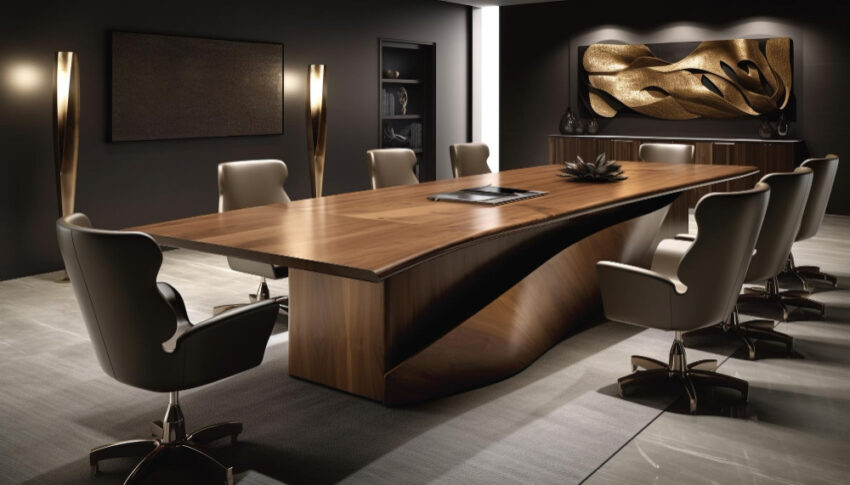
Custom Studio Office Furniture That Works for You
There’s a particular kind of frustration that comes with furnishing a serious workspace. You browse catalogs. You measure twice, maybe three times. You try to convince yourself that the standard 60-inch desk will work, that the pre-configured workstation layout will feel right once people are actually sitting in it. Then the furniture arrives, and within a week, you already know — it’s close, but it’s not quite right.
That gap between “close enough” and “exactly right” is where a lot of companies quietly bleed productivity, comfort, and brand identity. And it’s entirely avoidable.
Custom studio office furniture isn’t a luxury reserved for tech campuses or high-end law firms. It’s a practical decision for any business that wants its physical space to actually support the way its people work — and reflect who the company is to every client that walks through the door.
Why Standard Furniture Keeps Letting Workplaces Down
The catalog model works on averages. The average team size, the average desk depth, the average traffic flow through an open floor plan. But your office isn’t average — it has its own footprint, its own culture, its own operational quirks that no mass-produced furniture line was designed to address.
Think about the column that sits in an awkward spot right where you need a clean run of workstations. The reception area that’s just a little too narrow for the standard desk options, but too wide to leave without something substantial. The collaboration space that needs seating configurations you’ve never quite been able to pull off with off-the-shelf pieces.
These aren’t edge cases. They’re the reality of almost every real office. And they’re exactly the kind of challenges that a custom studio process is built to solve.
What the Co-Design Process Actually Looks Like
One of the biggest misconceptions about custom studio office furniture is that it means handing a brief to a designer and waiting months for something to materialize. Good custom work doesn’t operate that way.
The real process starts with deep listening. What does your team actually do at their desks? How do people move through the space? Where do informal conversations happen? What materials say something true about your brand, and which ones would feel like a mismatch the moment a client walks in?
This kind of investigation — genuinely studying how end users behave in a space — is what separates furniture that looks great in a rendering from furniture that works brilliantly for years. The co-design approach brings the client into that process as a collaborator, not just an approver. The result is custom studio office furniture that solves real problems, not imagined ones.
The Details That Actually Drive Performance
There’s a reason designers talk about sweating the small stuff. In furniture, the details aren’t decorative — they’re functional. The radius on a desktop edge affects how long someone can work comfortably. The height of a partition affects acoustic separation and visual privacy. The finish on a surface affects how a room reads under different lighting conditions throughout the day.
With custom office furniture, every one of those decisions is made intentionally, for your specific context. You’re not accepting a tradeoff because that’s just how the product was manufactured. You’re making choices — with guidance from people who’ve spent decades understanding what those choices mean in practice.
That 12-year warranty that serious custom manufacturers stand behind isn’t just a selling point. It’s a signal that the work is built to last, because the materials were chosen with longevity in mind, the manufacturing tolerances were held tightly, and the design itself wasn’t compromised to hit a price point.
First Impressions Are Set Before Anyone Says a Word
Before a client shakes your hand, they’ve already formed an impression. They’ve walked through your door, stood at your reception area, and taken in the environment you’ve created. That moment is doing real work for your brand — or it isn’t.
A Custom reception desk is often the single most visible piece of furniture in an entire office. It sets the tone. It communicates scale, quality, brand personality, and professionalism in one glance. When it’s designed specifically for the space it lives in — with the right proportions, materials, and finish — it reads as intentional. When it’s a standard unit that was the closest available option, it often reads as exactly that.
Custom work at the reception level isn’t about extravagance. It’s about making sure the first thing people see is something that accurately represents what your company stands for.
Sustainability Isn’t an Add-On — It’s Built In
There’s a growing expectation, particularly among US businesses with serious ESG commitments, that the furniture filling their offices is sourced and manufactured responsibly. The good news is that custom studio office furniture and sustainable manufacturing are increasingly the same conversation.
When furniture is designed from scratch for a specific project, waste can be minimized at the pattern-cutting stage. Materials can be selected for recycled content and end-of-life recyclability. Regional manufacturing partnerships reduce transportation emissions and allow for tighter quality control throughout the process. Low-VOC finishes and Greenguard-certified materials protect indoor air quality for the people who spend eight hours a day in those spaces.
This is the kind of thinking that goes into custom work from the outset — not as a retrofit or a marketing talking point, but as a genuine part of how good custom studio office furniture gets made.
Scale Without Losing the Custom Edge
One practical concern businesses raise about going custom is scalability. If you open a second office, or a third, or a fifteenth, can the same furniture be reproduced consistently? With digitally fabricated designs, the answer is yes — and reliably so. Once a piece has been built and refined, it exists as a precise digital asset that can be reproduced with the same tolerances across any number of locations.
This means a growing company doesn’t have to choose between the cohesive brand identity that custom furniture creates and the operational efficiency of scaling nationally. You get both. The custom studio office furniture that defines your flagship office can anchor every location you open.
Ready to Build Something Worth Working In?
If you’ve been settling for furniture that almost works, it’s worth finding out what’s possible when the brief is built around your space and your people. Studio Other’s team of industrial designers and engineers has spent over 25 years designing and building bespoke furniture for companies across the US. No catalog. No compromise.
Visit studioother.com to start the conversation.