
Construction Trades Services That Build Better Spaces
Most conversations about commercial interiors start with the fun stuff — furniture selections, finish palettes, spatial planning, the look and feel of a workplace that people actually want to show up to. That’s understandable. Those are the visible outcomes. But there’s a layer of work that happens before any of that matters, and when it isn’t handled well, every subsequent decision pays the price.
That layer is construction trades services. And for companies across the US that are planning a workplace renovation, building out a new space, or managing a multi-site project, getting this piece right is often the difference between a smooth delivery and a project that never quite comes together the way it was supposed to.
Why Interior Construction Is More Complex Than It Looks
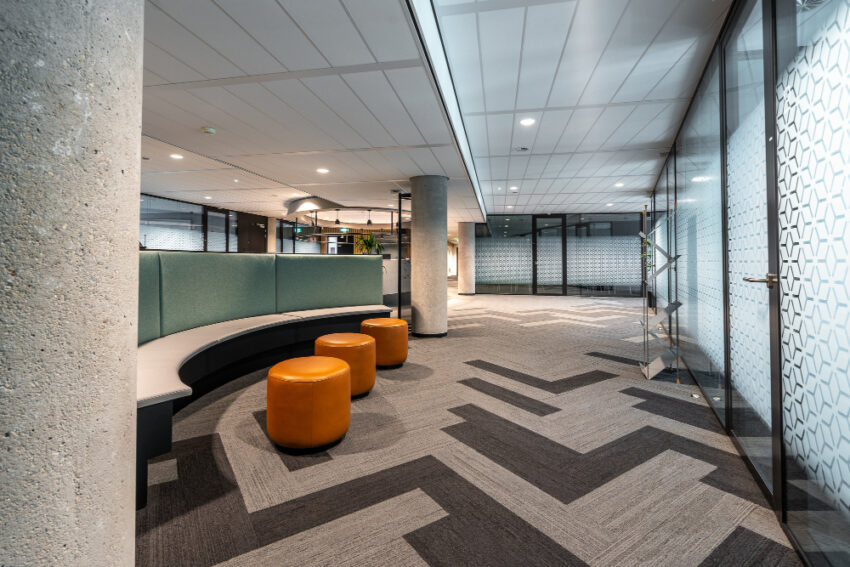
Walk into any well-designed commercial space and the integration looks effortless. Furniture flows. Flooring transitions cleanly. Technology is embedded where it needs to be, not added as an afterthought. Walls, ceilings, and millwork feel like they belong together. That kind of cohesion doesn’t happen by accident — it’s the product of coordinated trades work that was planned and executed with the end user experience in mind from the very beginning.
The challenge for most businesses is that managing construction trades work in isolation from the broader interior design and furniture process creates unnecessary friction. When your GC is running the trades, your designer is specifying furniture, and your AV vendor is doing their own thing, you spend enormous energy managing handoffs, reconciling timelines, and troubleshooting problems that probably wouldn’t have existed if everything had been coordinated under one roof.
This is exactly why integrated construction trades services — offered as part of a holistic interiors solution rather than as a standalone trade — change the way projects actually get built.
What Trades Integration Actually Looks Like
When construction trades are integrated into the broader interior design and project management process, a few things happen that don’t happen when they’re siloed.
First, design decisions inform trades scope from day one. If the furniture plan calls for power at a specific workstation configuration, the rough-in is planned around that configuration, not adjusted after the fact. If flooring transitions are part of the design intent, the substrate prep is coordinated with the flooring installation sequence. These are not complicated things in principle, but they require the trades team and the design team to be working from the same set of goals — which only happens when they’re coordinated together.
Second, timelines align. Construction trades work often drives the critical path of a project. When the trades team is communicating directly with furniture delivery, AV installation, and move management, the schedule becomes a shared document rather than a set of competing calendars. Problems surface earlier. Adjustments happen faster. The end result is a project that installs on time and opens the way it was intended.
Third, accountability lives in one place. When something doesn’t go as planned — and on any real project, something always doesn’t go as planned — it matters enormously whether you have one integrated partner to call or a chain of subcontractors pointing at each other. Integrated construction trades services mean one team owns the outcome.
The Healthcare Environment: Where Trades Precision Matters Most
Healthcare is where the integration of trades work and interior design becomes genuinely critical. A clinical environment isn’t just a commercial office with medical equipment in it. It’s a highly regulated space where the quality and precision of construction work directly affects infection control, patient safety, staff workflow, and regulatory compliance.
Healthcare interior design involves a layer of complexity that most commercial trades teams aren’t equipped to handle independently. Wall construction, flooring systems, ceiling configurations, plumbing rough-ins, and technology integration all carry clinical implications. A flooring seam in the wrong location is not just an aesthetic problem — it’s an infection control risk. A wall assembly that doesn’t meet the appropriate acoustic or hygiene requirements creates compliance exposure.
When construction trades services are delivered by a team that genuinely understands healthcare interior requirements, those issues don’t appear in post-occupancy walk-throughs. They get designed out before the first tool is picked up.
Thinking About Multi-Site Projects
For organizations managing real estate across multiple locations — a retail chain, a professional services firm, a healthcare network, a regional employer — the value of an integrated trades partner compounds significantly. Consistency across locations doesn’t happen by accident. It requires a trades and installation approach that is documented, repeatable, and quality-controlled across every site.
This is particularly relevant for US companies that are either expanding nationally or managing existing portfolios that have accumulated inconsistency over time. A partner that brings construction trades services together with furniture, flooring, and technology under one coordinated process can deliver the kind of consistency that builds genuine brand cohesion — not just in what people see when they walk in, but in how the space performs for the people using it every day.
The Foreman-Level Detail That Separates Good Work From Great Work
There’s something worth saying about the difference between a trades team that shows up and installs to spec and a trades team that brings genuine craft to the work. Details like how a floor transition is finished at a threshold, how millwork seams are handled at corners, how cable management is integrated cleanly into a workstation configuration — these are the things that don’t show up on a specification sheet but define how a finished space actually feels.
The best construction trades work is invisible in the final product. You don’t notice it because it’s right. The flooring goes where it’s supposed to go. The walls are where they’re supposed to be. Everything looks like it was planned and built as a single unified thing. That’s the standard worth holding to.
What to Ask When Evaluating a Trades Partner
If you’re evaluating construction trades partners for an upcoming project — whether it’s a single-office renovation or a multi-site rollout — a few questions cut through the noise quickly. Does this team coordinate directly with the furniture and flooring specification? Do they have documented experience in your sector, whether that’s corporate, healthcare, education, or another environment with specific requirements? Can they deliver consistent quality across multiple locations if your project demands it? And is their project management integrated into a broader delivery ecosystem, or are you going to be managing the handoffs yourself?
The answers to those questions tell you a lot about what your project experience is going to look like.
From Planning to Punch List
At Tangram Interiors, construction trades services are part of a fully integrated approach to creating and maintaining great commercial environments. That means trades work is coordinated with furniture specification, flooring, custom fabrication, move management, and AV technology from the planning phase through final installation — not bolted on at the end or managed as a separate track.
The goal is always the same: a space that works the way it was designed to work, on time, and built to last.
Ready to talk about your next project? Visit tangraminteriors.com to connect with the team.