
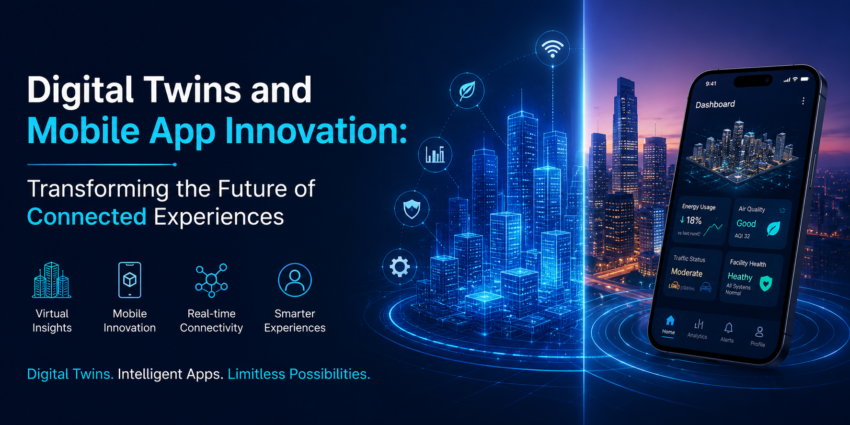
Technology is evolving faster than ever, and businesses are constantly searching for smarter ways to improve operations, enhance customer experiences, and make data-driven decisions. One innovation that is rapidly gaining attention across industries is digital twin technology. Once primarily used in manufacturing and engineering, digital twins are now transforming the way organizations build and use mobile applications.
A digital twin is a virtual representation of a physical object, system, process, or environment that continuously receives real-time data from its real-world counterpart. By combining sensors, IoT devices, artificial intelligence, cloud computing, and analytics, digital twins provide a dynamic view of assets and operations.
Today, mobile app innovation is increasingly driven by real-time insights and intelligent automation. Businesses want applications that do more than display information—they want apps that can predict problems, optimize performance, and deliver personalized experiences. This is where digital twins create tremendous value.
Organizations across healthcare, manufacturing, logistics, retail, and real estate are investing heavily in digital twin-powered mobile applications to improve efficiency and gain a competitive edge. Partnering with an experienced mobile app development company can help businesses successfully adopt this technology and unlock new opportunities for growth.
What Is Digital Twin Technology?
Understanding the Concept of Digital Twins
Digital twin technology refers to the creation of a virtual model that mirrors a physical object or system in real time. The digital replica continuously updates using data collected from sensors and connected devices.
The core components of a digital twin include:
- Physical asset or environment
- Sensors and connected devices
- Data communication systems
- Analytics and AI engines
- Visualization interfaces
Unlike static models, digital twins evolve continuously, reflecting current conditions and performance metrics.
For example, a smart manufacturing machine can have a digital twin that monitors temperature, energy consumption, and productivity levels through a mobile application.
How Digital Twins Work
Digital twins operate through a combination of technologies that work together seamlessly.
Data Collection
Sensors gather operational data from physical assets.
IoT Integration
Connected devices transmit information to cloud platforms.
Real-Time Synchronization
The virtual model updates instantly as conditions change.
Predictive Analytics
AI algorithms analyze patterns and forecast future outcomes.
The result is a powerful ecosystem that allows businesses to monitor, simulate, and optimize operations directly from smart mobile applications.
The Evolution of Mobile Applications Through Digital Twins
From Static Apps to Intelligent Experiences
Traditional mobile apps primarily focused on information access and task completion. Modern applications are becoming intelligent ecosystems capable of analyzing, predicting, and responding to real-world conditions.
Digital twins are accelerating this shift by enabling real-time interaction between physical and digital environments.
Why Mobile Apps Need Real-Time Intelligence
Consumers and businesses increasingly expect instant insights. Delayed information can lead to inefficiencies, downtime, and poor user experiences.
Digital twin-powered apps provide:
- Live monitoring
- Immediate alerts
- Predictive recommendations
- Remote control capabilities
These features make mobile apps significantly more valuable and impactful.
The Role of AI, IoT, and Cloud Computing
Digital twins rely heavily on interconnected technologies.
AI processes data and generates predictions.
IoT devices provide continuous streams of information.
Cloud platforms store and process large datasets.
Together, they create intelligent mobile ecosystems that support digital transformation initiatives across industries.
Key Benefits of Digital Twins in Mobile App Development
Enhanced User Experiences
Digital twins allow applications to provide highly personalized experiences based on real-time conditions.
Users receive relevant insights, recommendations, and updates that improve engagement and satisfaction.
Real-Time Monitoring and Control
Organizations can monitor equipment, facilities, and operations remotely through mobile devices.
This level of visibility improves responsiveness and operational management.
Predictive Maintenance and Analytics
Instead of reacting to failures, businesses can predict and prevent them.
For example, industrial equipment can notify technicians through a mobile app before a component fails.
Improved Operational Efficiency
Digital twins help identify inefficiencies, optimize workflows, and reduce downtime.
Companies can improve productivity while lowering operational costs.
Better Decision-Making Through Data Insights
Executives and managers gain access to actionable insights that support faster and more accurate decisions.
This makes digital twins a valuable tool for enterprise mobile apps and business intelligence initiatives.
Industries Benefiting from Digital Twin-Powered Mobile Apps
Healthcare and Remote Patient Monitoring
Healthcare providers use digital twins to monitor patient conditions remotely.
Wearable devices collect health data that feeds into mobile applications, allowing doctors to track vital signs and predict potential health risks.
For example, hospitals can monitor cardiac patients in real time and intervene before serious complications occur.
Manufacturing and Smart Factories
Manufacturers use digital twins to monitor machinery, optimize production lines, and predict equipment failures.
A factory manager can access live operational data through a mobile app and immediately address issues before they impact productivity.
Real Estate and Smart Buildings
Property managers use digital twin technology to monitor energy consumption, HVAC systems, and building performance.
Mobile applications provide real-time building insights, improving maintenance and reducing costs.
Automotive and Connected Vehicles
Modern vehicles generate massive amounts of data.
Digital twins help manufacturers and drivers monitor vehicle health, fuel efficiency, battery performance, and maintenance requirements through mobile apps.
Electric vehicle companies are already leveraging these capabilities extensively.
Retail and Customer Experience Management
Retailers use digital twins to understand customer behavior, optimize store layouts, and manage inventory.
Mobile applications connected to digital twins provide valuable insights that improve shopping experiences and operational efficiency.
Logistics and Supply Chain Tracking
Supply chain visibility has become a major business priority.
Digital twins help organizations track shipments, monitor warehouse operations, and optimize transportation routes.
Real-time data applications ensure faster deliveries and better customer satisfaction.
How AI and Digital Twins Are Revolutionizing Mobile Innovation
Predictive Intelligence
AI analyzes historical and real-time data to forecast outcomes.
Businesses can anticipate equipment failures, customer demand fluctuations, and operational challenges before they occur.
Personalized User Experiences
AI-powered mobile apps use digital twin data to customize recommendations and interactions.
This creates more engaging and relevant user experiences.
Automated Decision-Making
Advanced algorithms can automatically adjust settings, allocate resources, or trigger actions based on changing conditions.
This reduces manual intervention and improves efficiency.
Real-Time Performance Optimization
AI continuously evaluates system performance and recommends improvements.
As a result, smart mobile applications become more adaptive and responsive over time.
Essential Technologies Behind Digital Twin Mobile Applications
Internet of Things (IoT)
IoT devices collect and transmit data from physical assets.
Without IoT connectivity, digital twins cannot function effectively.
Artificial Intelligence and Machine Learning
AI and machine learning transform raw data into meaningful insights and predictions.
Cloud Computing
Cloud infrastructure enables large-scale data storage and processing.
It supports real-time synchronization across multiple devices and systems.
Edge Computing
Edge computing processes data closer to the source, reducing latency and improving responsiveness.
This is especially important for time-sensitive applications.
Augmented Reality (AR)
AR enhances digital twin visualization by allowing users to interact with virtual models in real-world environments.
Big Data Analytics
Large datasets generated by connected devices require sophisticated analytics platforms to uncover valuable insights.
Challenges of Implementing Digital Twins in Mobile Apps
Data Security and Privacy
Real-time data collection creates security concerns.
Businesses should implement encryption, secure APIs, and strong access controls.
High Development Costs
Developing digital twin applications requires investment in infrastructure, software, and expertise.
Working with an experienced mobile app development company helps reduce risks and maximize ROI.
Integration Complexity
Many organizations operate with legacy systems.
Successful implementation requires seamless integration between existing platforms and new technologies.
Scalability Issues
As data volumes increase, applications must scale efficiently.
Cloud-native architectures provide flexibility and performance.
Managing Real-Time Data Streams
Processing continuous data streams can be challenging.
Businesses should adopt modern data pipelines and automation tools to ensure reliability.
How a Mobile App Development Company Can Build Digital Twin Solutions
Requirement Analysis and Strategy
The development process begins with identifying business objectives, assets, and operational requirements.
Designing User-Centric Experiences
A successful application must provide intuitive dashboards, insights, and controls.
User experience remains critical to adoption.
IoT and AI Integration
Integrating sensors, connected devices, and AI models creates the foundation for intelligent digital twin applications.
Real-Time Data Architecture
A robust architecture ensures data flows efficiently between physical systems and mobile platforms.
Continuous Monitoring and Maintenance
Digital twin ecosystems require ongoing monitoring, updates, and optimization.
As a trusted mobile app development company, Esferasoft Solutions helps organizations design, build, and maintain advanced digital twin applications tailored to their unique business needs. Through expertise in AI-powered mobile apps, IoT mobile solutions, and enterprise mobility, Esferasoft Solutions enables businesses to accelerate innovation and achieve measurable results.
Future Trends in Digital Twins and Mobile App Innovation
AI-Driven Autonomous Twins
Future digital twins will become increasingly autonomous, making decisions with minimal human intervention.
5G-Powered Real-Time Experiences
The expansion of 5G networks will enable faster communication and lower latency.
This will dramatically improve real-time digital twin applications.
Smart Cities and Urban Management
Governments are investing in digital twins to manage infrastructure, traffic systems, utilities, and public services.
Mobile applications will serve as key interfaces for city management.
AR-Based Digital Twin Visualization
AR experiences will make digital twins more interactive and accessible.
Users will visualize complex systems directly through smartphones and wearable devices.
Industry 5.0 and Hyperautomation
Industry 5.0 focuses on collaboration between humans and intelligent technologies.
Digital twins will play a central role in hyperautomated environments across industries.
By 2026 and beyond, digital twin adoption is expected to accelerate significantly as businesses seek greater efficiency, agility, and innovation.
Why Businesses Should Invest in Digital Twin Mobile Apps Today
Digital twin-powered mobile applications offer substantial business advantages:
- Stronger competitive positioning
- Increased operational efficiency
- Enhanced customer experiences
- Faster innovation cycles
- Improved scalability
- Better risk management
- More accurate decision-making
Organizations that invest early will be better positioned to capitalize on emerging opportunities and evolving market demands.
Conclusion
Digital twin technology is reshaping the future of mobile app innovation by creating intelligent, data-driven, and highly interactive digital experiences. From healthcare and manufacturing to retail and logistics, businesses are discovering new ways to leverage real-time insights and predictive intelligence through mobile applications.
As demand for smart mobile applications continues to grow, digital twins will become an essential component of modern digital transformation strategies. Companies that embrace this technology today can improve operational efficiency, enhance customer experiences, and unlock new sources of value.
Partnering with a trusted mobile app development company is critical for successful implementation. With deep expertise in digital twin technology, AI-powered mobile apps, IoT mobile solutions, and enterprise mobility, Esferasoft Solutions helps businesses build innovative applications that drive measurable outcomes and long-term growth.
If your organization is ready to embrace the next generation of connected experiences, now is the perfect time to explore digital twin-powered mobile solutions and transform the way you innovate.
Frequently Asked Questions (FAQs)
FAQ 1: What is a digital twin in mobile app development?
A digital twin is a virtual replica of a physical asset, system, or process that receives real-time data and provides insights through mobile applications.
FAQ 2: How do digital twins improve mobile app performance?
They enable real-time monitoring, predictive analytics, automation, and personalized user experiences, making applications more intelligent and responsive.
FAQ 3: Which industries benefit most from digital twin technology?
Healthcare, manufacturing, automotive, logistics, retail, real estate, and smart city initiatives are among the biggest beneficiaries.
FAQ 4: How does AI enhance digital twin applications?
AI analyzes real-time data, predicts outcomes, automates decisions, and continuously optimizes performance.
FAQ 5: What are the challenges of implementing digital twins in mobile apps?
Common challenges include security concerns, integration complexity, scalability requirements, development costs, and managing large volumes of real-time data.
FAQ 6: Can small businesses benefit from digital twin-powered mobile applications?
Yes. Small businesses can use digital twins to improve efficiency, monitor assets, reduce costs, and gain actionable insights.
FAQ 7: How much does it cost to build a digital twin mobile app?
Costs vary depending on complexity, integrations, data requirements, AI capabilities, and infrastructure needs. A professional mobile app development company can provide customized estimates.
FAQ 8: Why choose Esferasoft Solutions for digital twin app development?
Esferasoft Solutions combines expertise in AI, IoT, cloud technologies, and mobile development to deliver scalable, secure, and innovative digital twin applications tailored to business objectives.