
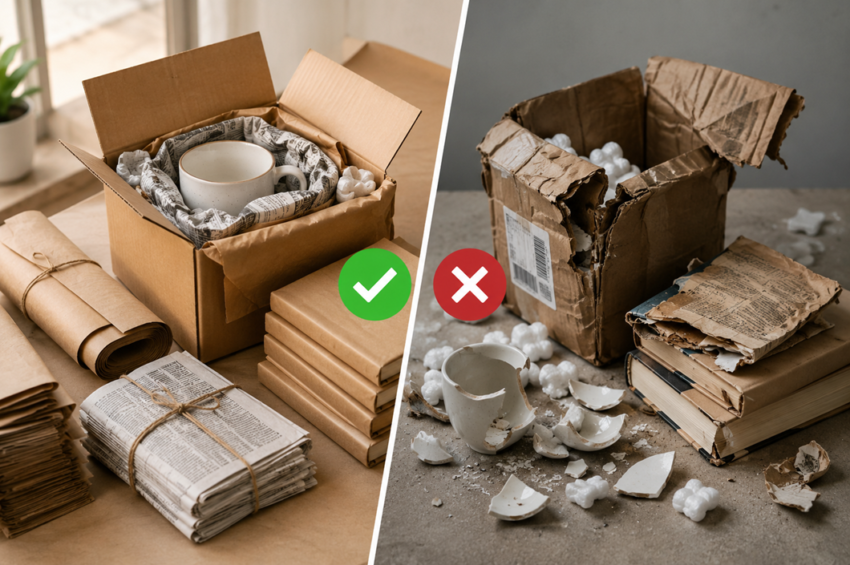
Most businesses have experienced it at some point. A customer opens a parcel and sends a photo of a crushed corner, a scratched surface, or a damaged product that looked perfectly fine when it left the warehouse. It’s frustrating because the product itself is rarely the problem. More often than not, the issue comes down to packaging.
The truth is that product protection is built in layers. A sturdy outer wrap, the right cushioning inside the box, and secure sealing all help a parcel survive its journey. Whether a package is travelling across town or across the country, every stage of handling puts it under pressure. That’s why choosing suitable packaging materials matters far more than many people realise.
Why Is Product Protection More Important Than Ever?
Today, a parcel goes through a lot before reaching its destination. It may be loaded onto multiple vehicles, stacked beneath heavier boxes, or moved through busy sorting hubs. Even careful handling cannot eliminate every bump and knock along the way.
That is why experienced packers think about protection from the outside in.
A well-protected parcel usually includes:
- An outer layer that shields against wear and tear
- Internal materials that stop products from shifting
- Strong sealing that keeps everything secure
Miss one of those elements and the risk of damage increases significantly.
What Makes a Good Outer Layer?
Brown Parcel Paper
Despite all the modern packaging options available today, brown parcel paper remains one of the most widely used materials in shipping.
There is a reason it has stood the test of time. It is reliable, easy to use, and suitable for a huge range of products. Walk into a busy stockroom, and you will still find rolls of brown paper being used every day.
It is particularly useful for:
- Wrapping cartons before dispatch
- Protecting retail packaging
- Reducing surface scuffs during transport
Many small retailers prefer it because it creates a neat, professional finish without adding unnecessary bulk.
Corrugated Book Wraps
Anyone who sells books online will tell you the same thing: customers notice damaged corners immediately.
That is exactly why book wraps exist.
Unlike a standard box, a book wrap is designed around the shape of the item itself. The corrugated structure helps absorb knocks while holding the contents firmly in place.
They are commonly used for:
- Books
- Magazines
- Printed catalogues
For publishers and independent booksellers, they remain one of the most practical ways to reduce transit damage.
What Stops Products from Moving Around Inside the Box?
Newspaper Offcuts
One of the simplest forms of protection is often one of the most effective. Newspaper offcuts are frequently used to fill empty spaces inside a parcel.
If you’ve ever opened a package and found the contents rattling around inside, you’ll understand why void fill matters.
Newspaper offcuts help to:
- Limit movement
- Cushion products
- Fill awkward gaps
They are especially useful when packing items of different shapes that don’t sit neatly inside a box.
Paper Cushioning
Paper cushioning is often chosen when protection and presentation need to work together.
You will frequently see it used with:
- Clothing
- Handmade products
- Gift items
Many online businesses favour paper cushioning because it feels both thoughtful and practical.
Which Materials Help Protect Delicate Surfaces?
Parcel Wrap
Some products are not particularly fragile, but they can still be marked or scratched during transit. This is where parcel wrap comes into its own.
It creates a protective layer around the product before it is packed into the outer carton.
Businesses regularly use it for:
- Finished retail goods
- Decorative products
- Boxed items
It is often combined with other protective materials to create an additional layer of reassurance during shipping.
Foam Sheets
Foam sheets are commonly chosen when products have surfaces that need extra care.
They work particularly well for:
- Electronics
- Glassware
- Decorative pieces
Because the material sits directly against the product, it helps reduce the risk of rubbing or scratching during transit.
Why Is Sealing Often Overlooked?
Many packing problems do not start with the box or the cushioning. They start when a carton opens during transit. Packaging tape is often the final layer of protection that keeps a parcel secure throughout its journey. Popular options include polypropylene tape for everyday carton sealing, vinyl tape for heavier boxes, fragile printed tape for handling instructions, low-noise tape for warehouse environments, and paper tape for recyclable packaging solutions.
Reliable tape helps:
- Keep cartons closed
- Reinforce packaging strength
- Protect products throughout their journey
Warehouse teams often say that great packaging can be undone by poor sealing. It sounds obvious, but it remains one of the most common causes of avoidable problems.
|
Material |
Primary Purpose |
Best Used For |
|
Brown Parcel Paper |
Outer wrapping and surface protection |
Retail parcels, gift packaging, general shipping |
|
Book Wraps |
Structured protection for printed materials |
Books, magazine, catalogues |
|
Newspaper offcuts |
Void filling and cushioning |
Filling empty spaces inside cartons |
|
Paper Cushioning |
Protection and presentation |
Clothing, gifts, handmade products |
|
Parcel Wrap |
Surface protection |
Boxed goods, decorative items, retail products |
|
Foam Sheets |
Scratch and impact protection |
Electronics, glassware, fragile items |
|
Packaging Tape |
Sealing Cartons |
Everyday parcel dispatch |
|
Fragile Printed Tape |
Security and handling instructions |
Delicate products |
|
Reinforced Tape |
Extra-strength sealing |
Heavy cartons and bulk shipments |
|
Polypropylene Tape |
General-purpose carton sealing |
Warehouses and e-commerce packing |
|
Low-Noise Tape |
Quieter packing operations |
Offices, fulfilment centres, warehouses |
Final Thoughts
A single material rarely protects the safest parcels. Good packaging works because several layers work together. Brown parcel paper helps shield the outside, newspaper offcuts reduce movement, parcel wrap protects surfaces, and book wraps provide targeted protection for printed materials. Add reliable sealing to the mix, and you have a packaging system designed to handle the realities of modern delivery networks. In the end, the difference between delivered and damaged often comes down to the decisions made at the packing bench long before the parcel leaves the building.