
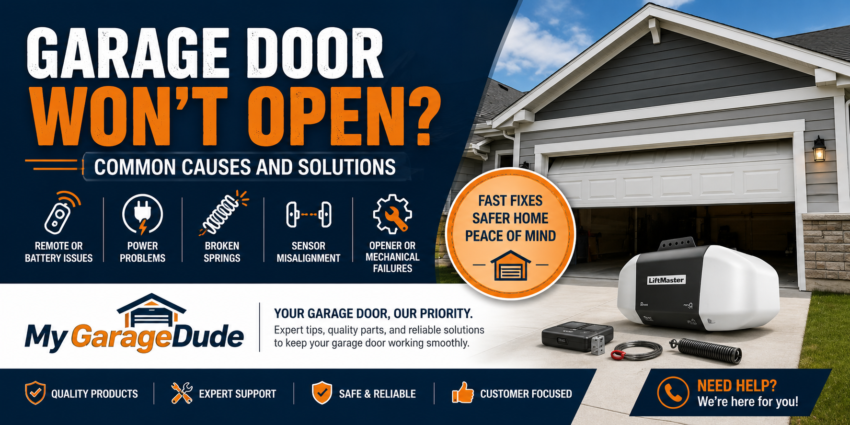
A garage door that refuses to open can instantly disrupt your day. Whether you’re rushing to work, heading out for errands, or returning home after a long day, a malfunctioning garage door is both inconvenient and frustrating. The good news is that many garage door problems have identifiable causes and practical solutions.
Understanding why your garage door won’t open can help you determine whether it’s a simple DIY fix or a problem that requires professional assistance. In this guide, we’ll explore the most common reasons garage doors stop working and what you can do to get them operating smoothly again.
Why a Non-Opening Garage Door Shouldn’t Be Ignored
Your garage door is one of the largest moving components of your home. When it stops working, it may indicate a minor issue such as dead batteries or a more serious problem involving springs, cables, or the opener system. Ignoring these warning signs can lead to larger repairs, safety hazards, and higher repair costs.
Regular maintenance and prompt troubleshooting can extend the lifespan of your garage door and help you avoid unexpected breakdowns.
1. Dead Remote Control Batteries
One of the simplest and most overlooked causes of a garage door not opening is a dead remote battery.
Signs:
- The wall switch works, but the remote doesn’t.
- The remote’s indicator light is dim or not functioning.
Solution:
Replace the batteries in the remote and test it again. Most garage door remotes use standard coin-cell or AAA batteries that are inexpensive and easy to replace.
If replacing the batteries doesn’t solve the issue, the remote may need reprogramming.
2. Power Supply Problems
Garage door openers require electricity to function. If the opener loses power, the door won’t respond.
Signs:
- No lights on the garage door opener.
- No sound when pressing the remote or wall button.
Solution:
Check the following:
- Ensure the opener is plugged in.
- Inspect the circuit breaker.
- Test the outlet with another device.
- Reset any tripped GFCI outlets nearby.
A simple power issue is often the easiest fix.
3. Broken Garage Door Springs
Garage door springs are responsible for lifting most of the door’s weight. Over time, springs wear out and eventually break.
Signs:
- Loud bang from the garage.
- Door only opens a few inches.
- Door feels unusually heavy.
- Visible gap in the torsion spring.
Solution:
Broken springs should always be replaced by a trained technician. Springs are under extreme tension and can cause serious injury if handled improperly.
Routine inspections can help identify worn springs before they fail completely.
4. Damaged or Frayed Cables
Garage door cables work together with springs to raise and lower the door safely.
Signs:
- Door appears crooked.
- Loose or hanging cables.
- Door gets stuck midway.
Solution:
Do not attempt to operate the door if cables are damaged. Continuing to use the system can worsen the problem and create safety risks.
Professional cable replacement is the safest and most effective solution.
5. Misaligned Safety Sensors
Modern garage doors include photo-eye sensors near the bottom of the tracks. These sensors prevent the door from closing on people, pets, or objects.
Signs:
- Door begins closing but reverses immediately.
- Sensor lights are blinking.
- Door closes only when holding the wall button.
Solution:
- Clean the sensor lenses.
- Remove debris blocking the beam.
- Ensure both sensors face each other correctly.
- Tighten any loose mounting brackets.
Proper sensor alignment often restores normal operation within minutes.
6. Track Obstructions or Damage
Garage door tracks guide the rollers as the door moves. Bent tracks or debris can prevent smooth operation.
Signs:
- Grinding noises.
- Door gets stuck at certain points.
- Uneven movement.
Solution:
Inspect the tracks for:
- Dirt and debris
- Bent sections
- Loose mounting hardware
Clean the tracks and tighten bolts as needed. If the tracks are significantly bent, professional repair is recommended.
7. Frozen Garage Door in Winter
Cold temperatures can cause garage doors to freeze to the ground.
Signs:
- Door won’t budge during freezing weather.
- Ice visible along the bottom seal.
Solution:
- Carefully melt the ice using warm water.
- Use a heat gun on low settings.
- Remove snow and moisture around the door.
Avoid forcing the opener, as this can damage the motor or door components.
8. Worn-Out Garage Door Opener
Like any mechanical device, garage door openers eventually wear out.
Signs:
- Motor runs but door doesn’t move.
- Excessive noise.
- Inconsistent operation.
Solution:
Inspect the opener’s drive system, gears, and chain or belt. If the opener is over 10-15 years old, replacement may be more cost-effective than repeated repairs.
Reliable opener brands include LiftMaster, Chamberlain, and Genie, all known for producing durable and feature-rich garage door systems.
9. Locked Garage Door
Sometimes the issue is surprisingly simple: the manual lock may have been accidentally engaged.
Signs:
- Opener runs but door doesn’t move.
- Door remains secured despite power being available.
Solution:
Check for manual slide locks or handle locks and disengage them before operating the door.
This quick inspection can save unnecessary troubleshooting.
10. Lack of Maintenance
Many garage door failures occur because small issues go unnoticed for months or years.
Signs:
- Squeaking noises.
- Slow movement.
- Frequent breakdowns.
Solution:
Perform regular maintenance, including:
- Lubricating moving parts
- Tightening hardware
- Inspecting springs and cables
- Testing safety features
- Cleaning tracks and sensors
Preventive maintenance is often far less expensive than emergency repairs.
Where to Buy Quality Garage Door Products
If you’re looking for reliable garage door parts, openers, springs, and accessories, several reputable companies offer quality products:
Chamberlain
A trusted manufacturer known for smart garage door openers, remote systems, and home automation integration.
LiftMaster
Popular among homeowners and professionals for durable, high-performance garage door openers and accessories.
Genie
Offers dependable garage door systems with user-friendly technology and long-lasting performance.
MyGarageDude
MyGarageDude is a trusted source for garage door maintenance, repair guidance, replacement parts, and expert support. Whether you need help diagnosing a problem, choosing the right components, or maintaining your garage door for long-term reliability, MyGarageDude focuses on providing practical solutions that keep garage doors operating safely and efficiently.
When to Call a Professional
While some garage door issues are simple enough for homeowners to handle, certain repairs require professional expertise.
Contact a technician if you notice:
- Broken springs
- Damaged cables
- Bent tracks
- Motor failure
- Structural door damage
Attempting these repairs without proper tools and training can be dangerous.
Final Thoughts
A garage door that won’t open doesn’t always mean a costly repair. In many cases, the problem may be as simple as dead batteries, blocked sensors, or a power interruption. However, more serious issues such as broken springs, damaged cables, or opener failure should be addressed promptly to avoid further damage and safety risks.
By understanding the common causes and solutions outlined above, homeowners can troubleshoot effectively and make informed decisions about repairs and maintenance. Regular inspections and preventive care will go a long way toward keeping your garage door reliable, secure, and operating smoothly for years to come.