
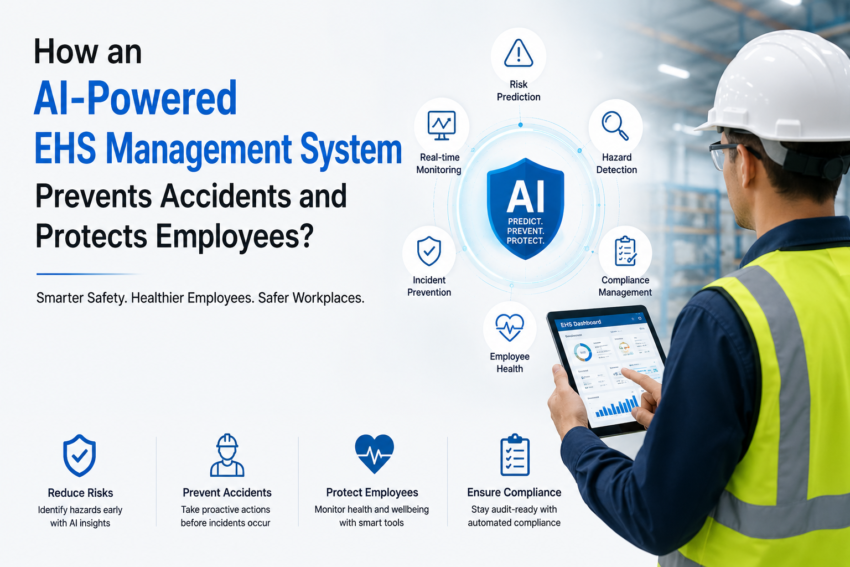
Workplace safety has become one of the most important priorities for organizations across industries. Whether in manufacturing, construction, healthcare, logistics, oil and gas, or corporate offices, protecting employees is essential for maintaining productivity, meeting regulatory requirements, and building a positive work culture. However, relying on manual safety processes often leads to delayed reporting, overlooked hazards, and inconsistent compliance.
This is where an EHS Management System powered by Artificial Intelligence makes a significant difference. By combining automation, predictive analytics, and real-time monitoring, AI helps organizations identify potential risks before they become serious incidents. When integrated with Workplace Safety Software, Employee Health Software and modern Safety Software, businesses can create a proactive safety culture that protects employees and supports long-term operational success.
In this blog, we’ll explore how AI-powered EHS Management Systems are transforming workplace safety and reducing accidents across industries.
What Is an AI-Powered EHS Management System?
An EHS Management System is a digital platform that helps organizations manage environmental, health, and safety processes from a single location. It streamlines activities such as incident reporting, inspections, audits, compliance tracking, risk assessments, employee training, and corrective actions.
When enhanced with AI, the system becomes more intelligent by analyzing large volumes of safety data, recognizing patterns, and providing predictive insights. Instead of reacting to incidents after they occur, organizations can take preventive action before accidents happen.
This proactive approach helps businesses improve employee safety while reducing operational risks.
Why Traditional Safety Management Is No Longer Enough?
Many organizations still rely on spreadsheets, paper checklists, and manual reporting systems to manage workplace safety. While these methods may work on a small scale, they often create challenges such as:
- Delayed hazard reporting
- Human error in recordkeeping
- Limited visibility into safety trends
- Slow response to incidents
- Difficulty maintaining regulatory compliance
As workplaces become more complex, businesses need smarter solutions that provide real-time insights and automate repetitive safety tasks.
An AI-powered Safety Software solution addresses these challenges effectively.
How AI Prevent Workplace Accidents?
1. Identifies Risks Before They Become Incidents:
One of the greatest strengths of AI is predictive analytics.
An AI-powered EHS Management System continuously analyzes information from inspections, incident reports, equipment records, and employee observations.
It can identify patterns such as:
- Frequently reported hazards
- High-risk work areas
- Equipment prone to failure
- Unsafe work behaviors
- Recurring compliance issues
Instead of waiting for an accident to occur, safety managers receive alerts that enable them to take corrective action early.
This significantly reduces workplace incidents.
2. Enables Real-Time Hazard Reporting:
Employees are often the first to notice unsafe conditions.
Modern Workplace Safety Software allows workers to report hazards instantly using mobile devices.
Reports may include:
- Photos
- Videos
- GPS locations
- Voice notes
- Hazard descriptions
AI automatically categorizes reports based on severity and assigns them to the appropriate personnel.
Faster reporting means faster resolution, reducing the likelihood of accidents.
3. Improves Incident Investigation:
Every workplace incident provides valuable lessons.
AI-powered EHS Management Systems help organizations investigate incidents by analyzing:
- Root causes
- Historical trends
- Similar previous incidents
- Corrective actions
- Risk factors
Rather than treating each incident as an isolated event, AI identifies recurring issues that require long-term improvements.
This supports continuous workplace safety enhancement.
Supporting Employee Health Through Intelligent Monitoring
Employee well-being extends beyond accident prevention.
Modern Employee Health Software integrated with an EHS Management System helps organizations monitor workforce health by tracking:
- Medical examinations
- Fitness assessments
- Vaccination records
- Occupational illnesses
- Health surveillance schedules
AI can identify employees requiring follow-up assessments or preventive care.
This proactive approach helps reduce absenteeism and supports healthier workplaces.
Strengthening Occupational Health Services
Organizations increasingly rely on Occupational Health Services to protect employees exposed to physical, chemical, or environmental hazards.
AI-powered systems simplify occupational health management by:
- Scheduling medical surveillance
- Monitoring exposure history
- Tracking health assessments
- Managing return-to-work programs
- Identifying long-term health trends
By connecting occupational health data with workplace safety information, businesses gain a more complete understanding of employee well-being.
Automating Safety Compliance
Maintaining compliance with health and safety regulations can be challenging, especially for organizations operating across multiple locations.
An AI-powered Safety Software platform automates compliance by:
- Monitoring regulatory requirements
- Scheduling inspections
- Tracking audit findings
- Managing corrective actions
- Sending compliance reminders
Automation reduces administrative workload while helping organizations stay audit-ready throughout the year.
Enhancing Employee Engagement in Safety
Building a strong safety culture requires active employee participation.
AI-powered Workplace Safety Software encourages engagement through features such as:
- Easy hazard reporting
- Digital safety checklists
- Mobile inspections
- Training reminders
- Safety observations
- Real-time feedback
When employees can easily participate in safety programs, they become more aware of workplace risks and contribute to accident prevention.
A culture of shared responsibility leads to safer workplaces.
Data-Driven Decision Making
Safety leaders need accurate information to make informed decisions.
AI-powered EHS Management Systems generate dashboards and reports that provide insights into:
- Incident frequency
- Near-miss reporting
- Risk levels
- Training completion
- Inspection performance
- Corrective action status
Instead of relying on assumptions, organizations can prioritize safety initiatives based on real operational data.
This improves both safety performance and resource allocation.
Key Benefits for Organizations
Implementing an AI-powered EHS Management System offers numerous business advantages.
Improved Workplace Safety:
Predictive analytics help prevent accidents before they occur.
Better Employee Health:
Integration with Employee Health Software supports proactive health monitoring and early intervention.
Stronger Compliance:
Automated workflows simplify regulatory compliance and audit preparation.
Faster Incident Response:
Real-time reporting accelerates hazard resolution.
Enhanced Operational Efficiency:
Automation minimizes manual work and improves decision-making.
The Future of AI in Workplace Safety
Artificial Intelligence continues to reshape occupational safety.
Future innovations are expected to include:
- AI-powered video analytics for unsafe behavior detection
- Smart wearable devices for worker monitoring
- Predictive maintenance of safety equipment
- Digital twins for workplace risk simulation
- Voice-enabled safety assistants
These technologies will enable organizations to prevent more incidents while improving employee well-being.
Conclusion
Protecting employees requires more than responding to workplace incidents—it requires preventing them before they occur. An AI-powered EHS Management System empowers organizations to move from reactive safety management to proactive risk prevention through intelligent automation, predictive analytics, and real-time monitoring.
When combined with Workplace Safety Software, Employee Health Software, Occupational Health Services, and advanced Safety Software, businesses can create safer work environments, strengthen compliance, improve employee well-being, and reduce operational risks.
As workplaces continue to evolve, investing in an AI-powered EHS Management System is not just a technology upgrade—it is a strategic commitment to protecting people, improving productivity, and building a resilient safety culture for the future.