
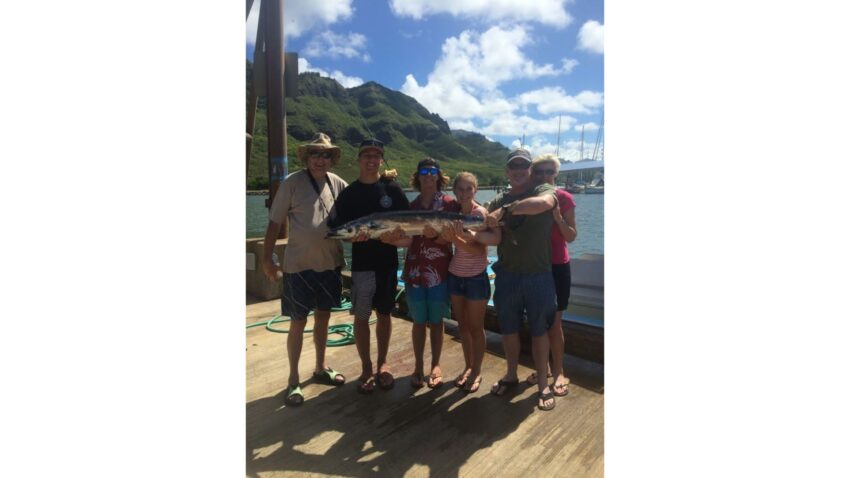
Your fishing day on Kauai begins long before the boat leaves the harbor. Wind, ocean currents, and water temperature quietly shape every trip. Knowing how these natural patterns work helps you enjoy yellow fin tuna fishing in Hawaii with greater confidence and realistic expectations.
Why Do Hawaii’s Northeast Trade Winds Matter So Much?
The northeast trade winds are one of the biggest weather patterns affecting fishing around Kauai. They blow across the islands through much of the year and influence wave height, boat comfort, offshore travel, and even where yellowfin tuna gather.
On lighter trade wind days, your captain can comfortably reach productive offshore waters. When the winds become stronger, rougher seas may develop on some routes, making longer runs less comfortable for families, first-time visitors, and younger anglers.
When you join a local charter, you are not simply heading offshore. You are stepping into an environment that changes every day. That is why yellow fin tuna fishing in Hawaii depends on skilled captains who understand Kauai’s weather, ocean conditions, and seasonal fish movements.
Rather than canceling every windy trip, experienced Kauai charter captains often adjust fishing locations. They may fish on more protected sides of the island or select productive grounds that offer safer conditions without reducing the excitement of the experience.
How Do Ocean Currents Help Yellowfin Tuna?
Offshore waters around Kauai are shaped by changing ocean currents, warm blue water, offshore eddies, and natural current breaks. These moving water masses gather baitfish into productive feeding zones, making them attractive hunting grounds for yellowfin tuna and other pelagic species.
Current breaks form where different water masses meet. Along these natural edges, baitfish, squid, and flying fish often concentrate. Experienced Kauai captains closely watch these changing offshore conditions because yellowfin tuna regularly patrol these areas in search of easy meals.
Water temperature also plays an important role. Slight changes in sea surface temperature can influence where bait gathers, and yellowfin often follow those food sources. By reading temperature charts alongside current patterns, captains can make informed decisions before leaving the harbor.
What Conditions Usually Bring Better Tuna Opportunities?
Successful yellowfin tuna fishing depends on several ocean conditions working together rather than one single factor. Experienced captains monitor weather forecasts, offshore temperatures, current movement, bait activity, and sea conditions before deciding where to fish.
|
Offshore Condition |
Why It Matters for Yellowfin Tuna |
|
Light to moderate northeast trade winds |
More comfortable rides and better access to offshore grounds |
|
Current edges and offshore eddies |
Gather baitfish that attract feeding tuna |
|
Temperature breaks |
Often mark productive feeding areas where bait concentrates |
|
Active bait schools |
Increase opportunities to locate feeding pelagic fish |
|
Favorable swell and sea conditions |
Allow captains to safely reach productive offshore waters |
Why Might Your Captain Fish Somewhere Different?
Many visitors expect every charter to follow the same offshore route. Around Kauai, however, no two fishing days are exactly alike. Wind strength, swell direction, current movement, and sea conditions all help determine where the most productive fishing grounds will be.
Instead of following a fixed course, experienced captains may adjust their route to take advantage of calmer waters created by Kauai’s terrain, shifting swells, or changing offshore conditions. These adjustments help provide a safer, more comfortable trip while still putting you in excellent yellowfin tuna habitat.
Changing fishing locations is a sign of local knowledge rather than uncertainty. A captain who adapts to the day’s conditions gives your group the best balance of comfort, safety, and fishing opportunities.
Because Kauai does not offer self-operated offshore boat rentals, booking a licensed fishing charter remains the safest and most practical way to experience big-game fishing. Visitors who prefer to stay on land can still enjoy shore fishing at designated public locations.
What Makes a Guided Kauai Charter Worth It?
A great fishing trip offers much more than catching fish. You spend time learning local techniques, watching seabirds, spotting dolphins when conditions allow, and enjoying the beauty of the Pacific with family and friends beside you.
Experienced crews explain why they change fishing grounds, how they read ocean conditions, and what attracts pelagic fish throughout the seasons. Even beginners quickly gain a better understanding of Hawaii’s remarkable offshore ecosystem during the trip.
If you have searched online for deep sea fishing near me, choosing a family-friendly Kauai charter gives you more than transportation. You gain local expertise, quality equipment, safety guidance, and an experience built around lasting memories instead of simple catch numbers.
When Is the Best Time to Plan Your Trip?
Yellowfin tuna can be caught around Kauai throughout the year. However, fishing is often more consistent from late spring through early fall, when warmer water, active bait schools, and stable offshore conditions create favorable opportunities.
Morning departures are especially popular because sea conditions are often calmer before the northeast trade winds strengthen later in the day. If your vacation schedule allows, booking early in your stay gives your captain flexibility to move your trip should weather conditions change.
Final Thoughts
Trade winds, ocean currents, water temperatures, and bait movement all work together to shape every yellowfin tuna trip around Kauai. When you fish with an experienced local charter, you enjoy a safer, more comfortable adventure while learning how Hawaii’s changing ocean creates unforgettable big-game fishing experiences for every member of your group.