
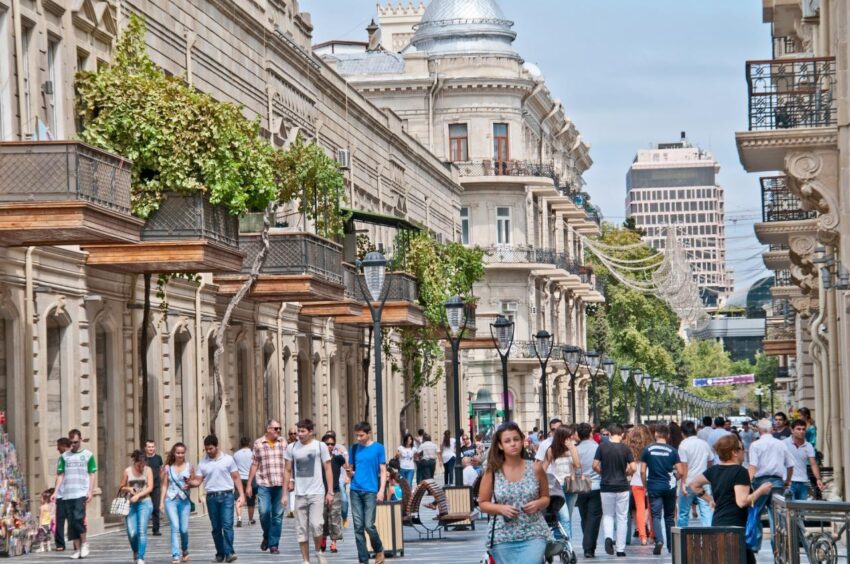
Azerbaijan has long been known across the world as the “Land of Fire” (Odlar Yurdu). Long before modern oil drilling defined its economy, natural gas seeped through cracks in the earth, bursting into flames that burned day and night without stopping.
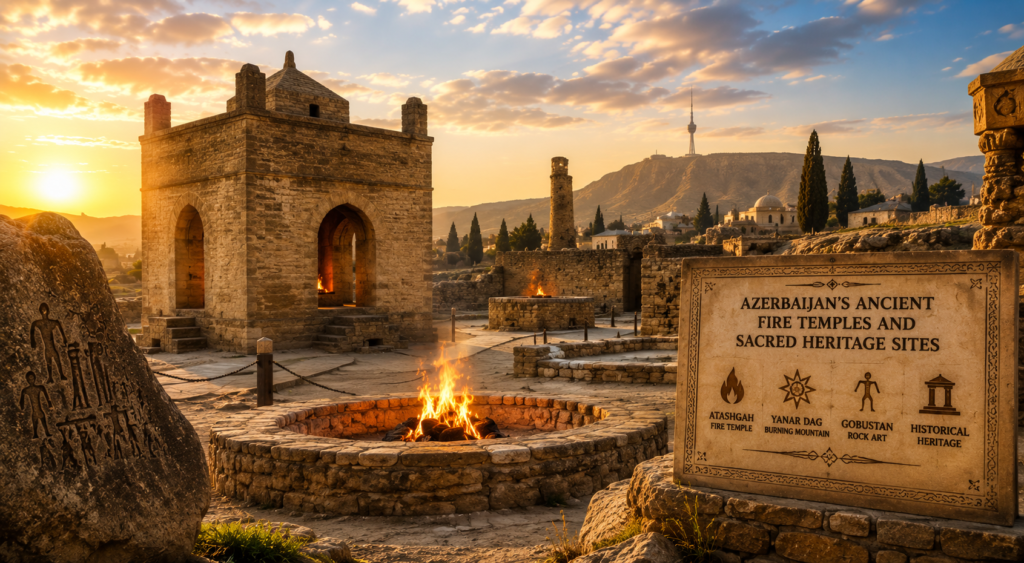
To ancient travelers along the Silk Road, these mysterious fires were supernatural. They inspired religions, drew pilgrims across thousands of miles, and shaped a unique cultural footprint where Zoroastrianism, ancient Christianity, Sufi mysticism, and Islam overlap.
If you are planning a cultural journey to the Caucasus, exploring Azerbaijan’s sacred landscape offers an experience unlike anywhere else on Earth. Before booking your trip, ensure you check the list of Azerbaijan visa eligible countries so you can secure your travel authorization smoothly.
Here is your complete guide to the most significant fire temples, ancient rock art, and holy sanctuaries across the country.
1. Ateshgah of Baku: The Surakhani Fire Temple
Located just 30 kilometers east of central Baku in the suburb of Surakhani, the Ateshgah Fire Temple is one of the most famous spiritual monuments in Central Eurasia.
   +--------------------------------------------------------+
   |                ATESHGAH FIRE TEMPLE                    |
   |                                                        |
   |  Central Shrine: Pentagonal Courtyard Structure        |
   |  Key Feature: Central altar with four stone pillars    |
   |  Historical Eras: Zoroastrian, Hindu, Sikh Worshipers  |
   +--------------------------------------------------------+
The History Behind the Temple
The word Ateshgah literally translates from Persian as “Home of Fire.” While local fire worship in the Absheron Peninsula dates back over two millennia, the temple structure seen today was constructed during the 17th and 18th centuries.
During this period, Baku was a major trade hub along Indian and Persian merchant routes. Traders, ascetic monks, and travelers from Northern India (worshipers of Shiva and Vishnu) as well as Zoroastrians from Iran visited the site to perform rituals around the natural gas vents.
What to See at Ateshgah
- The Central Altar: An open-air, four-pillar stone pavilion (chahar taq) housing an eternal flame.
- Inscriptions: Over 20 stone inscriptions line the cell walls, written in Devanagari, Gurmukhi, and Persian script.
- Monk Cells: Surrounding the central courtyard are 24 small rooms where visiting ascetics lived, prayed, and practiced severe self-discipline.
- Museum Exhibits: Today, the site operates as a well-maintained state historical reserve showcasing wax models, historical artifacts, and detailed timeline exhibits.
2. Yanar Dag: The Natural Burning Mountain
A short drive from Ateshgah brings you to Yanar Dag (literally “Burning Mountain”), a natural gas fire that blazes continuously along a 10-meter stretch of a hillside.
Unlike Ateshgah, where gas is now piped to preserve the flame after natural underground pressures dropped in the 20th century, Yanar Dag is 100% natural and continuous.
Why Does It Burn?
Sub-surface natural gas reserves steadily leak through porous sandstone layers at the base of the hill. A simple spark centuries ago ignited the seam, and the flame has flared ever since—unbothered by rain, snow, or high winds.
Local Folklore and Best Time to Visit
Local legend says a shepherd accidentally dropped a match here in the 1950s, though historical records by travelers like Marco Polo mention burning hillsides across the Absheron region as far back as the 13th century.
Travel Tip: Visit Yanar Dag right at dusk or early evening. The glowing yellow-red flames against the dark hill create a striking visual experience and far better photos than during midday.
3. Gobustan National Park: Prehistoric Rituals and Rock Art
Located roughly 64 kilometers southwest of Baku, Gobustan Rock Art Cultural Landscape is a UNESCO World Heritage Site that reveals how sacred beliefs functioned long before organized religion existed.
Rock Art (Petroglyphs)
Gobustan houses more than 6,000 stone engravings spread across massive limestone boulders. These carvings date from the Upper Paleolithic period (around 40,000 years ago) through the Middle Ages.
Key themes depicted in the carvings include:
- Sacred ritual dances (such as early forms of the traditional Yally dance).
- Ceremonial hunt scenes involving wild bulls, goats, and horses.
- Solar icons, boats, and fertility symbols.
The Gaval Dash (Singing Stone)
At the entrance of the reserve sits the Gaval Dash, a natural musical stone slab balanced on three points. When struck with small stones, it produces a resonant, drum-like chime. Archaeologists believe tribal shamans used this resonant stone during ritual gatherings and sacred ceremonies thousands of years ago.
4. The Remote Fire Altar of Khinalug
High up in the Caucasus Mountains—over 2,100 meters above sea level—lies Khinalug, one of the oldest continuously inhabited villages in Europe.
The locals here have preserved their own distinct language (Ketik), unique architecture, and ancient customs. Approximately 5 kilometers from the main village sits a high-altitude Ateshgah—a natural burning flame situated on a rocky ridge.
- Unique Features: This high-altitude flame burns in a simple stone hut, far removed from modern tourist crowds.
- Historical Link: Local lore suggests local villagers guarded this flame through successive religious eras, blending ancient fire reverence with their current traditions.
5. Diri Baba Mausoleum: Mystic Sufi Sanctuary
Moving away from fire worship to Islamic spiritual heritage, the Diri Baba Mausoleum in Qobustan (Maraza town) is an architectural masterpiece built into a solid cliff face in 1402.
+-------------------------------------------------------------+
|                     DIRI BABA MAUSOLEUM                     |
|                                                             |
|   Level 2: Main Prayer Room & Spherical Cupola              |
|   -------------------------------------------------------   |
|   Level 1: Entrance Hall cut into limestone rock face       |
|                                                             |
|   Significance: Sacred pilgrimage site for Sufi mystics     |
+-------------------------------------------------------------+
Why It’s Sacred
Diri Baba (“The Living Saint”) was a holy Sufi scholar who practiced meditation in a small cave on this cliff. Legend says his body remained uncorrupted long after his death, drawing pilgrims from across the Islamic world seeking blessings and healing.
The building seamlessly blends rock-cut architecture with refined Shirvan-Absheron stonemasonry, creating a dramatic visual effect where the monument appears to float against the mountain wall.
Key Sacred & Heritage Sites at a Glance
| Site Name | Location | Historical Era / Belief System | Key Highlight |
|---|---|---|---|
| Ateshgah Fire Temple | Surakhani (Baku) | 17th–18th Century / Zoroastrian & Hindu | Pentagonal courtyard with central flame pavilion |
| Yanar Dag | Absheron Peninsula | Ancient Natural Phenomenon | 10-meter continuous natural gas wall fire |
| Gobustan Reserves | Qobustan District | 40,000 BCE – Middle Ages | Petroglyphs, Gaval Dash, and mud volcanoes |
| Atashgah of Khinalug | Quba District | High-altitude ancient shrine | Remote mountain fire sanctuary |
| Diri Baba Mausoleum | Maraza | 15th Century Sufi Shrine | Two-story cliffside tomb built into bedrock |
| Church of Kish | Shaki | 1st–12th Century Caucasian Albanian | Ancient Caucasian Christian stone church |
Essential Tips for Visiting Azerbaijan’s Sacred Sites
- Get Your Travel Visa First: Before finalizing your itinerary, apply for your Azerbaijan eVisa online. Most international visitors require an official electronic visa prior to arrival.
- Respect Local Customs: While Baku is modern and cosmopolitan, sacred mausoleums and rural shrines require modest dress (shoulders and knees covered). Women should carry a lightweight scarf when entering operating shrines.
- Transportation: Sites like Ateshgah and Yanar Dag can easily be accessed via taxi or local Baku buses. Remote locations like Khinalug require a four-wheel-drive vehicle or a tour driver due to steep mountain roads.
- Best Seasons: Spring (April to June) and Autumn (September to November) offer comfortable weather for outdoor rock art walking tours and mountain travel.
Ready to Visit? Getting Your Azerbaijan Visa Simplified
Exploring the ancient fire altars and rich heritage of Azerbaijan is an unforgettable journey. Navigating official immigration rules can sometimes feel complicated, but securing your entry permit does not have to be stressful.
Why Choose Us for Your Visa Application?
- Reliable Travel Visa Services: Our global approach has assisted numerous travelers in obtaining their Visa.
- Round-the-Clock Assistance: Reach out to us 24/7, and our experts will respond within 72 hours.
- Experienced Visa Consultants: Receive expert guidance to ensure the acceptance of your application.
- Efficient Visa Application Process: Apply for your Visa in minutes with our simplified form.
Check all eligible countries for an Azerbaijan visa and start your application today to begin your travel planning!
Conclusion
From the roaring flames of Yanar Dag to the silent petroglyphs of Gobustan, Azerbaijan’s ancient sites showcase human spirituality and natural wonder linked across thousands of years. Whether you are a history enthusiast, a photographer, or a curious traveler, these sacred destinations offer an inspiring look into the heart of the Caucasus.