
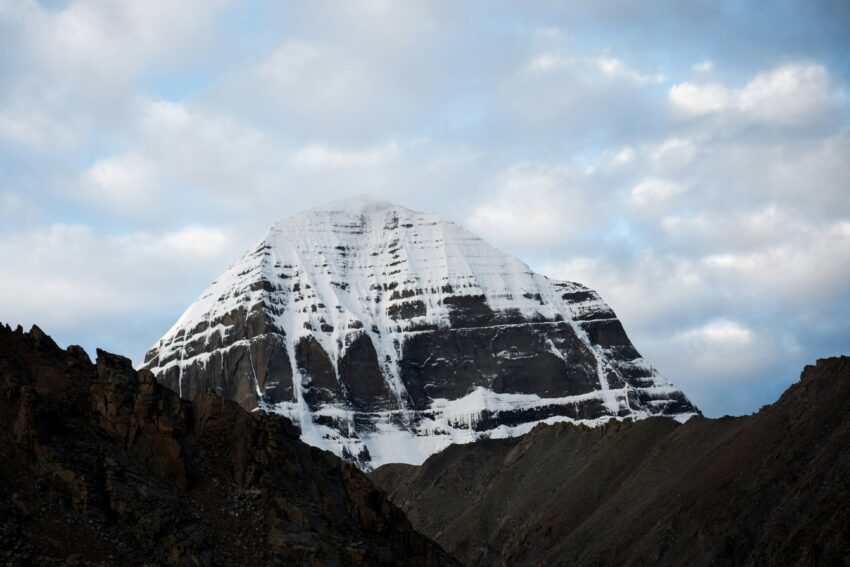
Of all the ways a Kailash Mansarovar Yatra can go wrong, altitude sickness is by far the most common and the most preventable. Unlike weather delays or logistical hiccups, this is a risk almost entirely within your control, shaped by how well you prepare your body beforehand and how honestly you respond to symptoms once you’re actually up there.
This guide isn’t meant to alarm anyone out of making the trip. Thousands of pilgrims complete this journey safely every season. It’s meant to replace vague reassurances with the specific, practical understanding that actually keeps people safe at elevations most of them have never experienced before.
Why This Particular Trip Carries Real Altitude Risk
It helps to understand what you’re actually dealing with. Darchen, the base town for the parikrama, sits above 4,600 meters. Lake Mansarovar sits close behind it. Dolma La Pass, the highest point of the circuit, reaches roughly 5,630 to 5,650 meters higher than Everest Base Camp, and high enough that even physically fit, experienced hikers can develop symptoms if they’ve ascended too quickly.
The core issue isn’t fitness. Altitude sickness has surprisingly little correlation with how strong or experienced a trekker someone is. It’s primarily a function of how fast the body ascends relative to how much time it’s given to adjust, along with a fair amount of individual physiological variation that even doctors can’t fully predict in advance. Someone who’s run marathons can struggle at altitude while someone far less athletic sails through it and planning around that unpredictability, rather than assuming fitness alone protects you, is the mindset that actually keeps people safe.
Understanding What’s Happening in Your Body
At sea level, the air you breathe contains enough oxygen for your body’s normal functioning without much thought. As elevation increases, atmospheric pressure drops, and each breath delivers meaningfully less oxygen to your bloodstream, even though the percentage of oxygen in the air itself doesn’t change.
Your body has remarkable short-term adaptive mechanisms for this — increased breathing rate, elevated heart rate, and eventually increased red blood cell production but these adaptations take time. Acute mountain sickness develops when you’ve climbed faster than your body’s adjustment mechanisms can keep pace with, essentially asking your system to function at oxygen levels it hasn’t yet adapted to.
In most cases, this produces uncomfortable but manageable symptoms. In a smaller number of cases, particularly when early warning signs are ignored and ascent continues anyway, it can progress into more serious and occasionally life-threatening complications affecting the lungs or brain.
Recognizing the Early Warning Signs
Mild acute mountain sickness typically starts with a persistent headache, often described as different from an ordinary headache in that it doesn’t respond well to normal pain relief and tends to worsen rather than ease with rest at the same elevation.
Alongside the headache, common early symptoms include unusual fatigue beyond what the day’s physical effort would normally explain, mild nausea or loss of appetite, difficulty sleeping despite exhaustion, and a general sense of unwellness that’s hard to pin down to any single cause.
These symptoms on their own aren’t necessarily dangerous, and many pilgrims experience some version of them at some point during the trip. What matters is how you respond. Mild symptoms that stabilize or improve with rest at the same elevation are generally manageable. Symptoms that worsen, or that are joined by more serious signs, are a different situation entirely.
When Symptoms Become Serious
Two more severe conditions can develop from unaddressed altitude sickness, and both require immediate descent rather than waiting to see if things improve.
High-altitude pulmonary edema involves fluid building up in the lungs, and it tends to announce itself through breathlessness that persists even at rest, a cough that may bring up frothy or blood-tinged sputum in more advanced cases, and a sense of chest tightness or a bubbling, rattling sound when breathing.
High-altitude cerebral edema involves swelling in the brain, and its warning signs include severe headache that doesn’t respond to medication, confusion or noticeably altered mental state, loss of coordination — often first noticeable as difficulty walking in a straight line and in more advanced cases, drowsiness that’s hard to rouse someone from.
Both conditions are medical emergencies. The single most effective treatment for either is immediate descent to lower elevation, and this is not a situation where “pushing through” or waiting until morning is an acceptable response. Any guide or operator worth traveling with will take these symptoms seriously and prioritize getting you down rather than keeping the group on schedule.
The Preparation That Actually Reduces Risk
Build a Gradual Ascent Into Your Itinerary
The single most protective thing you can do is avoid gaining elevation too quickly. This is largely handled by well-designed itineraries that build in acclimatization stops at towns like Saga and near Lake Mansarovar before pushing to Darchen and the parikrama itself, but it’s worth confirming with your operator that your specific itinerary includes adequate rest days rather than rushing straight through.
If you have any flexibility, adding an extra acclimatization day, particularly before starting the parikrama, is one of the more effective and underused ways to reduce your personal risk.
Talk to a Travel Doctor Before You Go
A pre-trip consultation with a doctor experienced in high-altitude travel medicine is worth prioritizing over general travel advice. Many travelers use a prescription medication, commonly acetazolamide, taken preventatively before and during the ascent, which has reasonably strong evidence behind it for reducing acute mountain sickness symptoms. This isn’t something to start experimenting with for the first time once you’re already at altitude — any medication should be discussed and, ideally, trialed briefly at home first to understand how your body responds to it.
This consultation is also the right time to flag any pre-existing heart, lung, or blood pressure conditions, since these can meaningfully change your personal risk profile and sometimes warrant additional precautions or, in some cases, a doctor’s recommendation against attempting the trip at all.
Build Cardiovascular Fitness, But Don’t Overestimate What It Buys You
Physical fitness genuinely helps with the physical demands of trekking at altitude the actual walking, the steep sections, the multi-hour days. It does not reliably protect against acute mountain sickness itself, which is more about physiological adaptation than muscular strength or cardiovascular capacity. Still, arriving fit reduces overall fatigue and stress on your body, which indirectly supports better acclimatization and a more comfortable overall experience.
Hydrate More Than Feels Necessary
Dehydration compounds altitude symptoms and is genuinely easy to fall into at elevation, since the dry mountain air increases fluid loss through breathing alone, often without the usual thirst cues you’d notice at lower elevations. Deliberately drinking water throughout the day, well beyond simply responding to feeling thirsty, is a small habit that meaningfully supports how well your body copes with the altitude.
Avoid Alcohol and Limit Sedatives During Ascent
Alcohol and sedative sleep aids both suppress breathing rate, which is counterproductive exactly when your body needs to breathe faster to compensate for lower oxygen availability. Most experienced guides recommend avoiding alcohol entirely during the ascent portion of the trip and being cautious with any sleep medication, even over-the-counter options, until you’ve acclimatized.
What to Do If Symptoms Appear
The most important principle is simple, even if it’s psychologically harder to follow than it sounds: don’t ascend further while experiencing worsening symptoms, and be honest with your guide about how you’re feeling rather than downplaying it out of a desire not to slow the group down or seem weak.
Mild symptoms often respond well to resting at the same elevation for a day, staying well hydrated, and avoiding further ascent until they improve. If symptoms don’t improve or start worsening, descent becomes the priority, and this is where having chosen an experienced operator with trained guides and, ideally, some medical support becomes genuinely important rather than a nice-to-have detail on a brochure.
It’s worth having an honest conversation with yourself, and ideally with travel companions, before the trip about the reality that altitude sickness can affect anyone, and that admitting to symptoms early is a sign of good judgment, not a failure of toughness.
A Note on Group Dynamics and Peer Pressure
One underappreciated risk factor on group pilgrimages is social pressure not wanting to be the person who slows down the group, admits to feeling unwell, or asks to turn back. This dynamic has genuinely contributed to worse outcomes in mountain environments across many different expeditions and pilgrimages, not just this one.
Good operators actively work against this dynamic by normalizing honest symptom reporting and building enough flexibility into the schedule that one person’s need to rest doesn’t derail everyone else’s trip. When researching operators, it’s reasonable to directly ask how they handle situations where a pilgrim develops symptoms mid-parikrama, since the answer tells you a great deal about how seriously altitude safety is actually taken beyond the marketing language.
Frequently Asked Questions
Can altitude sickness be completely prevented?
Not with certainty, since individual physiological response varies significantly, but gradual ascent, proper hydration, preventative medication where appropriate, and honest symptom monitoring together substantially reduce the risk of it progressing beyond mild, manageable symptoms.
Is it normal to feel some symptoms during this trip?
Mild headache, fatigue, or minor sleep disruption at elevations above 4,500 meters are common and not automatically dangerous. The concern arises when symptoms worsen, fail to improve with rest, or are joined by more serious warning signs like persistent breathlessness at rest or confusion.
Should I bring my own oxygen or a portable hyperbaric bag?
Reputable operators typically carry oxygen and, on well-equipped trips, portable hyperbaric bags for group use in emergencies. It’s worth confirming this directly with your operator rather than assuming it’s included, particularly for smaller or budget-tier group packages.
Does prior high-altitude trekking experience reduce my risk this time?
Previous successful high-altitude trips can be reassuring, but altitude sickness susceptibility isn’t necessarily consistent between trips or even between different mountains, so past experience shouldn’t replace proper preparation and monitoring on this specific journey.
What’s the single most important thing I can do to stay safe?
Follow a well-paced itinerary with adequate acclimatization days, and commit in advance to being honest about symptoms rather than pushing through them, since early, honest reporting is what allows guides to intervene before mild symptoms become serious ones.
Respecting the Mountain by Respecting Your Body
There’s a strange irony in how altitude sickness prevention works: the pilgrims who move slowest, rest most deliberately, and speak up earliest about how they’re feeling are usually the ones who complete the journey most comfortably. Treating your body’s signals with the same seriousness you’re bringing to the spiritual weight of this pilgrimage isn’t a distraction from the experience it’s part of what allows you to actually be present for it, rather than spending the hardest days of the trip fighting a problem that better preparation could have avoided.