
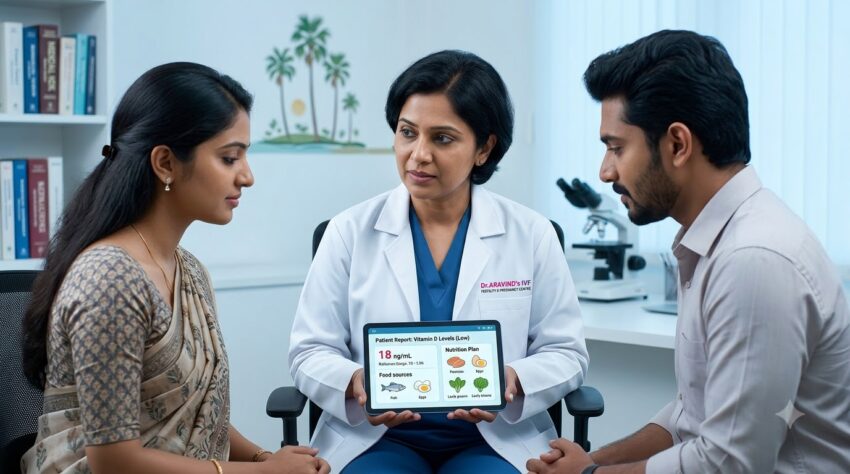
What Is the Connection Between Vitamin D and Reproductive Health?
Vitamin D is often associated with strong bones and healthy immunity, but its role may extend beyond these functions. Researchers have also explored the relationship between vitamin D levels and reproductive health in both women and men.
This has led many couples trying to conceive to ask an important question: Can low vitamin D levels affect fertility?
The answer is not completely straightforward. Vitamin D deficiency does not automatically cause infertility, and correcting a deficiency alone cannot guarantee pregnancy. However, vitamin D plays a role in several biological processes, and maintaining adequate levels is part of overall health.
For couples searching for the Best Infertility Clinic in Palakkad, understanding the possible connection between vitamin D and fertility can help them make informed decisions about testing and treatment.
Why Is Vitamin D Important?
Vitamin D is a fat-soluble vitamin that helps the body absorb calcium and supports bone health.
It is also involved in immune function and several other biological processes.
The body can obtain vitamin D through:
- Sunlight exposure
- Certain foods
- Fortified foods
- Supplements when medically recommended
Vitamin D levels can vary depending on diet, lifestyle, sunlight exposure, skin type, age, and certain medical conditions.
A blood test can help determine whether a person has a deficiency.
Can Low Vitamin D Affect Female Fertility?
The relationship between vitamin D and female fertility is still being studied.
Reproductive organs such as the ovaries and uterus contain receptors that respond to vitamin D. This has encouraged researchers to investigate whether vitamin D status may influence reproductive processes.
Some studies have found associations between vitamin D levels and reproductive outcomes, while others have not shown a clear relationship.
Possible areas of interest include:
- Ovulation
- Hormonal balance
- Endometrial receptivity
- Ovarian function
- Pregnancy outcomes
However, it is important not to assume that vitamin D deficiency is the main reason for infertility.
Conditions such as PCOS, endometriosis, reduced ovarian reserve, blocked fallopian tubes, and age-related changes can have a much more direct impact on conception.
Does Vitamin D Affect Ovulation?
Ovulation is an important part of natural conception.
Some research has explored whether vitamin D may be associated with ovarian function and ovulation, particularly in women with certain hormonal conditions.
However, there is not enough evidence to say that every woman with low vitamin D will experience ovulation problems.
If periods are irregular or ovulation is suspected to be abnormal, a proper fertility evaluation is more useful than focusing on vitamin D alone.
What About PCOS and Vitamin D?
Polycystic ovary syndrome is a common hormonal condition that can affect ovulation and fertility.
Some women with PCOS may also have low vitamin D levels.
Researchers have studied whether improving vitamin D status could support metabolic or reproductive health in women with PCOS.
However, vitamin D supplementation should not be considered a standalone treatment for PCOS-related infertility.
PCOS management may involve lifestyle changes, ovulation treatment, weight management when appropriate, and fertility treatment depending on individual circumstances.
Can Vitamin D Affect the Uterine Environment?
For pregnancy to occur, the embryo needs to implant successfully in the lining of the uterus.
Because vitamin D receptors have been identified in reproductive tissues, researchers have investigated whether vitamin D status may influence the uterine environment.
Some studies suggest a possible association between vitamin D levels and implantation or pregnancy outcomes.
However, the evidence is not strong enough to conclude that correcting vitamin D deficiency will always improve implantation or IVF success.
Many other factors affect implantation, including:
- Embryo quality
- Uterine health
- Endometrial thickness
- Age
- Hormonal factors
- Genetic factors
Can Vitamin D Deficiency Affect Male Fertility?
Vitamin D may also be relevant to male reproductive health.
Research has explored possible connections between vitamin D levels and:
- Sperm motility
- Sperm concentration
- Sperm quality
- Testosterone levels
However, findings are mixed.
A man with vitamin D deficiency is not necessarily infertile, and taking supplements does not automatically improve sperm quality.
Male fertility depends on multiple factors, including sperm production, hormonal health, lifestyle, genetics, and medical conditions.
If a couple is experiencing difficulty conceiving, a semen analysis may be recommended to assess male reproductive health.
Does Vitamin D Improve IVF Success?
This is one of the most common questions among couples undergoing assisted reproductive treatment.
Some research has suggested that vitamin D status may be associated with IVF outcomes, while other studies have found limited or inconsistent evidence.
Therefore, vitamin D should not be considered a guaranteed way to improve IVF success.
If a woman has a confirmed deficiency, a fertility specialist may recommend appropriate supplementation as part of her overall health management.
However, IVF success depends on many important factors, including:
- Female age
- Egg quality
- Sperm quality
- Embryo development
- Ovarian reserve
- Uterine health
- Underlying fertility conditions
Should Everyone Take Vitamin D Supplements?
Not necessarily.
Vitamin D supplements should ideally be taken based on medical advice, especially when high doses are being considered.
Excessive vitamin D can also cause health problems.
A doctor may recommend a blood test if deficiency is suspected based on symptoms, lifestyle, medical history, or other risk factors.
If a deficiency is confirmed, the appropriate dose and duration can be determined.
How Can You Maintain Healthy Vitamin D Levels?
Simple lifestyle habits may help support healthy vitamin D levels.
Get Appropriate Sunlight
Regular, safe sunlight exposure may help the body produce vitamin D. The amount needed varies depending on several factors.
Eat a Balanced Diet
Foods such as fatty fish, egg yolks, and fortified products may contribute to vitamin D intake.
Follow Medical Advice
If testing shows a deficiency, follow the supplementation plan recommended by your healthcare provider.
Avoid Excessive Self-Supplementation
Taking very high doses without medical guidance is not recommended.
When Should You Consider Fertility Testing?
If you have been trying to conceive without success, do not assume that vitamin D deficiency is the only possible reason.
A fertility evaluation may consider:
- Ovulation
- Ovarian reserve
- Fallopian tube health
- Uterine factors
- Sperm quality
- Hormonal conditions
- Medical history
Both partners may need assessment because fertility difficulties can involve male factors, female factors, or a combination of both.
Looking at Fertility as a Whole
For couples searching for the Best Infertility Clinic in Palakkad, vitamin D is one of many health factors that may be considered during fertility care.
A deficiency may be worth identifying and treating for overall health, but it should not be viewed as the sole explanation for difficulty conceiving. Fertility is influenced by age, reproductive health, hormones, sperm quality, egg quality, and several other factors.
At Dr. Aravind’s IVF Fertility & Pregnancy Centre, couples can discuss their fertility concerns and understand which tests may be appropriate for their individual situation.
If you are looking for the Best Fertility Centre in Kerala, remember that personalized evaluation is more valuable than relying on a single vitamin or supplement. If you have been trying to conceive for longer than expected, consulting a fertility specialist can help identify possible causes and guide you toward the right treatment approach.
Taking care of nutrition, correcting confirmed deficiencies, maintaining a healthy lifestyle, and seeking timely medical advice can all be meaningful steps toward better reproductive health.
Book Your Appointment at Dr. Aravind’s IVF Fertility & Pregnancy Centre:
https://www.draravindsivf.com/book-your-appointment
Contact Us
Dr. Aravind’s IVF Fertility & Pregnancy Centre
Premier Tower, Coimbatore Road, Kalvakulam, Mankavu, Palakkad – 678013, Kerala
Phone: +91 90 2012 2012
Email: info@draravindsivf.com
Frequently Asked Questions
Can vitamin D deficiency cause infertility?
Vitamin D deficiency is not considered a direct cause of infertility in every person. However, it may be associated with certain reproductive factors, and research is ongoing.
Should I check my vitamin D before IVF?
Your fertility specialist may recommend testing depending on your health and medical history.
Can vitamin D improve egg quality?
There is no strong evidence that vitamin D supplements directly improve egg quality in every woman.
Does vitamin D affect sperm?
Research has explored possible links between vitamin D status and sperm parameters, but the evidence is mixed.
Can I take vitamin D without testing?
It is better to discuss supplementation with a healthcare professional, especially before taking high doses.