
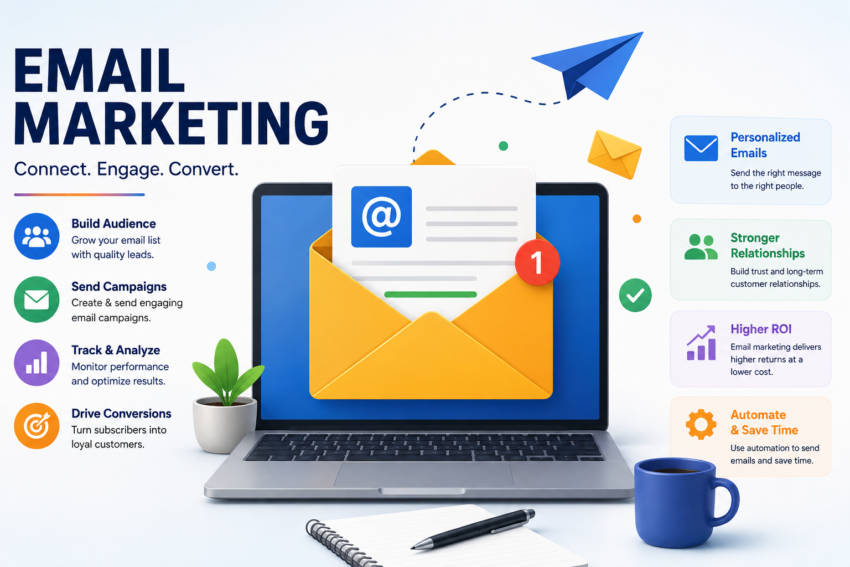
In today’s competitive online marketplace, businesses need more than just a website and social media presence to stay connected with customers. One of the most effective ways to build long-term relationships, increase conversions, and generate repeat sales is through email marketing. Whether you’re a startup, an eCommerce store, or an established enterprise, a well-planned email strategy can help you reach your audience directly and deliver personalized messages that drive results.
Unlike many digital marketing channels, email allows businesses to communicate with customers in a highly targeted and cost-effective way. It gives brands complete control over their messaging while helping maintain consistent engagement throughout the customer journey.
What Is Email Marketing?
Email marketing is a digital marketing strategy that involves sending emails to prospects and customers to promote products, services, offers, or valuable content. It helps businesses nurture leads, improve customer retention, and increase revenue by delivering personalized messages directly to subscribers’ inboxes.
Businesses use email campaigns for various purposes, including:
-
Welcome emails
-
Promotional campaigns
-
Product launches
-
Seasonal offers
-
Newsletters
-
Cart abandonment reminders
-
Customer feedback requests
-
Order confirmations
-
Loyalty programs
-
Event invitations
When executed correctly, email marketing becomes one of the highest ROI marketing channels available.
Why Businesses Still Rely on Email Marketing
Many people assume that social media has replaced email, but the reality is quite different. Email remains one of the most trusted communication channels because users voluntarily subscribe to receive updates from brands they care about.
Some major benefits include:
High Return on Investment
Email marketing consistently delivers one of the highest returns among digital marketing channels. Businesses spend relatively little while generating significant revenue through targeted campaigns.
Direct Customer Communication
Unlike social media algorithms that limit visibility, emails reach customers directly in their inbox, giving businesses greater control over message delivery.
Personalized Customer Experience
Modern email marketing platforms allow businesses to personalize emails based on customer behavior, purchase history, demographics, and preferences.
Better Customer Retention
Regular communication helps businesses stay top of mind while encouraging repeat purchases and stronger customer relationships.
Measurable Performance
Businesses can easily track campaign performance using metrics like:
-
Open Rate
-
Click Through Rate (CTR)
-
Conversion Rate
-
Bounce Rate
-
Unsubscribe Rate
-
Revenue Generated
These insights help marketers continuously improve future campaigns.
Essential Types of Email Marketing Campaigns
Successful businesses don’t rely on just one type of email. Instead, they create multiple automated campaigns that engage customers at different stages.
Welcome Emails
These introduce new subscribers to your brand and often generate the highest engagement rates.
Promotional Emails
Used to announce discounts, limited-time offers, product launches, or seasonal sales.
Newsletter Campaigns
Regular newsletters help educate customers, share industry updates, and strengthen brand authority.
Transactional Emails
These include order confirmations, shipping updates, invoices, and payment receipts.
Cart Recovery Emails
Abandoned cart campaigns remind customers about unfinished purchases and encourage them to complete their orders.
Customer Feedback Emails
Collecting reviews and feedback helps businesses improve products while building trust.
Best Practices for Successful Email Marketing
Simply sending emails isn’t enough. Businesses need a strategic approach to maximize engagement.
Build a Quality Email List
Focus on collecting subscribers organically through:
-
Website forms
-
Landing pages
-
Lead magnets
-
Webinars
-
Product downloads
-
Newsletter signups
Avoid purchasing email lists, as they often lead to poor engagement and spam complaints.
Write Compelling Subject Lines
The subject line determines whether recipients open your email. Keep it:
-
Short
-
Personalized
-
Clear
-
Benefit-focused
Personalize Every Campaign
Use subscriber names, previous purchases, browsing history, or location to make emails more relevant.
Create Mobile-Friendly Designs
Most emails are opened on smartphones, making responsive design essential.
Include Clear Calls-to-Action
Every email should guide readers toward one primary action, such as:
-
Shop Now
-
Learn More
-
Book a Demo
-
Download Guide
-
Claim Discount
Test Before Sending
A/B testing subject lines, layouts, CTA buttons, and sending times helps optimize campaign performance.
Common Email Marketing Mistakes to Avoid
Many businesses struggle because they overlook basic practices.
Some common mistakes include:
-
Sending too many emails
-
Ignoring segmentation
-
Poor email design
-
Weak subject lines
-
No personalization
-
Missing unsubscribe options
-
Not analyzing campaign data
Avoiding these mistakes significantly improves customer engagement.
How Automation Improves Email Marketing
Marketing automation allows businesses to send emails automatically based on customer actions.
Examples include:
-
Welcome series
-
Birthday emails
-
Cart abandonment reminders
-
Product recommendations
-
Re-engagement campaigns
-
Post-purchase follow-ups
Automation saves time while maintaining consistent communication.
Email Marketing for eCommerce Businesses
Online stores benefit enormously from email marketing because it directly influences customer purchases.
Popular eCommerce email campaigns include:
-
Product recommendations
-
Flash sales
-
New arrivals
-
Order confirmations
-
Back-in-stock alerts
-
Review requests
-
Loyalty rewards
-
VIP customer offers
These campaigns help increase average order value and customer lifetime value.
Choosing the Right Email Marketing Platform
Businesses should select software based on their requirements.
Look for features such as:
-
Drag-and-drop editor
-
Marketing automation
-
Contact segmentation
-
Analytics dashboard
-
A/B testing
-
CRM integration
-
Landing page builder
-
Email templates
-
SMS integration
-
API support
The right platform simplifies campaign management while improving results.
Future Trends in Email Marketing
As technology evolves, email marketing continues to become smarter and more personalized.
Emerging trends include:
-
AI-powered personalization
-
Predictive customer segmentation
-
Interactive emails
-
AMP email technology
-
Behavioral automation
-
Hyper-personalized recommendations
-
Privacy-focused marketing
-
Advanced analytics
Businesses adopting these innovations can stay ahead of competitors.
Conclusion
Email marketing remains one of the most effective digital marketing strategies for businesses of all sizes. It enables brands to communicate directly with customers, build trust, increase engagement, and drive consistent sales. With the right strategy, compelling content, audience segmentation, and marketing automation, businesses can maximize their return on investment while creating meaningful customer relationships.
Whether you operate an eCommerce business, SaaS company, local service, or enterprise brand, investing in a professional email marketing strategy can significantly improve customer retention and long-term business growth. By focusing on personalized communication and continuous optimization, businesses can turn subscribers into loyal customers and achieve sustainable success in today’s competitive digital landscape.