
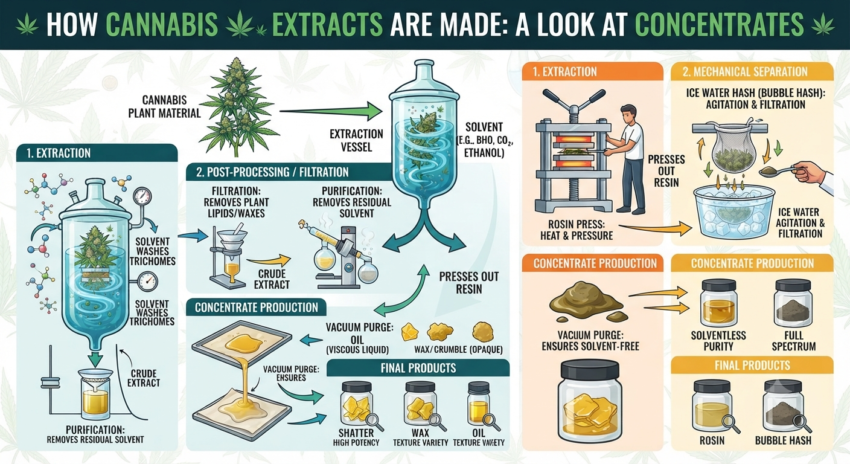
Cannabis extracts, often called concentrates, have become one of the most talked-about categories in the cannabis industry. These products are known for their concentrated cannabinoid content, unique flavors, and wide variety of forms. From oils and waxes to shatter and live resin, cannabis concentrates represent the combination of advanced technology, careful processing, and plant science.
As more consumers become interested in understanding cannabis products, learning how extracts are made can help them make informed decisions about quality, safety, and responsible use. High-quality concentrates depend on many factors, including cannabis genetics, cultivation methods, extraction techniques, and laboratory testing.
What Are Cannabis Extracts?
Cannabis extracts are products created by separating desirable compounds from the cannabis plant. These compounds include cannabinoids such as THC and CBD, as well as aromatic compounds called terpenes.
Unlike traditional cannabis flower, concentrates contain a higher concentration of specific plant compounds because the extraction process removes much of the plant material while preserving valuable components.
Common types of cannabis concentrates include:
-
Cannabis oils – Often used in vape products or other cannabis formulations.
-
Wax and budder – Soft-textured concentrates with a rich cannabinoid profile.
-
Shatter – A glass-like concentrate known for its solid texture.
-
Live resin – Made using fresh-frozen cannabis to preserve more natural aromas.
-
Rosin – A solventless extract created using heat and pressure.
Each type offers different characteristics depending on the extraction process and the quality of the starting material.
The Importance of Quality Cannabis Before Extraction
The quality of a cannabis extract begins with the plant itself. Extract producers typically select carefully grown cannabis with desirable genetics, strong cannabinoid profiles, and valuable terpene characteristics.
Factors that influence extract quality include:
Cannabis Genetics
Different cannabis varieties naturally contain different levels of cannabinoids and terpenes. Experienced growers select genetics based on desired characteristics such as aroma, flavor, and cannabinoid content.
Growing Conditions
Light, temperature, humidity, nutrients, and cultivation methods all influence the final quality of cannabis used for extraction.
Harvest Timing
Harvesting at the right stage allows growers to preserve important plant compounds that contribute to the final concentrate.
Common Cannabis Extraction Methods
There are several techniques used to create cannabis concentrates. Each method has advantages depending on the desired final product.
1. Solvent-Based Extraction
Solvent-based extraction uses specific substances to separate cannabinoids and terpenes from plant material.
Common solvents include:
-
Carbon dioxide (CO₂)
-
Hydrocarbons such as butane or propane
CO₂ Extraction
CO₂ extraction is a technology-driven process that uses carbon dioxide under controlled conditions to collect cannabinoids and other plant compounds.
This method is popular because it allows producers to carefully control extraction conditions and create consistent products.
Hydrocarbon Extraction
Hydrocarbon extraction can produce flavorful concentrates such as wax, shatter, and live resin. Skilled processors carefully control the process to maintain quality and safety.
2. Solventless Extraction
Solventless extraction methods do not use chemical solvents. Instead, they rely on mechanical processes.
One popular example is rosin production, where heat and pressure are used to extract cannabinoids and terpenes from cannabis material.
Many consumers appreciate solventless products because they focus on preserving the natural compounds of the plant.
The Role of Terpenes in Cannabis Concentrates
Terpenes are natural aromatic compounds found in cannabis and many other plants. They contribute to the smell, flavor, and overall character of different extracts.
Examples of common cannabis terpenes include:
-
Myrcene
-
Limonene
-
Pinene
-
Caryophyllene
Modern extraction companies often focus on preserving terpene profiles because they are an important part of the consumer experience.
Live resin products are especially popular because the process uses fresh-frozen cannabis, helping preserve more of the plant’s natural aromatic compounds.
Why Laboratory Testing Matters
Quality cannabis extracts should go through professional laboratory testing before reaching consumers.
Testing helps evaluate:
-
Cannabinoid levels
-
Terpene information
-
Contaminant screening
-
Product consistency
Reliable cannabis companies prioritize transparency by providing detailed product information and testing results.
Consumers looking for reputable cannabis products often explore licensed brands such as:
-
Weedroads – Known for producing cannabis concentrates and vape products with a focus on extraction quality.
-
Select – Offers a range of cannabis products including concentrate-based items in regulated markets.
-
Cresco Labs – Produces various cannabis products with an emphasis on standardized manufacturing.
-
Jetty Extracts – Recognized for cannabis extracts and vape products.
Availability depends on local cannabis regulations, so customers should always purchase from licensed retailers in their area.
How Consumers Can Identify High-Quality Concentrates
When selecting cannabis extracts, consumers should consider several quality indicators:
Check Laboratory Information
A reliable product should include information about cannabinoid content and safety testing.
Look at Packaging Quality
Professional packaging helps protect concentrates from heat, light, and contamination.
Consider Brand Reputation
Established companies often invest heavily in testing, manufacturing standards, and customer education.
Understand Product Type
Different concentrates offer different textures, flavors, and experiences. Learning about each type can help consumers choose products that match their preferences.
The Future of Cannabis Concentrates
The cannabis concentrate industry continues to evolve as technology improves. New extraction methods, better preservation techniques, and advanced testing systems are helping producers create more consistent products.
Future trends may include:
-
Improved terpene preservation methods
-
More environmentally friendly extraction technology
-
Greater product transparency
-
Advanced cannabinoid research
-
More personalized cannabis products
As the industry develops, education will remain important. Understanding how concentrates are made allows consumers to better appreciate the science and craftsmanship behind these products.
Final Thoughts
Cannabis extracts represent one of the most advanced areas of the cannabis industry. Creating high-quality concentrates requires careful cultivation, precise extraction methods, advanced processing equipment, and strict testing standards.
From solvent-based extraction to solventless techniques, every step influences the final product’s quality, flavor, and characteristics. Consumers interested in concentrates should focus on trusted brands, laboratory-tested products, and licensed retailers.
Companies such as Raw Garden, Select, Cresco Labs, and Jetty Extracts demonstrate how modern cannabis businesses are developing concentrate products with attention to quality and consistency. As cannabis technology continues to grow, extracts will likely remain an important and innovative part of the cannabis market.