
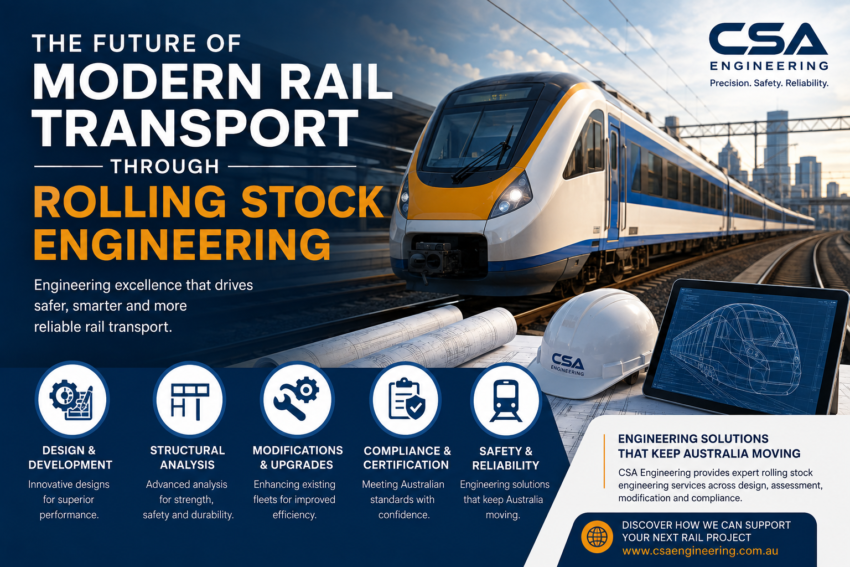
Railways continue to play a vital role in connecting cities, transporting freight, and supporting economic growth across Australia. As rail networks become more advanced, the need for innovative engineering solutions has never been greater. From designing new railway vehicles to upgrading existing fleets, rolling stock engineering is at the core of building safer, more reliable, and more efficient rail systems.
Every train, locomotive, passenger carriage, and freight wagon must be designed to withstand demanding operating conditions while meeting strict safety regulations. This requires specialized engineering expertise, detailed analysis, and compliance with industry standards. CSA Engineering has established itself as a trusted engineering consultancy, helping rail operators and manufacturers deliver practical, high-quality solutions for a wide range of rolling stock projects.
In this article, we’ll explore the importance of rolling stock engineering, the services involved, emerging industry trends, and how expert engineering contributes to the future of Australian rail transport.
Understanding Rolling Stock Engineering
Rolling stock refers to every railway vehicle that operates on rail tracks, including passenger trains, freight wagons, locomotives, light rail vehicles, maintenance vehicles, and metro trains. The discipline of rolling stock engineering focuses on designing, assessing, modifying, maintaining, and certifying these vehicles to ensure they perform safely and efficiently throughout their operational life.
Engineers carefully evaluate structural integrity, braking performance, suspension systems, fatigue resistance, material strength, and operational safety. Every engineering decision directly influences the reliability, durability, and safety of railway operations.
Why Rolling Stock Engineering Is Essential
The rail industry operates in one of the most safety-critical environments. Railway vehicles experience continuous vibration, heavy loads, varying weather conditions, and thousands of operational hours every year. Without proper engineering support, even minor issues can lead to significant maintenance costs, operational delays, or safety concerns.
Professional engineering services help rail operators:
- Improve passenger and freight safety
- Increase vehicle reliability
- Reduce maintenance costs
- Extend fleet lifespan
- Improve operational efficiency
- Meet Australian rail compliance requirements
- Minimize unexpected downtime
Working with experienced companies like CSA Engineering allows organizations to identify engineering challenges early and implement practical, cost-effective solutions before they become major problems.
Core Services in Rolling Stock Engineering
Vehicle Design and Development
Every railway project begins with a well-planned design. Engineers develop railway vehicles that balance strength, weight, efficiency, comfort, and long-term durability.
The design process considers:
- Vehicle structure
- Passenger capacity
- Load distribution
- Aerodynamics
- Manufacturing efficiency
- Energy consumption
- Safety requirements
A properly engineered design improves overall performance while reducing lifecycle costs.
Structural Engineering Analysis
Railway vehicles are exposed to constant mechanical stress throughout their service life. Structural engineering ensures every component performs safely under operational loads.
Using advanced engineering software, specialists evaluate:
- Stress distribution
- Fatigue life
- Weld strength
- Structural deflection
- Material performance
- Dynamic loading conditions
This detailed analysis helps prevent failures before they occur and improves long-term reliability.
Rolling Stock Modifications
Rail operators often modernize existing fleets instead of investing in completely new vehicles. Fleet upgrades provide a cost-effective way to improve safety, performance, and passenger experience.
Common engineering modifications include:
- Interior refurbishments
- Accessibility improvements
- Door system upgrades
- HVAC enhancements
- Driver cab redesign
- Electrical system modifications
- Equipment integration
Professional rolling stock engineering ensures every modification integrates seamlessly with the original vehicle design while maintaining compliance.
Engineering Compliance and Certification
Australian rail projects must comply with strict engineering and safety regulations before vehicles enter service.
Engineering consultants assist with:
- Compliance assessments
- Technical documentation
- Engineering calculations
- Design verification
- Risk assessments
- Certification support
- Safety reports
CSA Engineering helps clients navigate these requirements with practical engineering documentation that supports regulatory approval and project success.
Technology Is Transforming Rail Engineering
Modern railway engineering has evolved significantly through the adoption of advanced digital technologies. These innovations improve accuracy, reduce project risks, and optimize maintenance planning.
Digital Design
Digital engineering tools enable engineers to visualize railway vehicles before manufacturing begins.
Benefits include:
- Improved design accuracy
- Faster project delivery
- Better collaboration
- Reduced engineering revisions
- Lower development costs
Finite Element Analysis (FEA)
Finite Element Analysis has become an essential tool for railway engineering.
Engineers use FEA to simulate real-world operating conditions and evaluate how components respond to:
- Heavy loads
- Vibration
- Braking forces
- Structural fatigue
- Collision scenarios
These simulations significantly reduce design risks and improve safety.
Predictive Maintenance
Instead of waiting for equipment failures, railway operators increasingly rely on predictive maintenance strategies.
Engineering data allows maintenance teams to identify wear before failures occur, resulting in:
- Reduced downtime
- Lower repair costs
- Improved asset availability
- Increased operational reliability
Benefits of Professional Engineering Support
Investing in expert engineering delivers long-term value throughout the lifecycle of railway assets.
Improved Safety
Safety remains the highest priority within the rail industry. Engineering assessments identify potential risks early and recommend effective corrective actions.
Longer Asset Life
Quality engineering extends the operational life of railway vehicles by optimizing structural performance and reducing unnecessary wear.
Better Operational Efficiency
Engineering improvements contribute to:
- Higher fleet availability
- Reduced maintenance frequency
- Lower operating costs
- Improved fuel efficiency
- Enhanced reliability
Easier Regulatory Compliance
Experienced consultants ensure projects satisfy Australian engineering standards while providing clear documentation for audits and approvals.
Why Choose CSA Engineering?
Every rail project presents unique technical challenges that require practical engineering expertise. CSA Engineering works closely with rail operators, manufacturers, and infrastructure providers to deliver tailored engineering solutions across the entire project lifecycle.
Their services include:
- Rolling stock assessments
- Structural engineering analysis
- Design verification
- Engineering modifications
- Technical documentation
- Compliance support
- Independent engineering advice
With a strong focus on quality, safety, and innovation, CSA Engineering helps clients complete projects efficiently while maintaining the highest engineering standards.
Tips for Choosing the Right Engineering Partner
Selecting the right engineering consultant can significantly influence project outcomes.
When evaluating engineering providers, consider the following:
Industry Experience
Choose consultants with proven experience in railway engineering and rolling stock projects.
Technical Expertise
Look for capabilities such as:
- Structural calculations
- CAD design
- Finite Element Analysis
- Engineering certification
- Compliance reporting
Knowledge of Australian Standards
Your engineering partner should understand the latest rail safety regulations and compliance requirements applicable across Australia.
Strong Communication
Successful engineering projects rely on clear reporting, practical recommendations, and ongoing collaboration throughout the project.
The Future of Rolling Stock Engineering
The Australian rail sector continues to evolve through innovation and sustainability. Future railway vehicles will become smarter, lighter, and more energy efficient.
Emerging technologies include:
- Artificial intelligence for maintenance planning
- Digital twins
- Lightweight composite materials
- Battery-powered trains
- Hybrid propulsion systems
- Automated inspection technologies
- Smart monitoring sensors
As these technologies become mainstream, rolling stock engineering will remain essential for integrating new systems safely while maintaining operational reliability. Engineering specialists like CSA Engineering continue to support this transformation by delivering practical, future-focused engineering solutions.
Conclusion
Australia’s growing rail industry depends on safe, reliable, and innovative engineering to keep people and goods moving efficiently. From vehicle design and structural analysis to compliance and fleet upgrades, rolling stock engineering plays a crucial role in ensuring railway assets deliver long-term performance and safety.
Partnering with an experienced consultancy like CSA Engineering provides access to expert knowledge, technical precision, and practical engineering solutions that support every stage of a rolling stock project. Whether you’re developing new railway vehicles or modernizing an existing fleet, investing in quality engineering is an investment in operational success.
Ready to Strengthen Your Rail Project?
If you’re planning a rail project and require expert engineering support, CSA Engineering offers reliable solutions tailored to Australia’s rail industry. Learn how rolling stock engineering can improve safety, performance, and compliance by connecting with the experienced team at CSA Engineering today.