
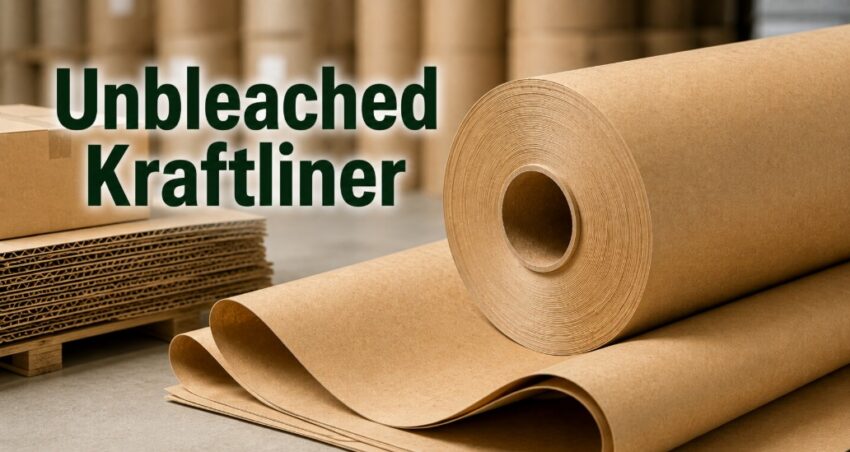
The Unbleached Kraftliner Price Trend has been showing a generally firm direction as packaging demand, inventory planning, raw material costs, and supply conditions continue to influence the market. Unbleached Kraftliner is an important material for corrugated boxes and other packaging products, so its price is closely connected with everyday business activity. When packaging manufacturers receive stronger orders, they usually need more kraftliner. At the same time, when pulp availability, freight costs, or production expenses change, suppliers may adjust their offers. Looking at these factors together gives a much clearer picture of where the market is heading.
What Is Unbleached Kraftliner?
Unbleached Kraftliner is a strong paperboard material mainly used for making corrugated packaging. It is valued for its strength, durability, and ability to handle transportation and storage requirements.
It is commonly used for shipping cartons, industrial boxes, food packaging, consumer goods packaging, and many other applications where a strong outer layer is required.
Because it is directly connected to the packaging industry, demand for Unbleached Kraftliner can change when e-commerce activity, manufacturing output, food distribution, agriculture, or consumer goods sales change.
This makes the product interesting from a price-tracking point of view. A buyer does not only need to look at the price offered by a supplier. It is also useful to understand what is happening with demand, production, inventories, freight, and raw materials.
Why Unbleached Kraftliner Prices Are Rising
One of the main reasons behind the current increase in Unbleached Kraftliner Prices is steady demand from corrugated packaging manufacturers.
Packaging companies generally try to maintain enough material for their production schedules. When they expect stronger orders, they may increase purchasing in advance. This can gradually reduce available inventory in the market.
Another factor is restocking.
When buyers feel that prices may rise further, they sometimes purchase additional quantities rather than waiting. This can create extra short-term demand and support higher prices.
Raw material costs also matter. Kraftliner production depends on wood-based fiber, energy, chemicals, transportation, and other inputs. When these costs remain firm, producers have less room to reduce selling prices.
The combination of steady demand and controlled supply can therefore create a market where prices gradually move upward instead of making a sudden jump.
👉 👉 👉 Please submit your query to get Unbleached Kraftliner price trend forecast, and market price analysis: https://www.price-watch.ai/book-a-demo/
Packaging Demand Remains an Important Driver
The packaging sector is one of the biggest influences on the kraftliner market.
Corrugated boxes are used across a wide range of industries. Online shopping requires shipping boxes, food companies need transportation packaging, manufacturers use cartons for finished products, and exporters require strong packaging for international shipments.
This broad customer base gives Unbleached Kraftliner a relatively diverse demand structure.
Even if one sector slows down, demand from another sector can continue to support the market. This is one reason why the current Unbleached Kraftliner Price Trend appears to have a stable foundation.
E-commerce is particularly important because products need protective packaging when they are transported directly to customers. A rise in shipment volumes can therefore increase demand for corrugated materials.
Supply Conditions Can Quickly Change Market Sentiment
Supply is equally important.
If mills maintain balanced production and shipments, buyers usually have enough material available. This keeps the market relatively orderly.
However, if production is reduced or shipments become slower, buyers may become more concerned about availability. Even before an actual shortage appears, market expectations can influence purchasing decisions.
This is why supply announcements, production schedules, inventories, and export availability are worth monitoring.
In the current market, suppliers have generally been managing production and shipments carefully. This has helped prevent excessive supply while allowing the market to respond to ongoing demand.
Brazil and the Export Market
Brazil remains an important market to watch for Unbleached Kraftliner because of its role in the international pulp and paper supply chain.
Export prices have shown an upward direction, supported by demand from packaging manufacturers. Buyers are also paying attention to shipment schedules and available volumes.
For exporters, freight and logistics are important parts of the final price. A supplier may offer a competitive product price, but higher transportation expenses can increase the final landed cost for an overseas buyer.
The export market is therefore influenced by more than the basic kraftliner quotation. Buyers need to consider freight, delivery terms, currency movements, and shipment availability together.
Chile and Import Purchasing
Chile has also shown firm conditions in the kraftliner market.
Importers are purchasing material based on their expected packaging requirements, while suppliers are managing shipments according to demand.
When buyers maintain regular purchasing, suppliers receive a clearer signal about market demand. If orders continue steadily, there is less reason for sellers to offer large discounts.
This creates a relatively balanced market where prices can remain firm even without extremely strong demand growth.
Argentina and Other Latin American Markets
Argentina is another market where purchasing activity is important for understanding the wider regional trend.
Packaging manufacturers continue to require kraftliner for different applications, while importers are monitoring supply and shipment conditions carefully.
The Latin American market can also be affected by international freight and availability from major exporting regions. A change in shipping costs can make imported kraftliner more expensive even when the underlying product price changes only slightly.
For buyers, this means that comparing only the supplier’s quoted price may not provide the complete picture.
European Market Conditions
Markets such as Poland, Turkey, and Sweden also provide useful signals for the global Unbleached Kraftliner market.
Demand from corrugated packaging manufacturers remains an important factor. Buyers are maintaining purchasing schedules while also paying attention to inventory levels.
In Europe, energy and logistics expenses can have a noticeable effect on paper and packaging production costs. When production expenses remain elevated, suppliers may try to protect margins by keeping prices firm.
At the same time, buyers are becoming more careful about inventory. Instead of building very large stocks, many companies prefer to purchase according to actual production requirements.
This cautious procurement behavior can limit sudden demand spikes but does not necessarily create downward price pressure.
India: Import Costs and Packaging Demand
India is another market worth watching.
The country’s packaging sector has continued to support kraftliner consumption. Demand comes from food packaging, consumer goods, e-commerce, industrial products, and other sectors.
For Indian buyers, imported kraftliner prices can be influenced by several additional factors. Freight costs, currency movements, port conditions, and international supplier availability can all affect the final cost.
When imported material becomes more expensive, packaging manufacturers may have to review their purchasing budgets.
This is why the Indian market can sometimes experience price changes even when the global market itself appears relatively stable.
United States Market
The United States remains an important consumer and producer market for packaging materials.
Demand for corrugated packaging is connected to manufacturing, retail, distribution, food products, and online commerce. When these sectors maintain healthy activity, kraftliner consumption can remain steady.
The market is also influenced by domestic production costs and transportation expenses.
For buyers, domestic availability can sometimes reduce dependence on international shipping, but changes in regional supply can still influence pricing.
Mexico and Peru
Mexico and Peru are also relevant import markets.
Mexico’s large manufacturing and consumer sectors create ongoing demand for corrugated packaging. Buyers often need to maintain reliable supplies because packaging shortages can directly affect production and shipment schedules.
Peru, meanwhile, depends more heavily on imported material for certain requirements. As a result, international supply and freight conditions can have a greater influence on local pricing.
These markets show why the global kraftliner market cannot be understood through one country alone.
How to Read an Unbleached Kraftliner Price Chart
An Unbleached Kraftliner Price Chart can be extremely useful for procurement teams.
Instead of looking at one quotation, a chart helps identify the direction of the market over time.
For example, buyers can look for:
- Consistent upward price movement
- Short-term corrections
- Changes in seasonal demand
- Differences between import and export markets
- Increasing freight costs
- Periods of tighter supply
- Changes in buyer purchasing behavior
The most useful approach is to compare price movement with market fundamentals.
If prices are rising while demand is healthy and supply remains controlled, the increase may have stronger support. If prices rise only because of temporary purchasing activity, the movement may not last as long.
Understanding the Unbleached Kraftliner Price Index
The Unbleached Kraftliner Price Index provides another way to understand the broader direction of the market.
An index can help buyers identify whether prices are generally strengthening, weakening, or remaining stable.
It is especially useful for companies that purchase material regularly and need to compare current market conditions with previous procurement periods.
However, an index should not be treated as the exact price for every transaction. Actual prices can vary depending on grade, brightness, basis weight, order size, origin, destination, freight, and delivery terms.
The index is better viewed as a market reference.
What Could Keep Prices Firm?
Several factors could continue supporting Unbleached Kraftliner Prices.
Strong corrugated packaging demand is one of the most important. If manufacturers continue receiving healthy orders, their need for kraftliner should remain stable.
Controlled production is another factor. If suppliers continue matching output with demand, the market is less likely to experience excessive availability.
Raw material and energy costs could also keep prices supported.
Finally, freight and logistics conditions remain important for international buyers. Any increase in transportation costs can raise the landed price.
Could Prices Correct Later?
Yes, a price correction is always possible.
If buyers become more cautious, inventories increase, or downstream packaging demand slows, purchasing pressure could decrease.
Improved supply availability could also create more competition between suppliers.
If production becomes more efficient and transportation costs ease, some of the cost pressure could disappear.
Therefore, buyers should not assume that a rising market will continue in a straight line. Short-term corrections are normal in commodity markets.
👉 👉 👉 Please submit your query to get Unbleached Kraftliner price trend forecast, and market price analysis: https://www.price-watch.ai/book-a-demo/
What Buyers Should Watch Next
Procurement teams should monitor several indicators rather than focusing only on the latest quotation.
The first is packaging demand. Stronger orders generally support kraftliner consumption.
The second is inventory. If buyers begin building larger stocks, demand may temporarily increase.
The third is raw material and energy costs. These directly affect production economics.
The fourth is freight. For imported kraftliner, transportation can make a significant difference to the final price.
Finally, buyers should regularly review the Unbleached Kraftliner Price Chart and Unbleached Kraftliner Price Index alongside supply and demand information.
The Unbleached Kraftliner Price Trend is currently showing a firm direction, supported by steady packaging demand, controlled supply, raw material costs, and continued purchasing across several international markets.
The market is not driven by one single factor. Corrugated packaging demand, restocking decisions, production expenses, freight costs, and regional availability all contribute to price movement.
For buyers, the best approach is to look beyond a single supplier quotation. Following Unbleached Kraftliner Prices, the Unbleached Kraftliner Price Chart, and the Unbleached Kraftliner Price Index can provide a clearer understanding of market direction.
Going forward, stable packaging demand and controlled supply could keep the market supported. At the same time, better availability, slower purchasing, or lower logistics costs could create opportunities for price corrections. For procurement professionals, regular market monitoring and well-timed purchasing will remain important for managing kraftliner costs effectively.
About Price-Watch™
Price-Watch AI is an India-based, independent raw material price reporting agency that provides real-time price forecasts and data-driven insights into global raw material markets. Price-Watch AI specializes in tracking raw material prices, analyzing market trends, and delivering timely updates on plant shutdowns, supply disruptions, capacity expansions, and demand-supply dynamics. The Price-Watch AI platform empowers manufacturers, traders, and procurement professionals to make faster, smarter decisions. Leveraging AI-powered forecasting and over a decade of historical data, Price-Watch AI transforms market volatility into actionable opportunity.
Futura Tech Park,
C Block, 8th floor 334,
Old Mahabalipuram Road,
Sholinganallur, Chennai, Tamil Nadu, Pincode – 600119.
𝐋𝐢𝐧𝐤𝐞𝐝𝐈𝐧: https://www.linkedin.com/company/price-watch-ai/
𝐅𝐚𝐜𝐞𝐛𝐨𝐨𝐤: https://www.facebook.com/people/Price-Watch/61568490385598/
𝐓𝐰𝐢𝐭𝐭𝐞𝐫: https://x.com/pricewatchai
𝐖𝐞𝐛𝐬𝐢𝐭𝐞: https://www.price-watch.ai/