
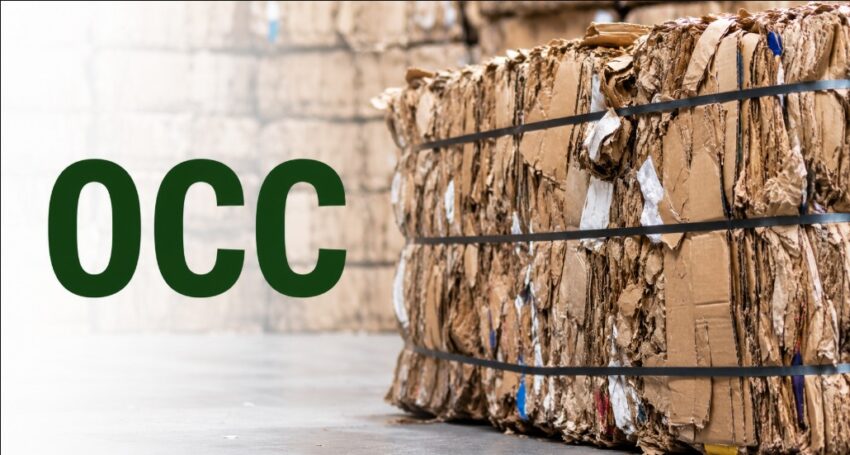
The OCC Price Trend in Q1 2026 showed a generally firm market, with prices moving higher across several important regions. The market was supported by better demand from packaging, food delivery, e-commerce, pharmaceutical, and industrial applications. At the same time, supply conditions remained relatively controlled, while recovered paper availability, freight expenses, and changing buying patterns continued to influence the market. Overall, the quarter reflected a gradual improvement rather than a sudden price spike.
Understanding the OCC Market
OCC, or Old Corrugated Container, is one of the most important recovered paper grades used by paper mills. It mainly comes from used corrugated boxes and shipping cartons. After collection and sorting, OCC is processed and used as a raw material for producing recycled containerboard and other paper products.
The market is closely connected with everyday business activity. When online shopping increases, more shipping boxes are used. When supermarkets, food companies, manufacturers, and warehouses become more active, the amount of used corrugated material also changes.
This makes OCC an interesting commodity to watch because its pricing is influenced by both supply and demand. A change in box consumption can eventually affect the availability and cost of recovered paper.
👉 👉 👉 Please submit your query to get OCC price trend, forecast, and market price analysis: https://www.price-watch.ai/book-a-demo/
What Happened to OCC Prices in Q1?
During Q1, the market showed a noticeable improvement compared with the previous quarter. The available market data indicated that global OCC prices increased by around 13% quarter over quarter.
This movement was not caused by one single factor. Instead, several smaller factors worked together.
Demand from packaging and shipping-related industries improved gradually. Buyers who had previously reduced inventories started returning to the market. Corrugated packaging manufacturers also became more active as order flows improved.
At the same time, OCC collection and supply remained relatively controlled in several markets. This helped prevent excess material from putting strong downward pressure on prices.
The result was a market that became firmer as the quarter progressed.
Why Did OCC Prices Move Higher?
One of the easiest ways to understand the OCC Prices movement is to look at the balance between available recovered paper and mill demand.
When mills need more OCC than is readily available, buyers may have to pay more to secure material. This can happen when collection volumes are lower, inventories decline, or downstream paper demand improves.
Another important factor was restocking.
After periods of inventory correction, many buyers tend to purchase only what they immediately need. Once their inventories become low, they return to the market and start rebuilding stocks. This can create additional buying pressure even if overall consumption has not changed dramatically.
Freight and logistics also remained important. OCC is traded across borders, so transportation costs can influence the final price paid by buyers. Changes in shipping availability, fuel costs, port activity, and regional logistics can all affect delivered prices.
United States OCC Market
The United States remained an important market for OCC during the quarter. The data indicated an increase of around 13% compared with the previous quarter.
The improvement was supported by better demand from corrugated packaging, FMCG-related packaging, food delivery, and e-commerce applications.
As business activity improved after the holiday period, packaging requirements also became healthier. This encouraged mills and buyers to return to more regular procurement patterns.
The market did not simply move higher because of demand. Inventory levels also played an important role. Some buyers had reduced their stocks earlier, creating the need for replenishment.
Monthly movements were more moderate than the overall quarterly increase, showing that OCC pricing can move differently from one month to another even when the broader trend remains positive.
India Market Movement
India also recorded a positive movement in OCC pricing during Q1. The market showed an increase of approximately 7% compared with the previous quarter.
Demand from corrugated box manufacturers remained important. Packaging requirements from e-commerce, FMCG, agriculture, retail, and industrial sectors supported consumption.
Another factor was restocking activity. As Indian paper mills and packaging producers adjusted their inventories, procurement became more active.
The market also benefited from relatively stable domestic consumption. Buyers were not necessarily building very large stocks, but regular procurement provided enough support to keep prices firm.
The Indian market demonstrates how local demand can influence the broader OCC market. Even when international conditions change, domestic packaging activity can provide an additional layer of support.
Spain and European Market Conditions
European markets also showed improvement during the quarter. Spain recorded a rise of around 5% in OCC pricing compared with the previous quarter.
The movement was linked to better downstream demand and improved purchasing activity. Corrugated packaging remained a major source of consumption, particularly for food distribution, delivery services, and general retail activity.
However, European buyers continued to remain careful. Instead of making very large purchases, many buyers focused on maintaining practical inventory levels.
This type of purchasing behavior can make the market more stable. Prices may rise gradually rather than moving sharply in either direction.
United Kingdom Market
The UK market showed a comparatively moderate increase of around 2%.
Demand from corrugated packaging and consumer-related sectors remained supportive. Buyers continued to monitor inventory levels and purchase according to actual requirements.
The smaller quarterly movement compared with some other regions highlights an important point: OCC markets do not always move at the same speed.
Local collection rates, mill demand, imports, exports, transportation costs, and inventory conditions can all create regional differences.
China and Asian Markets
China remained another important market to watch. OCC pricing in the Chinese market increased by around 12% during the quarter.
The market benefited from improving packaging consumption and better demand conditions. E-commerce and FMCG packaging continued to contribute to corrugated box demand.
At the same time, buyers remained sensitive to inventory levels. When inventories were sufficient, purchasing activity became slower. When stocks became tighter, buying interest increased.
Other Asian markets also recorded positive movements. Indonesia showed an increase of around 6%, while Vietnam recorded a rise of approximately 9%.
These movements indicate that demand across Asian packaging markets remained reasonably healthy during the quarter.
What the OCC Price Chart Shows
The OCC Price Chart provides a simple way to understand how the market changed across different regions.
Instead of looking at one number, buyers can compare regional movements and identify where prices are rising faster or remaining relatively stable.
A price chart is particularly useful for procurement teams because OCC is not priced identically everywhere. The same recovered paper grade can have different market values depending on collection conditions, quality, transportation costs, demand, and local availability.
For this reason, looking only at an average price may not provide the complete picture.
Why the OCC Price Index Matters
The OCC Price Index is another useful way to understand broader market direction. An index can help buyers identify whether the market is generally becoming stronger, weaker, or stable over a period.
For procurement teams, this can be useful when planning purchasing schedules. If the index shows a sustained upward movement alongside stronger demand and tighter supply, buyers may prefer to avoid unnecessary delays.
On the other hand, if the market starts weakening because inventories are high and demand is slowing, buyers may have more flexibility.
The index should therefore be viewed as a market signal rather than a guaranteed prediction of future prices.
What Buyers Should Watch Next
Several factors will remain important for OCC pricing.
- Packaging demand:
Growth in e-commerce, food delivery, retail, and industrial packaging can increase demand for corrugated boxes and, eventually, recovered OCC.
- Collection volumes:
The availability of used corrugated boxes directly affects the supply side. Higher collection can ease supply pressure, while lower collection can support prices.
- Mill operating rates:
When paper mills operate at stronger rates, their requirement for recovered fiber usually increases.
- Inventory levels:
Low inventories can encourage restocking and create short-term buying pressure. High inventories can have the opposite effect. - Freight costs:
For internationally traded OCC, transportation expenses can significantly influence delivered prices.
- Regional trade flows:
Changes in imports and exports can shift the balance between local supply and demand.
👉 👉 👉 Please submit your query to get OCC price trend, forecast, and market price analysis: https://www.price-watch.ai/book-a-demo/
How OCC Prices Can Affect Packaging
OCC pricing does not remain isolated from the rest of the paper industry. When recovered fiber becomes more expensive, the cost structure for recycled containerboard and corrugated packaging can also come under pressure.
Packaging manufacturers may then have to manage higher input costs. This can eventually influence the prices of corrugated boxes used by retailers, manufacturers, food companies, and logistics businesses.
This is why OCC is worth following even for businesses that do not directly purchase recovered paper.
The OCC Price Trend during Q1 2026 reflected a market that was moving toward firmer conditions. Prices increased across several major regions, supported by improving packaging demand, restocking activity, controlled supply, and higher logistics costs.
The regional picture was not identical. Some markets recorded stronger increases, while others showed more moderate movements. This difference highlights the importance of looking at local supply, demand, inventories, and transportation conditions rather than relying on a single global number.
For buyers, the most useful approach is to monitor the OCC Prices, follow the OCC Price Chart, and use the OCC Price Index alongside real purchasing conditions. These indicators can help businesses understand market direction and make more informed procurement decisions.
Overall, the quarter showed a healthier OCC market, but future price movements will continue to depend on packaging demand, recovered paper collection, mill requirements, inventory levels, and international logistics.
About Price-Watch™
Price-Watch AI is an India-based, independent raw material price reporting agency that provides real-time price forecasts and data-driven insights into global raw material markets. Price-Watch AI specializes in tracking raw material prices, analyzing market trends, and delivering timely updates on plant shutdowns, supply disruptions, capacity expansions, and demand-supply dynamics. The Price-Watch AI platform empowers manufacturers, traders, and procurement professionals to make faster, smarter decisions. Leveraging AI-powered forecasting and over a decade of historical data, Price-Watch AI transforms market volatility into actionable opportunity.
Futura Tech Park,
C Block, 8th floor 334,
Old Mahabalipuram Road,
Sholinganallur, Chennai, Tamil Nadu, Pincode – 600119.
𝐋𝐢𝐧𝐤𝐞𝐝𝐈𝐧: https://www.linkedin.com/company/price-watch-ai/
𝐅𝐚𝐜𝐞𝐛𝐨𝐨𝐤: https://www.facebook.com/people/Price-Watch/61568490385598/
𝐓𝐰𝐢𝐭𝐭𝐞𝐫: https://x.com/pricewatchai
𝐖𝐞𝐛𝐬𝐢𝐭𝐞: https://www.price-watch.ai/