
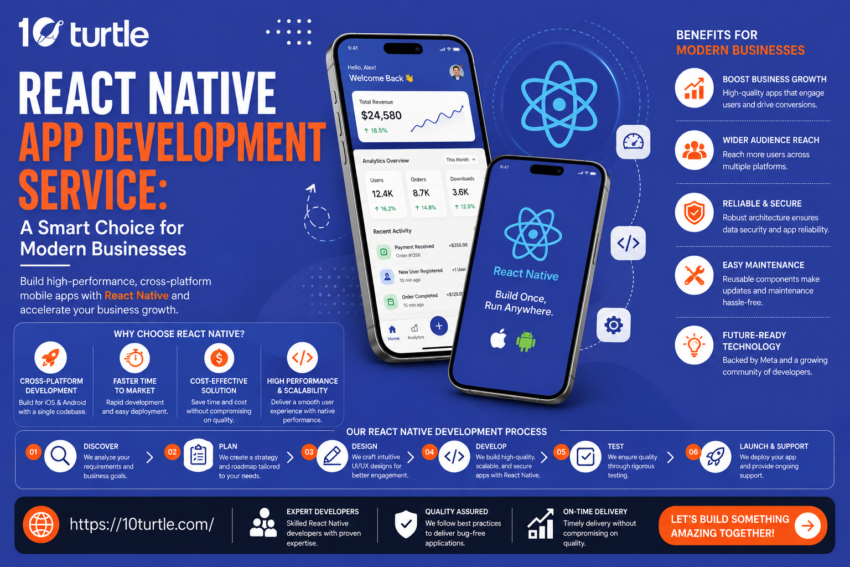
Every founder building a mobile product in the United States eventually hits the same fork in the road: build separate native apps for iOS and Android, or find a faster, more cost-efficient path. That’s exactly why a growing number of US companies are turning to a react native app development service instead of maintaining two parallel codebases. React Native lets teams write one JavaScript/TypeScript codebase and ship near-native experiences on both platforms, cutting timelines and budgets without sacrificing performance.
This shift isn’t a trend limited to Silicon Valley startups. Retail chains in Texas, healthcare providers in Florida, and fintech firms in New York are all leaning on react native app development company partners to modernize how they reach customers on mobile. The reasons are practical: faster releases, lower long-term maintenance costs, and a single team that can support both platforms.
Why Businesses Are Choosing React Native in 2026
React Native, backed by Meta and an active open-source community, has matured well beyond its early “hybrid app” reputation. Modern React Native apps render true native UI components, tap into device hardware directly, and perform on par with fully native builds for the vast majority of business use cases — e-commerce, on-demand services, internal enterprise tools, and consumer social apps included.
For companies comparing frameworks, react native vs flutter is one of the most common evaluations. Both are capable cross-platform tools, but React Native tends to win out for teams that already have JavaScript or web development talent in-house, since the learning curve is shorter and the hiring pool in the US is deeper. Flutter’s Dart language, while powerful, requires a more specialized skill set that can be harder to staff quickly.
The Real Business Case: Cost, Speed, and Reach
When companies search for react native app development cost, they’re usually trying to answer one question: is it actually cheaper than going native? In most cases, yes. Because a single codebase powers both iOS and Android, businesses typically see 30-40% savings on initial development compared to building two separate native apps, plus lower ongoing maintenance since bug fixes and feature updates only need to happen once.
Cross platform app development also means faster time-to-market. A feature that would take two sprints across separate iOS and Android teams often takes one sprint with a unified React Native codebase. For US businesses competing in fast-moving markets — retail during holiday seasons, fintech ahead of regulatory deadlines, healthcare apps racing to meet patient demand — that speed advantage translates directly into revenue and market share.
What to Look For When You Hire React Native Developers
Not every developer who has touched React Native is equipped to build a production-grade business app. When you hire react native developers or evaluate a react native app development agency, a few things matter more than a flashy portfolio:
- Proven native module experience. Real apps eventually need custom native code for camera access, push notifications, or payment SDKs. Ask for examples.
- Performance optimization track record. Poorly built React Native apps can lag; skilled teams know how to profile and fix this.
- App Store and Google Play submission experience, since US compliance requirements (privacy labels, data disclosures) have gotten stricter.
- Post-launch support model, since an app is never really “done” — it needs monitoring, OS-update compatibility checks, and iterative improvements.
A qualified react native mobile app development company should be able to walk you through all four of these without hesitation, backed by references or case studies from real US clients.
Industries in the US Seeing the Most Impact
Certain sectors are adopting React Native faster than others:
- Retail and e-commerce — unified shopping apps with real-time inventory sync across platforms
- Healthcare — patient portals and telehealth apps that need to launch quickly while staying HIPAA-conscious in how data is handled
- Fintech — budgeting and payment apps where fast iteration matters as regulations evolve
- Logistics and field services — internal tools for dispatch and tracking that need to work reliably on both Android and iOS devices in the field
This breadth of adoption is part of why demand for a reliable react native app development company usa businesses can trust keeps climbing — the framework has proven itself across very different use cases, not just one niche.
Choosing a US-Based React Native Partner
Working with a react native development company usa based has real advantages beyond time zone convenience: closer alignment with US data privacy expectations (like CCPA), easier real-time collaboration during business hours, and often a better understanding of the US app store review process and user expectations. Whether you’re comparing a best react native app development company shortlist for a greenfield build or looking to modernize an existing app, prioritize partners who can show transparent pricing, clear sprint-based delivery, and post-launch support — not just a slick pitch deck.
Final Thoughts
React Native has moved from “interesting alternative” to a mainstream, dependable choice for companies that want to move fast without compromising quality. For US businesses weighing their mobile strategy in 2026, partnering with an experienced react native app development company remains one of the smartest ways to launch a polished, reliable app on both iOS and Android — without doubling the budget or the timeline.
Frequently Asked Questions
1. How much does react native app development cost in the USA? Costs vary by app complexity, but most business apps range from $25,000 to $150,000+, generally 30-40% less than building separate native iOS and Android apps.
2. Is React Native good for enterprise-level apps? Yes. Companies like Shopify, Walmart, and Microsoft use React Native in production, proving it scales well beyond simple MVPs.
3. How long does it take to build a React Native app? A typical business app takes 3-6 months from discovery to launch, depending on feature complexity and integrations.
4. Can React Native apps access native device features? Yes — camera, GPS, push notifications, biometric authentication, and most native APIs are fully accessible through React Native’s native module system.
5. Should I hire a react native app development agency or a freelancer? For anything beyond a simple prototype, an agency typically offers more reliability: a full team (developer, QA, project manager), established processes, and accountability that’s harder to guarantee with a single freelancer.