
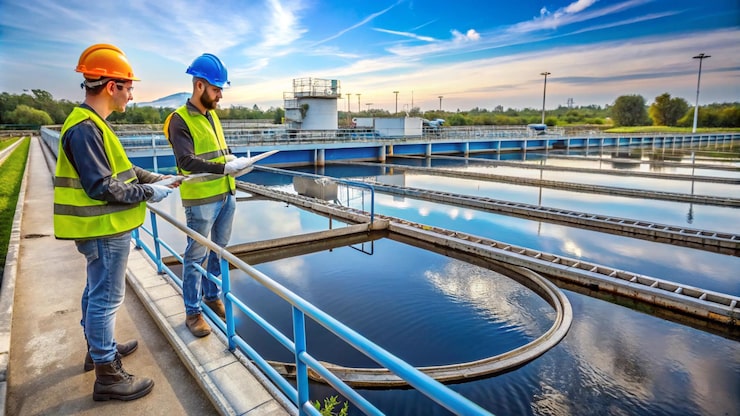
Peru’s water pump industry is being shaped by municipal water and sanitation gaps, large-scale irrigation development, mining activity, and growing investment in infrastructure. Uneven access to drinking water and sewerage, high non-revenue water, and the need to modernize wastewater facilities are increasing requirements for reliable pumping systems. At the same time, solar-powered pumps are emerging as an important option for rural and off-grid applications.
According to the Peru water pump market analysis published by MarkNtel Advisors, the sector was valued at around USD 0.17 billion in 2025 and is projected to reach USD 0.22 billion by 2032, expanding at a CAGR of 3.31% during 2026–2032. Water and wastewater accounted for approximately 15.43% of the sector in 2025, while the fire segment is projected to advance at a CAGR of 16.64% through 2032.
Water and Sanitation Gaps Are Sustaining Demand
Peru continues to face uneven access to essential water and sanitation services. The industry analysis indicates that around 3 million people, equivalent to 9.2% of the population, lack access to water services, while approximately 8.2 million, or 25.2%, lack access to sewerage services. The urban-rural divide is particularly significant, creating continued requirements for distribution expansion and pressure-boosting systems.
Sanitation access is estimated at 82.6% nationally, compared with 91.4% in urban areas and 51.1% in rural areas. These differences highlight the continuing need for water and wastewater infrastructure in underserved communities, where pumping systems can support water distribution, sewage transfer, and decentralized treatment.
The World Bank’s water and sanitation work in Peru provides broader context for the country’s continuing infrastructure and service-delivery requirements.
Irrigation Investment Is a Major Growth Driver
Agriculture is one of the most important forces shaping Peru’s water pump demand. Government investment in canals, reservoirs, and pressurized irrigation systems is expanding the need for centrifugal, submersible, and booster pumps used to lift and distribute water.
The industry analysis identifies a USD 24 billion portfolio of 22 large-scale irrigation projects announced in March 2025. The program aims to expand the agricultural frontier by more than 1 million hectares and support Peru’s long-term agro-export objectives.
Major developments such as Chavimochic III, Chinecas, and Pampas Verdes are also expected to require pumping infrastructure, water-transfer systems, and pressurized irrigation networks. In regions including La Libertad, Lambayeque, Ica, and Arequipa, the shift from gravity-fed systems toward drip, sprinkler, and micro-irrigation is increasing the importance of dependable pumping equipment.
Centrifugal Pumps Remain the Leading Technology
Centrifugal pumps lead Peru’s water pump industry because of their versatility, comparatively lower upfront cost, ease of maintenance, and suitability for continuous high-flow applications. Their use spans municipal water networks, wastewater systems, agriculture, and general industrial operations.
The availability of different configurations strengthens their applicability. End-suction, split-case, multistage, vertical, and submersible centrifugal pumps can address different flow and pressure requirements.
The industry analysis expects centrifugal pumps to retain their leading position during 2026–2032. Public investment in water infrastructure, pump replacement, energy-efficient upgrades, and increasing use of smart monitoring are expected to support their continued adoption.
Wastewater Infrastructure Requires Modernization
Water and wastewater accounted for around 15.43% of Peru’s water pump sector in 2025. While safely treated sewage improved from approximately 16% in 2015 to 50% in 2021, significant infrastructure challenges remain.
The industry analysis indicates that around 77% of Peru’s 171 wastewater treatment plants reportedly fail to meet discharge or reuse standards. Such conditions create requirements for equipment modernization, including submersible pumps, sludge pumps, and wastewater-transfer systems.
Future infrastructure development is expected to reinforce this demand. Eleven strategic projects in Lima and Callao are planned through 2030, comprising four wastewater treatment plants and seven drinking-water treatment plants. These projects are expected to create requirements for high-capacity pumping and digitally optimized infrastructure.
Water Losses Are Encouraging Smarter Pumping
Operational inefficiency is another important issue. Non-revenue water averages approximately 42.1%, while an estimated 611 million cubic meters of water went unbilled in 2024. These losses create pressure to improve leakage control, network management, and pumping efficiency.
Smart pumping systems can help utilities monitor pressure, flow, and equipment performance in real time. Variable-frequency drives can adjust pump operation according to changing demand, while sensors and connected monitoring platforms can identify abnormal conditions and support predictive maintenance.
The Inter-American Development Bank’s water and sanitation programs provide wider regional context on investments aimed at improving water access, sanitation, resilience, and infrastructure efficiency.
Solar Pumps Are Expanding in Rural Areas
Solar-powered pumping is emerging as an important trend in Peru, particularly in remote communities and agricultural areas with limited grid access. Falling photovoltaic costs, improved pump efficiency, and broader renewable-energy investment are supporting adoption.
The industry analysis notes that Peru installed approximately 195.4 MW of solar photovoltaic capacity in 2024. This expansion is creating a more favorable environment for solar water pumping, particularly in the Andean highlands and Amazon regions, where unreliable grid access and expensive diesel logistics can limit conventional pumping.
Solar pumps can support irrigation, livestock watering, and domestic water supply. However, the initial investment remains an important consideration for small farmers and rural households.
Financing Constraints Can Slow Modernization
Despite strong infrastructure requirements, high upfront costs remain a major challenge. Modern high-efficiency electric pumps, solar pumping systems, photovoltaic panels, batteries, and installation can require substantial capital.
The challenge is particularly relevant in remote areas where affordable financing options are limited. The industry analysis notes that financial institutions may treat water-pump projects as relatively high-risk, resulting in higher interest rates or strict collateral requirements.
These conditions can delay replacement of older and inefficient equipment and limit adoption of technologies such as variable-speed drives and solar systems. Financing availability is therefore likely to remain an important factor influencing modernization.
Fire Protection Is Emerging as a High-Growth Application
The fire segment is projected to expand at a CAGR of 16.64% during 2026–2032, making it the fastest-growing end-user category in the industry analysis.
Growing enforcement of industrial safety requirements, commercial construction, infrastructure modernization, and adoption of integrated fire-protection systems are supporting this development. Fire pumps must deliver reliable pressure and flow during emergency conditions, placing particular emphasis on equipment reliability and compliance.
This growth demonstrates that Peru’s water pump demand is extending beyond conventional irrigation and municipal applications into specialized infrastructure requirements.
Peru Is Moving Toward More Resilient Pumping
Peru’s water pump industry is increasingly connected to the country’s broader efforts to improve water access, agricultural productivity, sanitation, and infrastructure resilience. Government-backed irrigation projects provide a major source of demand, while municipal water and wastewater upgrades support replacement and modernization activity.
Centrifugal pumps are expected to remain the dominant technology because of their broad applicability and cost-effectiveness. Meanwhile, solar-powered pumps, smart monitoring, and specialized wastewater systems are creating additional areas of development.
The longer-term direction points toward pumping infrastructure that combines dependable water movement with greater energy efficiency, digital control, and adaptability to Peru’s geographic and resource constraints.