
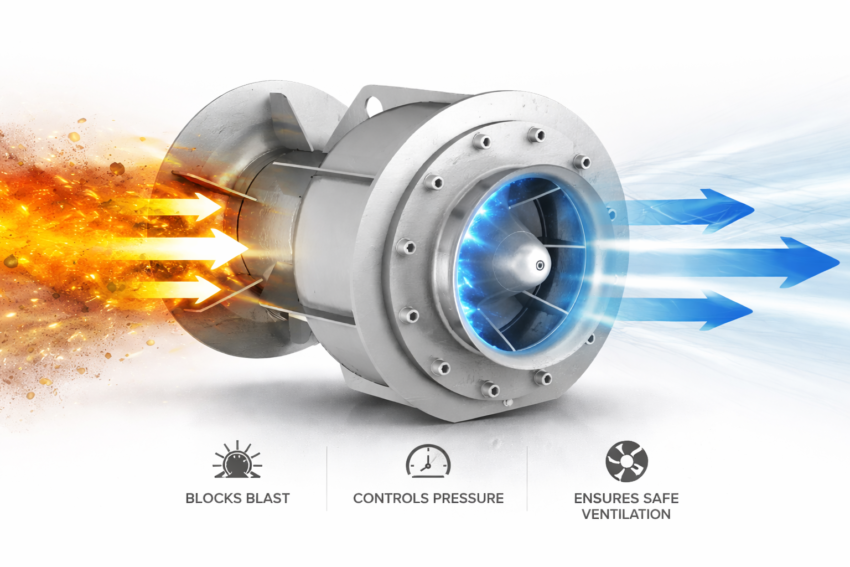
A high-security defence bunker is conducting its final commissioning tests before becoming operational. Engineers simulate an external blast to verify the ventilation system’s response. While one component instantly seals the ductwork against the incoming shockwave, another regulates internal air pressure to protect the HVAC equipment. Both devices are critical, but they perform very different functions. Understanding the difference between blast valves and pressure relief valves is essential for designing safe HVAC systems in defence, industrial, and critical infrastructure projects.
What are Blast Valves?
Blast valves are specialised protective devices designed to shield ventilation systems from explosion-generated overpressure. Installed in air intake and exhaust ducts, they automatically close when exposed to a sudden pressure wave, preventing destructive blast energy from entering a protected facility.
Unlike standard HVAC valves, blast valves are engineered specifically for explosion resistance. Their primary purpose is to protect occupants, equipment, and structural integrity during blast events while allowing unrestricted airflow during normal operation.
Whether installed as a Blast valve for bunker or within industrial facilities, these valves are an integral part of modern blast-resistant ventilation systems.
Blast Valve vs Pressure Relief Valve
Although both devices are associated with pressure management, they solve different engineering problems.
A Blast valve HVAC system protects against external overpressure caused by explosions. It reacts within milliseconds, automatically closing to stop shockwaves from travelling through the ventilation network.
A pressure relief valve, on the other hand, protects equipment from internal pressure buildup. When pressure inside a duct, vessel, or pipeline exceeds a safe limit, the valve opens to release excess pressure and prevent equipment damage.
In simple terms:
- Blast valve: Stops external blast pressure from entering the facility.
- Pressure relief valve: Releases internal pressure to protect the HVAC system or process equipment.
Many critical facilities require both devices because they address different safety risks.
How Blast Valves Work Under Explosion Pressure
During normal operation, a Blast valve HVAC installation allows unrestricted airflow through the ventilation system.
When an explosion creates a high-pressure shockwave, the valve senses the rapid pressure increase and closes automatically. This immediate action blocks the blast wave before it can travel through ducts and reach occupied areas.
After the pressure subsides, the valve reopens, restoring normal airflow. This automatic cycle provides effective shockwave protection without interrupting routine ventilation.
Key Features of High-Quality Blast Valves
Modern blast valves are engineered for reliability under extreme operating conditions.
Key features include:
- High pressure resistance
- Heavy-duty structural strength
- Corrosion-resistant construction
- Long service life
- Excellent sealing efficiency
- Efficient airflow management
- Fast automatic response
- Consistent safety performance
These features ensure dependable protection while maintaining the efficiency of the ventilation system.
Where Blast Valves are Used
Blast valves are installed wherever explosion protection is a design requirement.
Common applications include:
- Military bunkers and underground shelters
- Defence command centres
- Industrial manufacturing plants
- Chemical and petrochemical facilities
- Nuclear and thermal power stations
- Hazardous processing environments
- Emergency operation centres
- Critical infrastructure
- High-security Blast valve HVAC installations
A Blast valve for bunker is especially important because ventilation ducts are one of the few unavoidable openings in a blast-resistant structure.
Some buyers mistakenly compare blast valves with a Blast Gate or a Blast damper. However, these components serve different purposes. A blast gate regulates airflow in industrial dust collection systems, while a blast damper controls ventilation under standard operating conditions. Neither is designed to resist explosion-generated shockwaves like a certified blast valve.
Factors Affecting Blast Valve Price in India
The Blast valve price depends on several engineering considerations.
Major pricing factors include:
- Material quality
- Pressure rating
- Valve design complexity
- Manufacturing precision
- Custom engineering requirements
- Compliance with certification standards
- Installation environment
- Valve size and airflow capacity
- Protective surface coatings
- Factory testing requirements
Higher-performance valves designed for defence and critical infrastructure generally require more specialised manufacturing and testing, influencing the overall cost.
How to Choose Blast Valve Manufacturers in India
Selecting the right manufacturer is essential for ensuring long-term performance and operational safety.
Before making a purchasing decision, evaluate:
- Industry experience
- Engineering expertise
- Product testing capabilities
- Compliance certifications
- Manufacturing quality systems
- Customisation capability
- Technical documentation
- Installation assistance
- Maintenance support
- Proven project references
Engineers seeking more information about can review technical resources that explain product design, testing methods, and application requirements before specifying equipment.
Common Mistakes to Avoid
Several common mistakes reduce the effectiveness of blast protection systems.
These include:
- Choosing products based only on Blast valve price
- Ignoring required pressure ratings
- Installing valves incompatible with HVAC airflow requirements
- Confusing a Blast Gate or Blast damper with an explosion-rated blast valve
- Overlooking maintenance and inspection schedules
- Using incorrect specifications for high-risk facilities
- Failing to verify testing documentation
- Selecting suppliers without technical support
A proper engineering assessment helps ensure the selected valve matches the facility’s operational requirements.
Understanding the Term “Blast Valve Hot Air Balloon”
The phrase Blast valve hot air balloon refers to the venting system used in hot air balloons to release heated air during flight control and landing. Although the terminology is similar, these aviation valves are unrelated to industrial blast valves used in HVAC systems, bunkers, or explosion-resistant infrastructure. Their design, operating conditions, and safety functions are entirely different.
Conclusion
Blast valves and pressure relief valves both contribute to HVAC safety, but they are designed to address different hazards. A pressure relief valve protects equipment from excessive internal pressure, while a blast valve safeguards ventilation systems against destructive external shockwaves caused by explosions.
For defence facilities, industrial plants, power stations, and other high-risk environments, understanding this distinction is essential when designing a reliable protective ventilation system. By selecting properly engineered blast valves, verifying product testing, and working with experienced manufacturers, organisations can strengthen pressure management, improve explosion resilience, and ensure long-term infrastructure protection. In critical environments where failure is not an option, choosing the right valve for the right purpose is a fundamental part of effective HVAC safety.