
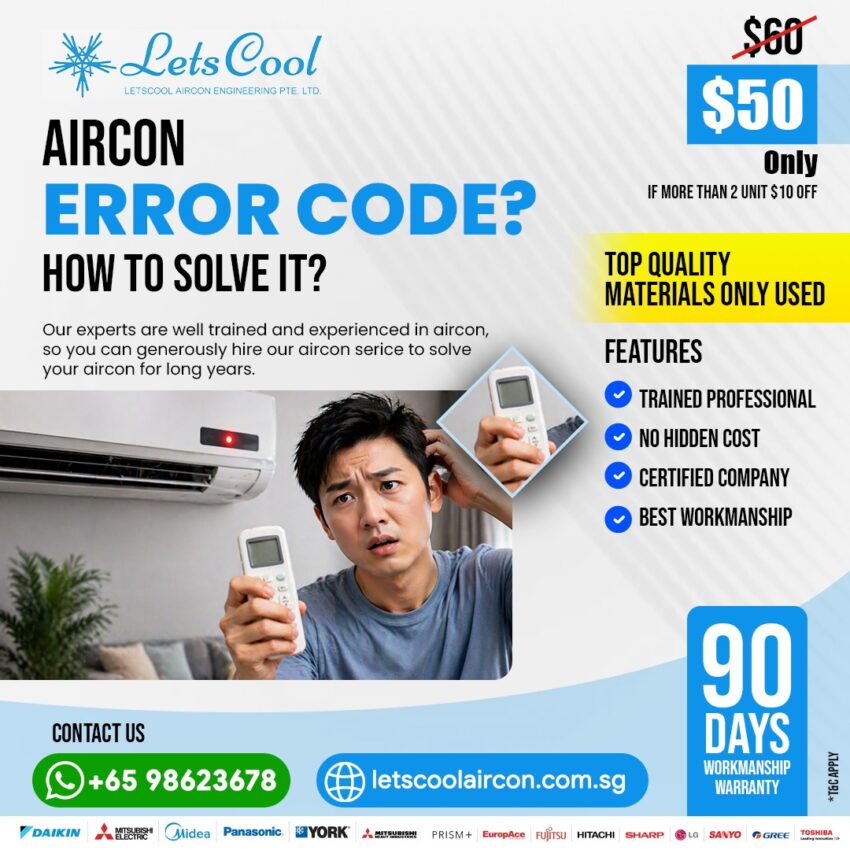
Aircon Error Code
An air conditioner that suddenly displays an aircon error code and makes a loud noise can be worrying. Many homeowners may wonder whether they should continue using the unit or switch it off immediately. While some noises are minor, a combination of an error code and unusually loud sounds can indicate a problem that needs attention.
Switching off the aircon is often the safest first step until the cause is identified. Continuing to operate a faulty unit may sometimes make the problem worse.
What Does an Aircon Error Code Mean?
Modern air conditioners use electronic sensors and control systems to monitor different parts of the unit. When something is not operating normally, the system may display an error code or cause an indicator light to blink.
An aircon error code can relate to different problems, including sensor faults, communication issues, drainage problems, fan problems, or compressor-related issues. The exact meaning depends on the aircon brand and model.
If an error code appears together with a loud noise, it is better not to ignore the warning. Checking the user manual can help identify what the specific code means, but professional inspection may be necessary if the problem continues.
View More: aircon becomes much colder after chemical cleaning?
Why Is My Aircon Making a Loud Noise?
Air conditioners can produce different sounds during normal operation. However, sudden or unusually loud noises should not be ignored.
Some common causes include:
- A loose fan blade
- Dirt buildup around the blower fan
- A damaged indoor fan motor
- Loose screws or internal components
- A blocked air filter
- Refrigerant-related problems
- Compressor problems
- Debris inside the outdoor unit
- Electrical or mechanical faults
A rattling sound may indicate a loose component, while grinding or screeching could suggest a problem with a motor or moving part. A buzzing noise may sometimes be related to an electrical component.
The type of sound can provide useful information, but only a proper inspection can confirm the actual cause.
Should You Switch Off the Aircon?
If your aircon displays an error code and produces an unusually loud noise, switching it off is generally the safest option.
Turn the unit off using the remote control. If the aircon continues making a strange sound after being switched off, you can turn off the power supply at the appropriate isolator or circuit breaker if it is safe to do so.
Avoid repeatedly switching the aircon on and off to see whether the problem disappears. If the fault is mechanical or electrical, continued operation could potentially cause further damage.
If you notice smoke, a burning smell, sparks, or signs of overheating, switch off the power and seek professional assistance immediately.
Can Regular Aircon Servicing Prevent These Problems?
Regular maintenance can help identify many developing aircon problems before they become serious. During aircon servicing Singapore, technicians can inspect important components and clean accumulated dust and dirt.
Aircon general servicing commonly includes cleaning filters, checking the indoor unit, inspecting drainage, checking operating performance, and examining accessible components.
For heavily contaminated systems, an aircon chemical wash may be recommended. This deeper cleaning can remove stubborn dirt from internal components such as the blower and evaporator coil.
Regular maintenance does not guarantee that an aircon will never develop a fault, but it can help maintain performance and identify potential issues earlier.
When Should You Call an Aircon Repair Technician?
You should consider professional aircon repair Singapore when the error code remains after restarting the unit, the loud noise continues, or the aircon stops cooling properly.
Professional assistance is particularly important when the issue involves electrical components, motors, sensors, or the compressor. Trying to dismantle or repair these components yourself can be unsafe and may cause additional damage.
A technician can inspect the unit, identify the error code, check the affected components, and recommend the appropriate repair.
If your aircon is also not cold, the technician may check the filters, evaporator coil, fan operation, refrigerant system, and other components. An aircon gas top-up should only be carried out when low refrigerant is confirmed as the cause.
How LetsCool Aircon Can Help
If you are searching for the best aircon servicing Singapore, LetsCool Aircon provides aircon servicing, cleaning, maintenance, and aircon repair solutions for homes and businesses.
When an aircon displays an error code or produces an unusual noise, professional inspection can help determine whether the issue requires cleaning, repair, or replacement of a faulty component.
LetsCool Aircon can help customers identify the cause of common problems and recommend a suitable solution based on the condition of the system.
Regular maintenance is also useful for Singapore homes and offices because air conditioners are often used frequently throughout the year.
Final Thoughts
An aircon error code combined with a loud or unusual noise should not be ignored. Switching the unit off is usually the safest first step, especially when the sound is sudden, unusually loud, or accompanied by poor cooling or other warning signs.
Check the error code information for your specific model and arrange a professional inspection if the problem continues. Avoid attempting electrical or mechanical repairs yourself.
With regular servicing and timely repairs, homeowners can help keep their air conditioning systems operating safely and efficiently.
Aircon servicing Singapore
11 Mandai Estate,
#05-15 Eldix,
Singapore 729908
Mail ID: info@letscoolaircon.com.sg
Service -WhatsApp Call: +65 9862 3678
Installation – WhatsApp Call: +65 94507178
#AirconErrorCode #AirconRepairSingapore #AirconServicingSingapore #AirconServiceSingapore #AirconNotCold #AirconLoudNoise #AirconMaintenance #AirconGeneralServicing #AirconChemicalWash #AirconTechnician #AirconProblems #SingaporeAircon #AirconCare #LetsCoolAircon #AirconRepair #AirconTips