
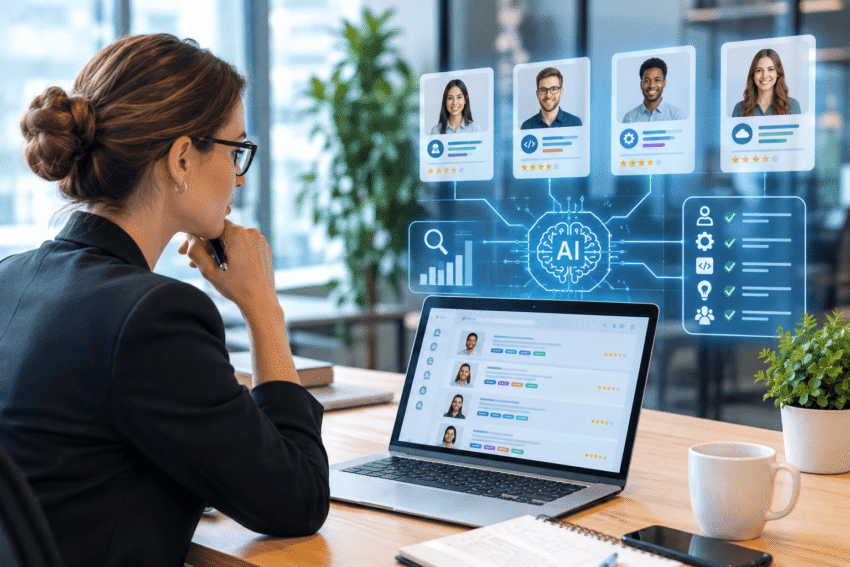
Artificial intelligence is changing the way businesses manage technology, automate processes, and support their customers. For Managed Service Providers (MSPs), this shift is also changing the type of IT professionals they need to hire.
AI-powered monitoring, automation, cloud platforms, cybersecurity tools, and intelligent service desks are becoming increasingly important in modern IT environments. However, AI is not eliminating the need for skilled IT professionals. Instead, it is creating demand for candidates who can work alongside these technologies and use them effectively.
For MSPs, hiring in 2026 is therefore less about finding candidates with traditional technical knowledge alone and more about identifying professionals with a combination of technical expertise, adaptability, problem-solving ability, and AI awareness.
How AI Is Changing the MSP Workforce
AI is increasingly being integrated into everyday IT operations. MSPs can use intelligent tools to automate repetitive service desk tasks, identify unusual network activity, monitor infrastructure, analyze data, and assist technicians with troubleshooting.
This allows IT professionals to spend less time on repetitive tasks and more time handling complex technical issues and strategic client requirements.
As a result, MSP hiring strategies are also evolving. Instead of viewing AI as a replacement for IT professionals, MSPs should look for candidates who understand how to use automation and AI tools to improve efficiency while still providing human oversight.
Businesses looking to strengthen their technology teams can also explore specialized MSP IT recruiting services to identify candidates with the technical and interpersonal skills required in modern managed service environments.
Why AI Skills Matter in MSP Hiring
AI knowledge does not necessarily mean that every MSP employee needs to become an AI developer. For most IT roles, practical knowledge is more valuable.
Candidates may need to understand how AI-powered tools can support:
- IT monitoring and alert management
- Helpdesk automation
- Network troubleshooting
- Cybersecurity monitoring
- Predictive maintenance
- Data analysis
- Cloud management
- Workflow automation
- Ticket prioritization and resolution
Candidates who understand these applications can potentially help MSPs improve service delivery while reducing unnecessary manual work.
1. AI and Automation Awareness
One of the most valuable skills for MSP professionals in 2026 is an understanding of automation.
Technicians and engineers should know how automated workflows operate and how to identify tasks that can be safely automated. They should also understand when human intervention is necessary.
For example, an automated system may identify a network problem, but an experienced engineer may still be required to determine the underlying cause and decide on the appropriate solution.
MSPs should therefore look for professionals who can combine automation with sound technical judgment.
2. Cloud Computing Skills
Cloud environments continue to play an important role in modern IT infrastructure. MSPs increasingly need professionals who understand cloud platforms, virtualization, identity management, cloud security, and hybrid environments.
AI-powered technologies are also increasingly integrated into cloud platforms, making cloud knowledge even more valuable.
Candidates with cloud and infrastructure expertise can help MSPs manage increasingly complex client environments while supporting automation and digital transformation initiatives.
For organizations looking to build teams with specialized technical expertise, IT engineering staffing can be particularly relevant when hiring professionals across infrastructure, networking, cloud, and cybersecurity functions.
3. Cybersecurity Knowledge
The increased use of AI also creates new cybersecurity considerations.
MSPs are responsible for protecting client systems, networks, applications, and data. As organizations adopt more automated and connected technologies, IT professionals need to understand security risks and best practices.
MSPs should consider candidates with knowledge of areas such as:
- Network security
- Endpoint protection
- Identity and access management
- Threat detection
- Security monitoring
- Vulnerability management
- Data protection
- Security awareness
Cybersecurity professionals who can work with AI-assisted security tools can provide additional value by combining automated threat detection with human analysis.
4. Strong Problem-Solving Skills
AI can identify patterns and provide recommendations, but it does not remove the need for human decision-making.
MSP environments often involve complicated client infrastructures where problems may have multiple causes. A technician or engineer must be able to investigate an issue, evaluate available information, identify the root cause, and determine the most appropriate solution.
For this reason, recruiters should assess problem-solving ability alongside technical certifications and experience.
Candidates who demonstrate analytical thinking and structured troubleshooting can become particularly valuable as MSP environments become more automated.
5. Adaptability and Continuous Learning
Technology changes quickly. The tools that MSP professionals use today may look very different in the next few years.
MSPs should therefore prioritize candidates who demonstrate a willingness to learn new technologies and adapt to changing workflows.
Recruiters can look for evidence such as:
- Recent technical certifications
- Experience learning new platforms
- Participation in technical training
- Familiarity with automation tools
- Exposure to emerging technologies
- A history of taking on new responsibilities
A candidate who is willing to continuously develop their skills may be better positioned to grow alongside an MSP’s technology environment.
6. Communication and Client Management
Technical knowledge is only one part of successful MSP service delivery.
IT professionals frequently communicate with clients, explain technical problems, provide updates, and help users understand recommended solutions.
AI can automate certain communication and support functions, but complex client interactions still require empathy, clarity, and professional judgment.
MSPs should therefore avoid focusing exclusively on technical qualifications. Strong communication and customer-service skills can be equally important when hiring technicians, engineers, and support professionals.
7. Data and Analytical Skills
AI relies heavily on data, and modern MSPs generate large amounts of operational information through monitoring systems, ticketing platforms, security tools, and infrastructure management solutions.
IT professionals who can interpret data and identify meaningful patterns can help MSPs make better operational decisions.
For example, data analysis can help teams identify recurring service desk issues, determine infrastructure performance trends, and recognize potential problems before they significantly affect clients.
Basic data literacy is therefore becoming increasingly useful across a range of MSP roles.
AI Is Changing Roles, Not Eliminating Them
One of the biggest misconceptions surrounding AI and IT recruitment is that automation will eliminate the need for technicians and engineers.
In reality, AI can change how these professionals spend their time.
Routine tasks may become increasingly automated, while employees focus on:
- Complex troubleshooting
- Infrastructure planning
- Security decisions
- Client relationships
- Technology strategy
- System optimization
- Escalation management
This means MSPs may need fewer resources dedicated to repetitive tasks while placing greater value on experienced professionals who can manage complex situations.
How MSPs Can Adapt Their Hiring Strategy
MSPs should review their job descriptions and recruitment processes to reflect the changing technology landscape.
Instead of simply listing traditional requirements, employers can consider adding skills related to automation, AI-assisted tools, cloud platforms, cybersecurity, analytics, and adaptability.
It is also important to distinguish between roles that require deep AI expertise and roles where basic AI awareness is sufficient.
For example, an infrastructure engineer may need advanced knowledge of automation and cloud technologies, while a Tier 1 technician may primarily need to understand how AI-assisted ticketing and troubleshooting tools fit into their workflow.
MSPs should also consider whether they need permanent employees, contract professionals, or specialized recruitment support for particular projects.
Understanding the difference between MSP recruitment and MSP staffing can help organizations choose an approach that matches their operational requirements.
What Should MSP Recruiters Look for in 2026?
When evaluating candidates, recruiters can consider a combination of technical and soft skills.
A strong MSP candidate may demonstrate:
- Relevant IT experience
- Cloud and infrastructure knowledge
- Cybersecurity awareness
- Automation experience
- AI tool familiarity
- Strong troubleshooting ability
- Analytical thinking
- Communication skills
- Customer-service experience
- Adaptability
- A commitment to continuous learning
The ideal combination will vary depending on the position, but the overall trend is clear: MSPs need professionals who can work effectively in increasingly automated environments.
Building a Future-Ready MSP Team
AI is creating a new phase of IT staffing in which technical expertise and technology adaptability go hand in hand.
MSPs that continue hiring solely around traditional skill sets may find it harder to keep pace with changing client expectations. Organizations that evaluate candidates based on both technical capabilities and their ability to adapt to AI, automation, cloud, and cybersecurity trends can build more resilient teams.
The goal is not simply to hire people who understand AI. It is to hire IT professionals who know when, where, and how to use technology effectively while applying human judgment where it matters most.
Conclusion
AI is transforming MSP operations, but skilled IT professionals remain essential. The biggest change is in the skills MSPs should prioritize when building their teams.
Cloud expertise, cybersecurity knowledge, automation awareness, analytical thinking, communication, problem-solving, and adaptability are becoming increasingly valuable alongside traditional IT capabilities.
For MSPs preparing for the future, updating their recruitment strategy today can help them build teams that are capable of supporting both current infrastructure and emerging technologies. With the right talent strategy, AI can become a tool that strengthens IT teams rather than a replacement for them.