
When most people think of Egypt, their minds instantly drift to the towering pyramids of Giza, the Valley of the Kings, and the golden treasures of Tutankhamun. Yet, beyond the ancient Pharaonic wonders lies a deeply moving and spiritually rich chapter of Egyptian history: its Coptic Christian heritage.
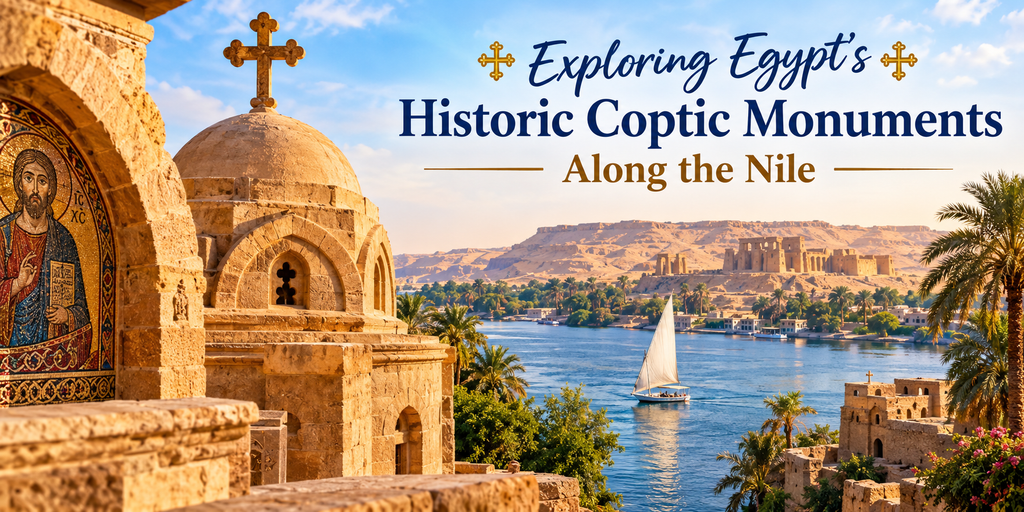
Stretching along the winding banks of the Nile River, ancient churches, hidden monasteries, and sacred sanctuaries offer a peaceful glimpse into the early days of Christianity. If you are looking to step off the beaten tourist path and experience a profound spiritual journey, exploring Egypt’s historic Coptic monuments is an unforgettable adventure.
The Roots of Coptic Christianity in Egypt
Christianity arrived in Egypt during the 1st century AD, traditionally introduced by Saint Mark the Evangelist in Alexandria. The word “Coptic” simply means “Egyptian,” and the Coptic Orthodox Church is one of the oldest Christian bodies in the world.
Despite centuries of change, the Coptic community has preserved its unique liturgy, art, architecture, and language—which is a direct descendant of the ancient Egyptian language. Traveling along the Nile to discover these sacred sites connects you directly to a resilient and vibrant living history.
Must-Visit Coptic Landmarks Along the Nile
1. Old Cairo: The Hanging Church and Saints Sergius and Bacchus
Your journey should begin in the heart of Old Cairo (Coptic Cairo), easily accessible near the Nile. Before you set out on your travels, it is wise to make sure your paperwork is in order by securing an Egypt Tourist Visa ahead of time so your arrival in Cairo is completely stress-free.
-
The Hanging Church (Al-Muallaqa): Named because it is suspended high above the gatehouse of an old Roman fortress, this 7th-century marvel features stunning wooden roof beams shaped like Noah’s ark and intricate icon paintings.
-
Saints Sergius and Bacchus Church: Believed to stand upon the very spot where the Holy Family—Mary, Joseph, and the baby Jesus—took shelter during their flight into Egypt, this crypt is a place of immense peace and quiet reflection.
2. The Monastery of Saint Anthony and Saint Paul (Red Sea & Eastern Desert Region)
While a bit inland from the central Nile Valley, no Coptic tour is complete without mentioning the world’s oldest Christian monastery. Founded in the 4th century by followers of Saint Anthony the Great, nestled against the rugged Red Sea mountains, these monastic complexes served as the birthplace of Christian monasticism before spreading to the rest of the world.
3. The White Monastery and Red Monastery of Sohag
Traveling further south along the Nile toward Upper Egypt brings you to Sohag, home to some of the most impressive early Christian architecture outside of Cairo.
-
The White Monastery (Deir el-Abyad): Built in the 5th century using stones from ancient Pharaonic temples, its exterior resembles an ancient Egyptian fortress, while its interior houses magnificent basilicas and ancient wooden screens.
-
The Red Monastery (Deir el-Ahmar): Known for its remarkably well-preserved Byzantine wall paintings and glowing red brickwork, it offers a breathtaking look at early Christian art.
4. The Island of Philae and Christian Adaptations
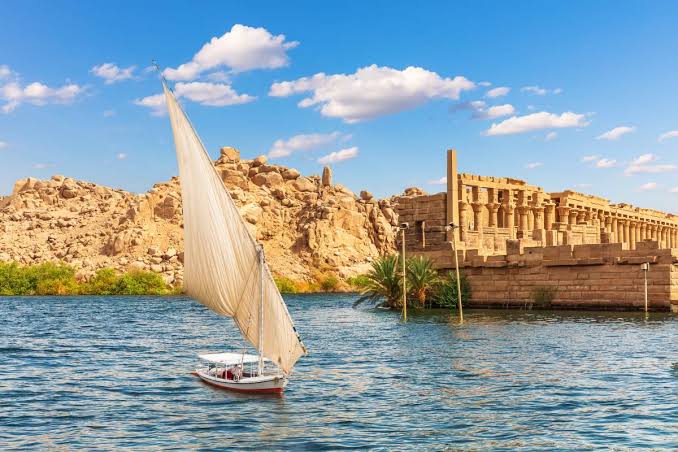
As you cruise down the Nile toward Aswan, you will encounter the famous Temple of Philae. While primarily dedicated to the goddess Isis, the temple complex was later converted into a Christian church during the Byzantine era. Walking through these stones reveals a fascinating physical transition where pagan carvings stand side-by-side with early Christian crosses.
Practical Tips for Your Coptic Heritage Journey
-
Dress Modestly: Because these are active places of worship, both men and women should wear clothing that covers their shoulders and knees. Women may also want to carry a light scarf to cover their heads when entering certain sanctuaries.
-
Hire Local Guides: To truly appreciate the rich symbolism behind the icons, architecture, and history, booking a knowledgeable local guide adds incredible depth to your experience.
-
Best Time to Visit: The cooler months between October and April provide the most comfortable weather for exploring historical sites along the Nile.
-
Organize Your Documentation Early: Before packing your bags, make sure your travel paperwork is fully sorted out. Utilizing a trusted online platform to apply for your Egypt Tourist Visa ensures you won’t have to worry about complicated embassy queues.
Plan Your Seamless Trip to Egypt Today
Embarking on a cultural and spiritual expedition along the Nile is a dream come true for history lovers and spiritual seekers alike.
If you need a fast and reliable way to secure your travel paperwork, getting support from trusted experts makes all the difference. Enjoy reliable travel visa services backed by a global approach that has assisted numerous travelers. Take advantage of round-the-clock assistance where experts respond within 72 hours, and receive guidance from experienced visa consultants to ensure your application’s success. With an efficient visa application process featuring a simplified form, you can start your Egypt Tourist Visa application in minutes and focus entirely on planning your unforgettable journey along the Nile!