

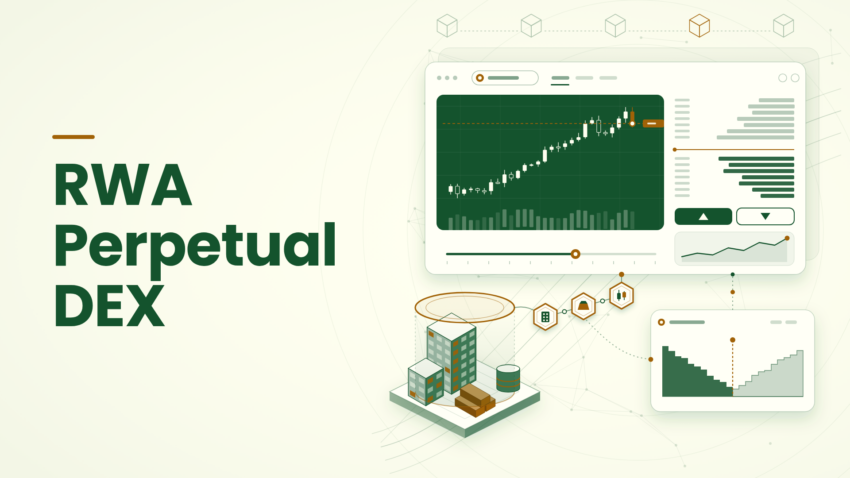
Perpetual DEXs are no longer limited to crypto-native assets. As tokenization brings assets from traditional markets onto blockchain networks, businesses are exploring new ways to create markets around real-world assets (RWAs).
But building an RWA perpetual market is not simply a matter of taking an existing crypto perpetual DEX and adding tokenized assets.
RWA Perpetual DEX Development requires a different infrastructure approach because the underlying assets can involve ownership records, valuation data, compliance requirements, custody, and real-world settlement considerations.
So, what actually makes an RWA perpetual DEX different?
1. The Underlying Assets Are Different
A traditional crypto perpetual DEX primarily works with digital assets such as BTC, ETH, and other crypto tokens. Their market data and trading activity exist almost entirely within digital ecosystems.
RWA markets can represent assets such as real estate, commodities, securities, private credit, or other off-chain assets.
This creates an additional connection between blockchain infrastructure and external asset data.
For an RWA Trading Platform Development project, the system may need to connect tokenized representations with information about the underlying asset, rather than treating the token as an isolated digital asset.
2. Price Discovery Requires More Than Crypto Market Data
Crypto perpetual markets can generally rely on established crypto exchanges, liquidity pools, and blockchain-based market data to support price discovery.
RWAs can be different.
The value of a tokenized real-world asset may depend on external valuations, market reports, reference prices, or other off-chain information.
That means RWA Perpetual DEX Development needs carefully designed oracle and data-feed infrastructure.
The platform has to determine how external information enters the trading environment and how that information influences pricing, margin calculations, and liquidations.
3. Compliance Becomes Part of the Architecture
Crypto perpetual DEX infrastructure is already subject to regulatory considerations, but RWA platforms can introduce additional requirements depending on the asset, jurisdiction, users, and structure of the product.
For U.S.-focused businesses, this consideration is particularly important.
An RWA platform may need mechanisms for identity verification, access restrictions, investor eligibility, transaction monitoring, and jurisdiction-based controls.
Therefore, RWA Platform Development should consider compliance requirements from the beginning instead of treating them as an add-on after the trading engine has been built.
4. Asset Ownership and Trading Are Connected
With a crypto perpetual contract, the trader is typically speculating on the price movement of a digital asset.
With an RWA-based market, the relationship between the tokenized asset, the underlying asset, and the trading product needs to be clearly defined.
For example, a platform could provide exposure to the price movement of a tokenized real estate asset without transferring direct ownership of the physical property through every trade.
This distinction affects how the platform handles tokenization, custody, settlement, and user-facing disclosures.
That is why Real-World Asset Tokenization and perpetual trading infrastructure need to be designed as connected components.
5. Liquidity Design Can Be More Complex
Liquidity is critical for any perpetual DEX.
However, RWA markets may initially have fewer participants and less established trading volume than major crypto markets.
A business planning Perpetual DEX Development therefore needs to think carefully about liquidity sources, market-making mechanisms, collateral models, and risk management.
The objective is not simply to launch another trading interface. The platform needs infrastructure capable of supporting active markets while managing the risks associated with less liquid underlying assets.
6. Risk Management Needs a Broader View
Crypto perpetual platforms commonly manage risks such as volatility, leverage, liquidation, funding rates, and oracle manipulation.
RWA perpetual markets can involve these same risks while introducing additional considerations.
Asset valuation can change based on external market conditions. Data availability may vary. Underlying assets may have different liquidity characteristics. Some assets may also have restrictions around transfer or redemption.
For an RWA Trading Platform Development project, risk controls should therefore account for both blockchain-native trading risks and asset-specific risks.
7. The Infrastructure Connects On-Chain and Off-Chain Systems
This is perhaps the biggest difference.
A crypto perpetual DEX can operate largely within blockchain-based infrastructure.
An RWA perpetual DEX may need to connect several layers:
Real-World Asset → Tokenization → External Data → Oracle → Trading Engine → Risk Management → Settlement
Each layer has a role in keeping the market connected to the underlying asset and its relevant data.
For businesses entering this market, choosing an experienced Decentralized Exchange Development team can help ensure that these components are considered together rather than developed as isolated features.
RWA Perpetual DEX vs. Crypto Perpetual DEX
The core difference comes down to what the platform is connecting to.
A crypto perpetual DEX primarily connects traders with blockchain-native market infrastructure.
An RWA perpetual DEX connects traders with market infrastructure that also depends on real-world assets, external data, tokenization frameworks, compliance controls, and asset-specific risk models.
That difference changes how the platform should be designed.
Building an RWA Perpetual Market?
If you are a U.S. business, Web3 founder, or blockchain entrepreneur planning to build an RWA platform, the trading interface is only one part of the project.
The larger challenge is creating infrastructure that connects tokenized assets, pricing data, liquidity, compliance, risk management, and perpetual trading into one coherent system.
With the right architecture, an RWA perpetual DEX can provide a structured environment for exploring perpetual markets around tokenized real-world assets.
If your business is planning RWA Perpetual DEX Development, start by defining the asset model, target users, jurisdiction, liquidity strategy, oracle architecture, and risk framework before moving into platform development.