

Search engine optimization is no longer about looking at overall website traffic and making broad assumptions. Modern SEO requires a deeper understanding of which users visit a website, how they behave, which pages attract them, and what actions they take. This is where analytics segmentation becomes valuable.
A skilled SEO company can divide website data into meaningful groups and examine each segment separately. Instead of treating all organic visitors as one audience, segmentation can reveal opportunities hidden inside specific devices, locations, landing pages, customer groups, and search behaviors.
Seodaddies is one example of an SEO company that can use data-driven analysis to identify opportunities, understand audience behavior, and connect organic search performance with broader business goals.
What Are Analytics Segments in SEO?
An analytics segment is a specific group of website users, sessions, or interactions that share certain characteristics.
For example, an SEO team might analyze:
-
Organic visitors from mobile devices
-
Visitors from a particular location
-
New versus returning users
-
Visitors landing on service pages
-
Users who complete a conversion
-
Visitors who leave after viewing one page
-
Traffic from particular search landing pages
-
Users visiting pages within a specific topic category
Looking at these groups separately can reveal patterns that disappear when all website traffic is combined.
For example, a website may appear to have stable organic traffic overall. However, segmentation might show that mobile traffic is declining while desktop traffic is increasing. That difference could point toward a technical, usability, or content opportunity.
Identifying High-Value Organic Traffic
Traffic volume alone does not determine whether an SEO opportunity is valuable.
An analytics-focused SEO company examines what visitors do after arriving from search engines. A page receiving 1,000 organic visitors may generate fewer meaningful actions than another page receiving 200 visitors.
By segmenting organic users according to conversions, an SEO team can identify pages and search journeys associated with valuable outcomes.
These outcomes could include:
-
Contact form submissions
-
Product purchases
-
Quote requests
-
Phone calls
-
Account registrations
-
Newsletter subscriptions
-
Downloads
-
Appointment requests
This helps shift SEO analysis from “Which pages receive the most traffic?” to “Which organic opportunities contribute to business objectives?”
Comparing New and Returning Visitors
New and returning visitors often have different needs.
New visitors may be discovering a company for the first time through informational searches. Returning visitors may already understand the brand and be closer to making a purchasing decision.
An SEO company can compare these segments to determine how organic content supports different stages of the customer journey.
For instance, informational articles may attract large numbers of new visitors, while product and service pages may receive a greater percentage of returning visitors. This information can help guide internal linking, content development, and conversion optimization.
Finding Mobile SEO Opportunities
Mobile segmentation is particularly useful because user behavior can differ significantly between mobile and desktop visitors.
An SEO team can compare:
-
Organic sessions
-
Engagement
-
Landing pages
-
Conversion rates
-
Page performance
-
Exit behavior
-
Site navigation
If a page performs well on desktop but has significantly weaker engagement on mobile, the problem may deserve closer investigation.
Possible areas to examine include page layout, loading performance, navigation, readability, interactive elements, forms, and mobile usability.
Rather than redesigning an entire website based on assumptions, segmentation gives SEO teams a way to identify where investigation is most necessary.
Discovering Geographic Search Opportunities
Location-based segmentation can uncover differences in organic performance between regions.
A company serving multiple cities, states, or countries may find that certain locations generate strong organic engagement while others receive little visibility.
An SEO company can analyze geographic segments to identify:
-
Locations with strong search demand
-
Regions with weak organic visibility
-
Local landing pages with growth potential
-
Regional conversion differences
-
Areas where content may need greater localization
This can be especially useful for businesses with multiple offices, service areas, or international markets.
However, geographic data should be interpreted carefully. Low traffic from a region does not automatically mean low demand. Search volume, competition, brand awareness, seasonality, and market availability can all influence results.
Analyzing Landing Page Segments
Landing pages provide another valuable segmentation opportunity.
Instead of reviewing website performance as one large group, an SEO company can divide landing pages into categories such as:
-
Blog articles
-
Product pages
-
Service pages
-
Category pages
-
Location pages
-
Resource pages
-
Comparison pages
Each group can then be evaluated according to organic traffic, engagement, conversions, and changes over time.
This can reveal situations where informational content generates substantial visibility but commercial pages receive limited organic exposure.
The SEO strategy can then address the gap through better internal linking, search-intent alignment, content improvements, or new commercial content.
Finding Pages With Impressions but Few Clicks
Analytics becomes even more useful when combined with search performance data.
A page may receive search impressions but generate relatively few visits. This can indicate an opportunity to investigate its search-result performance.
An SEO team might examine:
-
Search queries
-
Search position
-
Page title
-
Meta description
-
Search intent
-
Competing results
-
Content relevance
If a page already appears in search results but attracts limited clicks, improving how the page matches the searcher’s intent may create an opportunity without requiring an entirely new page.
Segmenting Conversion Behavior
Not every organic visitor behaves in the same way.
Some users may immediately purchase, while others may visit several pages before converting. Analytics segmentation can help identify these different journeys.
For example, an SEO company might compare visitors who converted with those who did not. The analysis could examine:
-
First landing page
-
Number of pages viewed
-
Time between visits
-
Content interactions
-
Device type
-
Traffic source
-
Product or service pages visited
These insights can help SEO teams understand which content assists users before conversion.
Using Segmentation to Discover Content Gaps
Analytics segments can also support content planning.
Suppose an SEO team discovers that visitors frequently arrive on an introductory article but then leave the website without reaching a relevant service page. That pattern may suggest a missing step in the content journey.
The company could create supporting content addressing questions that naturally arise after the initial topic.
This creates a more connected content ecosystem rather than simply publishing articles based on keyword volume.
Combining Analytics With Search Console Data
Analytics tells SEO teams what users do on a website, while search-performance tools can provide information about how users discover pages through search.
Combining these datasets can produce stronger insights.
For example, an SEO company can investigate pages that have:
-
Growing impressions
-
Moderate rankings
-
Low click-through rates
-
Strong engagement after visitors arrive
-
Good conversion potential
Such pages may represent opportunities worth prioritizing because they already demonstrate some level of search visibility and user value.
Protecting Organic Visibility During Major Site Updates
Analytics segmentation is also useful when a website undergoes a major update.
Website redesigns, platform migrations, URL changes, navigation changes, and large-scale content updates can affect organic performance.
Before an update, an SEO company can establish segmented benchmarks for important page groups and user types. After launch, those same segments can be monitored for unusual changes.
For example, teams can compare organic performance before and after an update across:
-
Mobile and desktop users
-
Important landing-page groups
-
Geographic markets
-
Conversion segments
-
High-value organic journeys
This makes it easier to identify where a problem may have occurred instead of simply observing that total traffic changed.
Turning Data Into SEO Action
The real value of analytics segmentation is not the reports themselves. It is the ability to turn patterns into practical decisions.
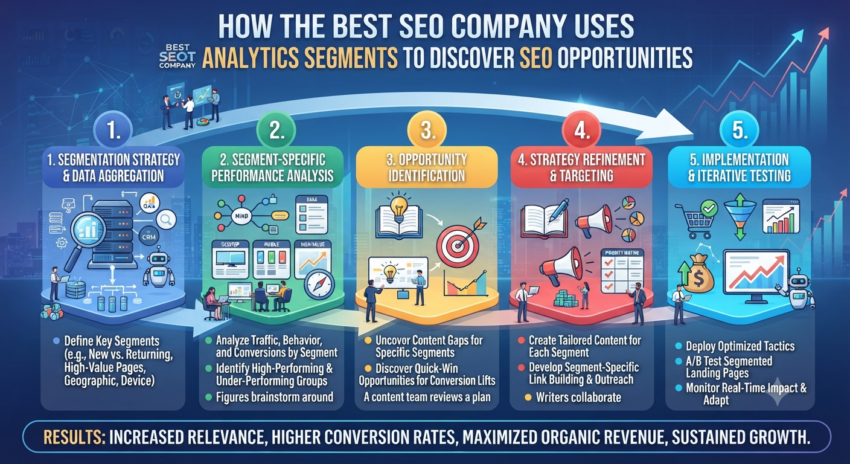
A structured SEO process can follow these steps:
-
Define the business objective.
-
Create relevant audience and performance segments.
-
Compare organic behavior across those segments.
-
Identify unusual patterns or performance gaps.
-
Validate findings with search and technical data.
-
Prioritize opportunities based on business relevance.
-
Implement targeted SEO improvements.
-
Measure the results by segment.
This process helps prevent teams from making decisions based only on overall traffic numbers.
The Role of an SEO Company
Companies such as Seodaddies can use analytics segmentation as part of a broader SEO strategy that connects search visibility with user behavior and business outcomes. Other established digital marketing companies may use similar data-driven approaches, but the important factor is how effectively the information is translated into practical SEO actions.
The strongest analytics process does not simply produce more dashboards. It helps answer meaningful questions: Who is finding the website? Which pages attract them? What do they do next? Which audiences are converting? Where is performance changing? And where is there an opportunity for improvement?
Conclusion
Analytics segmentation gives SEO teams a more detailed view of organic search performance. By separating users and pages into meaningful groups, an SEO company can discover opportunities that may remain hidden inside overall website statistics.
From mobile behavior and geographic performance to landing pages, conversion journeys, content gaps, and post-update monitoring, segmentation can make SEO analysis more precise.
For businesses investing in organic growth, the goal should not simply be to generate more visitors. It should be to understand which visitors matter, what they need, how they interact with the website, and where search visibility can create meaningful business value. That is where analytics-driven SEO becomes a strategic tool rather than just a reporting exercise.