

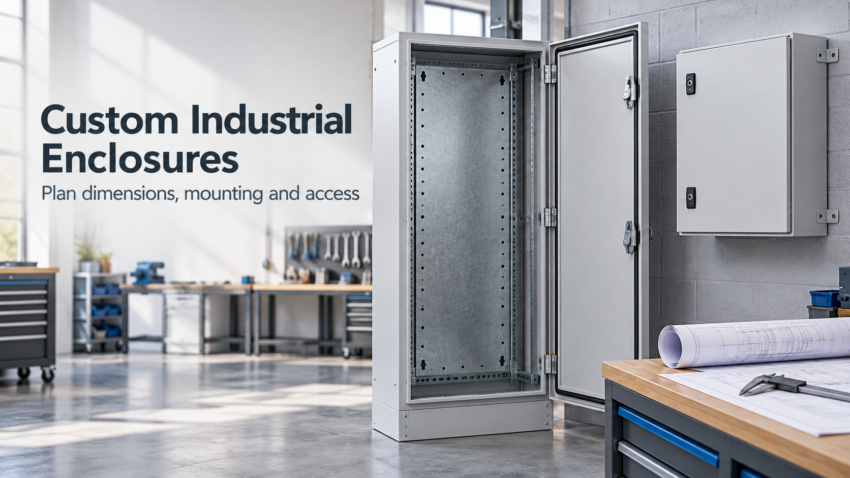
Custom industrial enclosures begin with a clear understanding of the equipment they will house. Component dimensions, cable connections, installation space and maintenance requirements all influence the enclosure design. Preparing these details before requesting a quotation helps manufacturers understand the application and propose a suitable configuration.
Start with an equipment layout. Identify the components that require mounting, their positions and the space needed around them. Include room for wiring, cable termination and access to connection points. The external dimensions alone do not explain whether an enclosure will accommodate a practical internal arrangement.
Next, consider where the enclosure will be installed. A wall-mounted installation has different space and support requirements from a floor-standing cabinet. Available clearance, surrounding equipment and the direction of access should be recorded. Door movement also matters when an enclosure is positioned near a wall, passageway or another cabinet.
Cable entry deserves attention during the design stage. Specify the intended entry locations and the approximate number of connections. Discuss any required openings with the manufacturer before production, including how modifications may affect the enclosure’s stated protection rating.
Maintenance requirements should also shape the specification. Some applications need frequent access for inspection, while others are opened less often. The preferred door or cover arrangement, access restrictions and component replacement procedures should be considered together.
Messung Rack & Enclosure Systems designs and manufactures enclosure solutions for industrial and automation applications. Its range includes standard products alongside customised solutions developed around project requirements. Buyers can discuss their equipment layout, mounting needs and installation conditions with the MRE team.
Before approving a design, review the drawings and confirm which features are included in the quotation. Check dimensions, mounting arrangements, material specifications, finish and any agreed modifications. Keep a record of these details for installation and future maintenance.
A well-prepared specification makes customisation more useful. It gives the manufacturer concrete information and helps the buyer assess whether the proposed enclosure matches the intended application.