

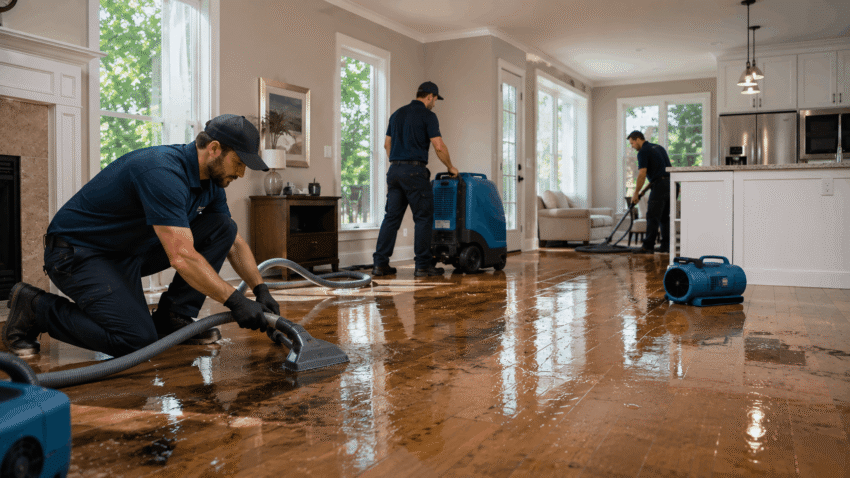
When water gets into a home, the first thing most people notice is usually the mess.
There may be water on the floor, stains on the ceiling, soaked belongings, or a section of drywall that has started to swell. It is easy to look at the visible damage and think the repair will simply involve drying the area and replacing whatever looks ruined.
Unfortunately, water does not always stay where you can see it.
It can move underneath flooring, behind walls, into insulation, around electrical components, and into areas beneath the home. What looks like one damaged room can sometimes involve several different building systems.
That is why water damage repairs in Mobile AL often require more than repairing the surface. The property needs to be looked at as a connected structure so that hidden problems are not overlooked.
Water Can Travel Farther Than Expected
One of the frustrating things about water damage is that the original source and the visible damage may be in completely different places.
A plumbing leak above a ceiling can send water downward. Water entering through a damaged roof can travel along framing before appearing as a stain. A washing machine leak can spread beneath flooring and affect nearby walls.
Gravity is not the only factor.
Water can move through gaps, seams, porous materials, insulation, and building cavities.
This means the first visible stain should not automatically be treated as the full extent of the problem.
An inspection may need to look around the affected area to understand where the water traveled and which materials were exposed.
Different Materials React Differently
A home contains many materials, and they do not all respond to moisture in the same way.
Drywall may become soft or swollen. Wood flooring can warp or buckle. Cabinets can swell around joints and edges. Insulation can hold moisture. Carpet padding may stay damp even after the surface feels dry.
Wood framing can also be affected if moisture remains present for an extended period.
Because of these differences, there is no single repair method that works for every water-damaged room.
A material that can be dried and restored in one situation may need replacement in another.
The decision depends on the material, the amount of exposure, the condition of the material, and how long it remained wet.
Flooring Often Requires a Closer Look
Floor damage can be particularly deceptive.
A homeowner may see water sitting on a hardwood, laminate, or tile surface and assume the problem is limited to the finished flooring.
But water can sometimes reach the layers underneath.
Depending on the construction, this may include:
- Underlayment
- Subflooring
- Floor joists
- Insulation
- Cabinets or built-ins
Wood-based materials can swell, deform, or deteriorate when exposed to prolonged moisture.
That is why installing new flooring before checking what is underneath can be a mistake.
The finished surface may look new, but an unresolved problem below it can remain.
Walls Can Hide Moisture
Walls are another area where visible damage does not always tell the whole story.
A small water stain may appear on one side of a wall while moisture has traveled inside the wall cavity.
Depending on the source and extent of the leak, professionals may need to evaluate areas around:
- Baseboards
- Electrical outlets
- Door frames
- Windows
- Insulation
- Wall framing
Not every wet wall requires extensive removal.
The goal is to determine which materials are affected and whether they can be safely dried and restored or need to be removed and replaced.
Electrical Components Deserve Special Attention
Water and electricity are a combination that should never be taken lightly.
If water has reached outlets, switches, electrical equipment, wiring, or other components, homeowners should avoid assuming that everything is safe simply because the area appears dry.
Electrical components affected by water may require evaluation by a qualified electrician before the area is put back into normal use.
This is especially important after significant flooding or water intrusion because electrical systems may be hidden behind walls or beneath floors.
A water-damage repair plan should therefore consider safety first rather than treating electrical concerns as part of ordinary cosmetic restoration.
Insulation Can Hold Moisture
Insulation is easy to forget because it is normally hidden from view.
But once water reaches an insulated wall, ceiling, attic, or other enclosed area, the insulation itself may become part of the repair problem.
Some insulation materials respond differently to moisture than others.
Depending on the type, exposure, and condition, the material may be capable of drying or may need to be removed.
Leaving wet material inside an enclosed space without determining whether it has properly dried can create additional concerns later.
That is one reason hidden areas deserve attention during an inspection.
Crawl Spaces Can Change the Repair Picture
Many homes in Mobile have crawl spaces, and these areas can be important when evaluating water-related problems.
A plumbing leak, drainage issue, stormwater intrusion, or other source can introduce moisture beneath the home.
The crawl space may contain:
- Floor joists
- Beams
- Support posts
- Insulation
- Ductwork
- Plumbing
- Electrical components
If moisture remains in these areas, it may affect materials over time.
This does not mean every damp crawl space has structural damage. It means the condition should be evaluated so homeowners understand whether there is an active moisture problem and whether any building components have been affected.
Mobile Weather Can Complicate Water Problems
Water damage in Mobile is not limited to plumbing failures.
Heavy rain, tropical storms, hurricanes, strong winds, and roof damage can all introduce water into a property.
A storm can damage an exterior component without immediately producing obvious interior signs.
Water may enter through a roof opening and travel before appearing as a ceiling stain. Wind-driven rain can reach areas around windows and doors. Damaged siding or exterior penetrations can also allow moisture into parts of the building.
After severe weather, homeowners should pay attention to new stains, damp areas, unusual odors, warped materials, and other changes that were not present before the event.
Repairs Should Follow a Logical Order
One of the easiest ways to create unnecessary work is to repair the visible finish before dealing with the underlying problem.
For example, repainting a stained ceiling does not make sense if the roof is still leaking.
Installing new flooring does not solve a damaged subfloor.
Replacing drywall does not address moisture that remains inside the wall.
A sensible repair sequence generally starts with understanding and stopping the source, followed by appropriate drying and evaluation. Once affected materials are understood, damaged components can be repaired or replaced before final finishes are restored.
The exact order depends on the property and the type of damage.
Repair or Replace?
Homeowners often want a simple answer: can the damaged material be saved?
Sometimes it can.
In other cases, replacement is the better option.
Professionals may consider:
- The type of material
- How long it was wet
- The extent of the damage
- Whether the material has changed shape
- Whether it has lost its intended function
- Whether contamination is involved
- Whether surrounding materials are also affected
The goal should not be to replace everything automatically.
It should also not be to save everything at any cost.
The right approach is to determine which materials can reasonably be restored and which no longer provide the condition or performance the property requires.
A Real-World Example
Imagine a homeowner in Mobile discovers water coming through a ceiling after a severe storm.
The visible stain is relatively small, so the homeowner initially assumes only the ceiling needs repair.
An inspection, however, finds moisture in the attic insulation and evidence that water reached part of the surrounding framing. An electrical component near the affected area also needs to be evaluated.
The repair therefore becomes more than repainting the ceiling.
The roof problem needs to be addressed, affected materials need to be evaluated, the electrical concern needs appropriate attention, and the ceiling can then be restored once the underlying issues are resolved.
The visible stain was only the beginning of the problem.
Final Thoughts
Water damage can be deceptive because the most noticeable damage is not always the most important damage.
A wet floor may have an affected subfloor underneath. A ceiling stain may point to moisture in an attic. A wall can hide damp insulation or framing. A crawl space can hold moisture long after the main living area appears dry.
For homeowners in Mobile, AL, understanding these possibilities can make the repair process much easier to navigate.
The best repair plan starts with finding the source, understanding how far the water traveled, evaluating the affected materials, and addressing problems in the right order.
Once the underlying issues are handled, the final goal is simple: restore the property so it is not only cleaner and better looking, but properly repaired from the inside out.
Also Read:
General Contracting in Mobile AL: Protecting Your Property During Construction