
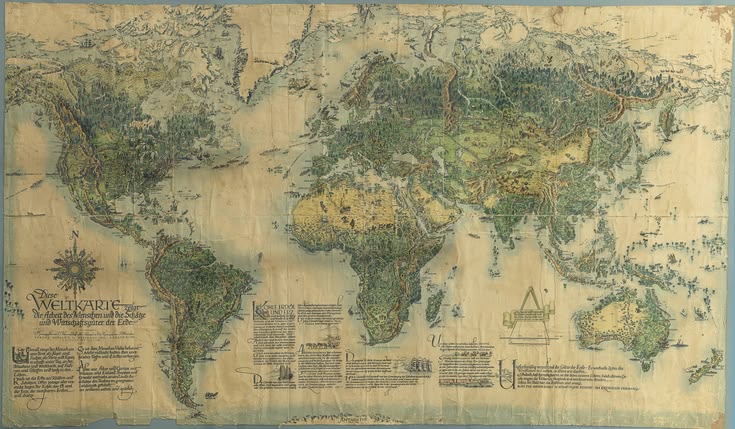
Old Map collectors have a unique appreciation for the stories, places, and historical details preserved within antique and vintage maps. These fascinating pieces are more than drawings of roads, borders, cities, coastlines, and landscapes. Each map can reveal how people understood a particular place during a specific period. For collectors and enthusiasts, an old map can become a valuable historical object, a decorative piece, and a source of endless discovery.
Whether you are interested in antique maps, vintage city plans, nautical charts, military maps, railway maps, or decorative cartography, collecting can become an enjoyable and rewarding hobby. You do not need to begin with rare or expensive pieces. Understanding what makes a map interesting, authentic, and well preserved is often more important than its price.
Understanding the Appeal of Old Maps
The appeal of old maps comes from their connection with history. A modern map is generally created to provide accurate and practical information, while an old map often reflects the knowledge, technology, artistic traditions, and priorities of the period in which it was produced.
An old map of a familiar city can look completely different from the modern version. Streets may have different names, neighborhoods may have changed, and important buildings may no longer exist. Borders can also reveal how political geography changed over time.
Collectors often enjoy maps because they combine historical information with visual character. Decorative lettering, engraved illustrations, compass roses, cartouches, borders, and carefully drawn geographic details can make an old map attractive even to someone who is not a serious historian.
Choosing a Map Collection Theme
One of the easiest ways to begin collecting is to choose a theme. A focused collection can make research easier and give your purchases a clear direction.
Some collectors concentrate on maps of a particular city or country. Others collect maps from a specific century or historical period. You may also choose a subject such as railway maps, maritime charts, world maps, exploration maps, architectural plans, or maps showing historical political boundaries.
Personal interests can provide another excellent starting point. Someone fascinated by family history might collect maps showing the towns and regions connected with previous generations. A traveler might collect historical maps of places they have visited.
A theme does not have to remain permanent. Many collectors begin with one subject and gradually expand into related areas as their knowledge develops.
Learning How Old Maps Were Produced
Understanding mapmaking methods can help collectors recognize different types of maps and appreciate their historical importance.
Early maps were often created through engraving or other printing methods that allowed detailed lines and lettering to be reproduced. Engraved maps may contain fine lines, distinctive shading, and carefully rendered typography.
Later developments introduced new printing processes that made maps easier and less expensive to reproduce. Lithography became particularly important for producing detailed maps in larger quantities. Color printing also developed considerably over time.
Knowing how maps were produced can help you understand what you are looking at. It can also help distinguish an original historical print from a modern reproduction.
Examining Age and Authenticity
Age is one of the first characteristics collectors consider, but determining age is not always straightforward. A map may look old because of its paper, coloring, or presentation without actually being an original historical example.
Examine the map carefully for publication information, cartographer details, printer information, dates, place names, typography, and printing characteristics. Compare these features with reliable references or established catalog records.
The paper itself can provide useful clues, although appearance alone should not be treated as proof. Folds, binding marks, page numbers, atlas references, and printed text around the map may also reveal its original source.
Collectors should be particularly cautious when purchasing maps described as extremely rare or unusually valuable. Researching before buying can prevent expensive mistakes.
The Importance of the Cartographer
The person who created or published a map can have a major influence on its historical importance.
Some cartographers became recognized for their contributions to geography, navigation, surveying, or publishing. Their maps may be particularly desirable because they document important stages in the development of geographic knowledge.
Researching the cartographer can reveal why a particular map was created, who commissioned it, and how it was distributed. The same geographic area may have been represented by many different mapmakers, each producing a map with its own characteristics.
Understanding the cartographer therefore adds another layer to collecting. Instead of simply owning an attractive old map, you begin to understand the story behind its creation.
Studying Historical Place Names
One of the most interesting features of old maps is their historical terminology. Cities, streets, regions, countries, rivers, and landmarks may have names that are no longer used.
Comparing historical names with modern names can reveal changes in language, administration, settlement patterns, and political geography. A map may also show a place before a major expansion, redevelopment, or infrastructure project.
This makes old maps particularly useful for researchers interested in local history. They can provide visual evidence of how an area looked or was organized at an earlier point in time.
Understanding Map Scale
Scale is another important feature for collectors and enthusiasts to understand. It describes the relationship between distances shown on a map and actual distances on the ground.
A large-scale map usually presents a smaller geographic area with greater detail, while a small-scale map covers a much larger area with less local detail.
When comparing maps from different periods, scale can explain why one map contains detailed streets while another shows only major cities and geographic features.
Learning to read scale also makes historical maps easier to use for research and comparison.
Exploring Nautical Charts
Nautical charts have a special place within map collecting. They were created to assist navigation and may contain information about coastlines, ports, channels, depths, navigation markers, and maritime routes.
Historical nautical charts can provide an extraordinary view of coastal regions during earlier periods. Changes in ports, waterfronts, islands, and navigation infrastructure can sometimes be observed by comparing charts from different years.
Their specialized purpose also gives nautical charts a distinct visual style. For collectors interested in maritime history, navigation, shipping, or coastal development, they can form an especially interesting collection.
Collecting City Maps and Plans
Historical city maps are among the most accessible choices for new collectors. They can be highly detailed and often document urban development in remarkable ways.
A city map may show streets, public buildings, parks, railway lines, industrial areas, markets, neighborhoods, and transportation routes. Comparing maps from different decades can reveal how a city expanded and changed.
Collectors can focus on one city and build a chronological collection. This approach creates a visual history of urban development and can make the collection particularly meaningful.
Decorative Maps as Interior Artwork
Not every collector approaches old maps primarily from an academic perspective. Many people appreciate them as artwork.
Historical maps often feature elaborate titles, decorative borders, illustrated panels, artistic lettering, and carefully designed geographic elements. When appropriately framed, they can become distinctive pieces of interior decoration.
A map can also add personality to an office, library, study, hallway, or living space. Choosing a map connected to a person’s interests can make the decoration more meaningful than a generic wall print.
Building a Collection on a Budget
Collecting does not necessarily require a large budget. Many interesting maps are available at accessible prices, particularly when they are common examples rather than exceptionally rare pieces.
Beginners can start by learning which types of maps are widely available. This provides an opportunity to develop knowledge before investing in more expensive examples.
Condition, rarity, historical importance, demand, age, cartographer, subject, and provenance can all influence price. A map that is expensive is not automatically more interesting, and a reasonably priced map can still have considerable historical value.
A thoughtful collection is usually built gradually. Researching each purchase can be more rewarding than simply acquiring a large number of items.
Evaluating Condition
Condition is an important consideration when buying historical maps. Paper can develop folds, tears, stains, discoloration, missing sections, or other signs of age and handling.
Some collectors prefer maps in excellent condition, while others appreciate examples that show evidence of their history. The appropriate condition standard depends on the collector’s goals.
Before purchasing, examine the entire map rather than focusing only on the central image. Check edges, corners, folds, printed areas, and the reverse side when possible.
Restoration can sometimes improve presentation, but excessive alteration may affect the historical character and value of a map. For important pieces, professional advice can be worthwhile.
Proper Storage and Preservation
Proper storage is essential for maintaining a map collection. Paper objects should be kept in a stable indoor environment away from direct sunlight and excessive moisture.
Acid-free folders, archival sleeves, and suitable storage boxes can help protect individual maps. Larger pieces may require specially designed archival storage or professional framing.
Maps should be handled with clean, dry hands and supported carefully when being moved. Avoid unnecessary folding, especially with fragile or already damaged paper.
If a map is particularly valuable or historically important, consult a professional paper conservator before attempting repairs or cleaning.
Framing Old Maps
Framing can protect a map while also allowing it to be displayed. However, the framing method should be appropriate for historical paper.
Archival materials are preferable because unsuitable backing boards, adhesives, or mounting methods can contribute to long-term deterioration. A professional framer familiar with historical documents can recommend suitable materials.
The frame should also provide enough space and protection for the map without putting unnecessary pressure on the paper.
Good framing allows collectors to enjoy their maps while reducing handling and exposure to environmental conditions.
Researching the History Behind a Map
Research can transform collecting from simple ownership into a deeper historical experience.
Look for information about when the map was published, why it was created, who used it, and what geographic information it contains. Old books, historical atlases, library collections, museum resources, auction catalogs, and specialist references can all provide useful information.
Pay attention to changes visible on the map. A missing railway line, renamed street, altered boundary, or newly developed neighborhood may lead to further research.
Keeping notes about each map can also be useful. Record the title, cartographer, publication date, source, dimensions, condition, purchase information, and research findings.
Buying Old Maps Safely
When purchasing maps, reputation and transparency matter. Established dealers, specialist auctions, antique shops, and reputable marketplaces can provide useful opportunities.
Read descriptions carefully and ask questions when important information is missing. If an image is unclear, request additional photographs showing details such as the title, margins, reverse side, and any publication information.
Be cautious about claims concerning rarity, age, and value unless they are supported by evidence. Independent research can help you understand whether a description is reasonable.
For expensive purchases, provenance or documentation can add confidence and provide a clearer historical record.
Understanding Provenance
Provenance refers to the documented history of ownership or origin of an item. For old maps, provenance can sometimes reveal which collection, atlas, library, dealer, or institution the map came from.
A map removed from a historical atlas may have page numbers, binding marks, or surrounding text that help identify its source.
Although provenance is not always available, documentation can make a map’s story more complete. Collectors should preserve invoices, certificates, auction records, dealer descriptions, and research notes whenever possible.
Digital Resources for Map Enthusiasts
Modern technology has made historical map research easier. Many libraries, archives, museums, universities, and cultural institutions have digitized maps and made them available for research.
Digital collections allow enthusiasts to compare maps from different periods without physically handling original material. High-resolution scans can reveal details that are difficult to see from a framed map.
Online resources are also useful for identifying cartographers, publication dates, historical place names, and atlas editions. However, collectors should verify important claims using trustworthy references rather than relying on a single online listing.
Creating a Meaningful Collection
A strong collection does not have to contain hundreds of maps. A smaller group with a clear theme and well-researched history can be more satisfying.
Consider what connects your maps. They might document one region through several centuries, illustrate the development of transportation, follow changing national boundaries, or represent the work of particular cartographers.
The most meaningful collections usually reflect the interests of their owners. The goal is not simply to acquire old paper but to create a collection that tells a story.
Final Thoughts for Old Map Collectors
Old map collecting combines history, geography, art, research, and personal discovery. Every map has the potential to reveal something about the time and place in which it was produced.
For beginners, the best starting point is curiosity. Learn the terminology, examine different printing methods, study cartographers, compare historical and modern geography, and gradually develop an understanding of condition and authenticity.
Whether your interest lies in city plans, world maps, nautical charts, railway maps, or decorative cartography, each addition can deepen your appreciation of the past. With careful research, responsible preservation, and a clear collecting focus, old maps can become a fascinating lifelong pursuit.