

Egypt is famous around the world for its ancient pyramids and Pharaohs, but its medieval heritage is equally captivating. Cairo, often called the “City of a Thousand Minarets,” houses one of the richest collections of historical Islamic architecture in the world. From sprawling 9th-century courtyards to towering alabaster domes, Egypt’s mosques tell a fascinating story of art, devotion, and empire building spanning over 1,400 years.
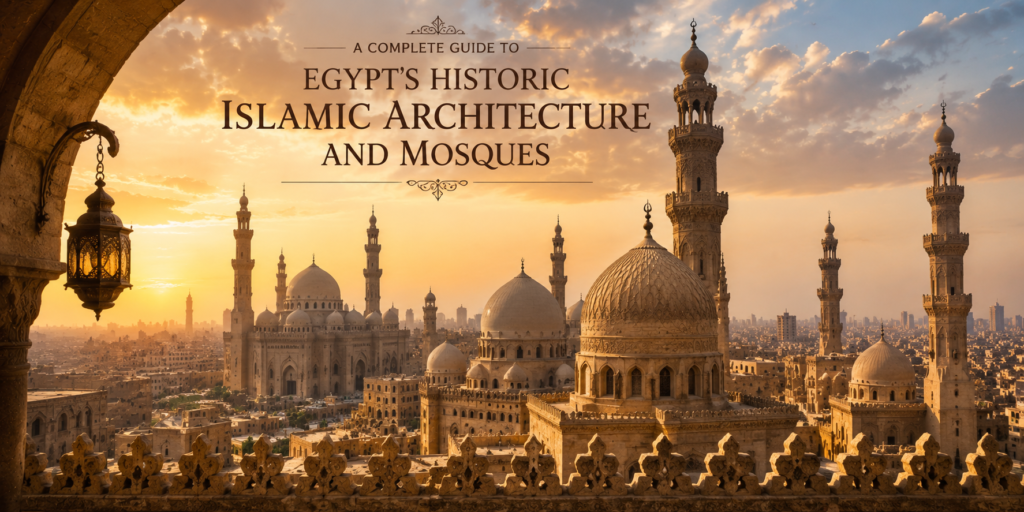
Whether you are a history lover, an architecture enthusiast, or a curious traveler planning your next trip, this guide will walk you through the evolution, key features, and must-visit mosques of historic Egypt.
The Rich History of Islamic Architecture in Egypt
Islamic architecture in Egypt evolved across several dynasties, each leaving its distinct artistic imprint on the skyline of Cairo and beyond.
1. Early Islamic & Tulunid Era (7th – 9th Century)
After the Arab conquest of Egypt in 641 AD, early mosques were built with simple, functional designs centered around large open courtyards. The Tulunid period introduced brick construction, pointed arches, and distinctive spiraling minarets influenced by Mesopotamian styles.
2. Fatimid Dynasty (10th – 12th Century)
The Fatimids established Cairo as their capital in 969 AD. They introduced elaborate stone carvings, keel-shaped arches, detailed Kufic calligraphy, and grand monumental entrances that became hallmarks of Cairo’s cityscape.
3. Ayyubid & Mamluk Eras (12th – 16th Century)
The Mamluk period represents the peak of Cairo’s medieval architectural splendor. Mamluk builders excelled in stone dome construction, complex geometric patterns, carved wooden pulpits (minbars), stalactite-like ceiling decorations (muqarnas), and polychrome marble paneling.
4. Ottoman Era (16th – 19th Century)
Following the Ottoman conquest, architectural styles shifted toward pencil-thin minarets, central domed sanctuaries, and expansive multi-domed roofs reminiscent of Istanbul’s grand mosques.
Must-Visit Historic Mosques in Egypt
When visiting Egypt, these remarkable mosques should be at the top of your travel itinerary:
1. Mosque of Amr ibn al-As (Old Cairo)
Built in 641 AD, this is the first mosque built in Egypt and Africa. While it has undergone multiple reconstructions over the centuries, it remains a powerful symbol of early Islamic history in the region.
2. Mosque of Ibn Tulun (Cairo)
Completed in 879 AD, the Mosque of Ibn Tulun is the oldest intact mosque in Cairo surviving in its original form. Spanning nearly six acres, its vast courtyard, beautiful stucco ornamentation, and unique spiral staircase minaret make it a masterpiece of early Islamic engineering.
3. Al-Azhar Mosque (Historic Cairo)
Founded in 970 AD by the Fatimids, Al-Azhar is not only a stunning architectural landmark with elements from multiple historical eras, but it is also home to one of the world’s oldest continuously operating universities.
4. Mosque-Madrasa of Sultan Hassan (Near the Citadel)
Built between 1356 and 1363 AD, this mammoth complex is considered the pinnacle of Mamluk architecture. Its sheer scale, massive walls, soaring portal, and marble-paved central courtyard leave visitors in awe.
5. Mosque of Muhammad Ali (Alabaster Mosque)
Perched atop the Citadel of Saladin, this famous 19th-century landmark dominates Cairo’s skyline. Built with polished alabaster paneling and grand Ottoman domes, it offers breathtaking views across the entire city.
Distinctive Features of Egypt’s Islamic Architecture
As you tour these historical sites, keep an eye out for these signature design elements:
- Minarets: Ranging from the unique spiral tower of Ibn Tulun to octagonal Mamluk spires and slender Ottoman needles.
- Muqarnas: Intricate, honeycomb-like ceiling vaulting used to transition square rooms into circular domes.
- Mihrab & Minbar: The mihrab (prayer niche facing Mecca) is often decorated with intricate mosaic tiles or carved marble, while the minbar (pulpit) features detailed woodwork with geometric inlay.
- Courtyards (Sahn): Open central spaces designed to accommodate large congregations and maximize airflow in the desert climate.
- Arabesque & Calligraphy: Intertwining floral patterns paired with beautifully stylized Arabic script decorating walls, doors, and window screens.
Practical Tips for Visiting Mosques in Egypt
To ensure a respectful and smooth experience when visiting these holy and historical sites, keep these helpful tips in mind:
- Dress Modestly: Men should wear long pants and covered shoulders. Women should cover their arms, legs, and bring a scarf to cover their head before entering.
- Remove Shoes: Shoes must be removed before stepping onto mosque carpets. Shoe attendants are usually available at entrance doors (a small tip of 10–20 EGP is customary).
- Plan Around Prayer Times: Avoid visiting during active prayer times, especially Friday midday prayers, unless you are attending to worship.
- Photography Etiquette: Photography is generally permitted, but avoid taking pictures of worshippers without explicit consent, and turn off flash in designated areas.
Seamless Travel Planning: Obtaining Your Egypt Visa
Exploring the historic mosques of Cairo and Egypt’s rich cultural landmarks requires proper travel preparation. Depending on your nationality, securing an official electronic visa before departure makes your journey smooth and hassle-free.
Before booking your flights, check whether your passport qualifies for online application on the Eligible Countries for Egypt e-Visa.
Why Choose Us for Your Egypt Travel Visa?
Navigating visa requirements should never hold you back from exploring Egypt’s timeless heritage. Here is why travelers rely on our service:
- Reliable Travel Visa Services: Our global approach has assisted numerous travelers in obtaining their visas securely and efficiently.
- Round-the-Clock Assistance: Reach out to us 24/7, and our dedicated experts will respond to your queries within 72 hours.
- Experienced Visa Consultants: Receive expert guidance throughout your application process to maximize your approval chances.
- Efficient Visa Application Process: Complete and apply for your visa in just minutes with our simplified, user-friendly form.
Conclusion
Egypt’s historic Islamic architecture offers an unforgettable journey through time. From quiet 9th-century sanctuaries to magnificent royal monuments, every mosque reflects centuries of artistic triumph, craftsmanship, and culture. Plan your itinerary today, secure your entry visa, and prepare to immerse yourself in Cairo’s rich architectural legacy!