
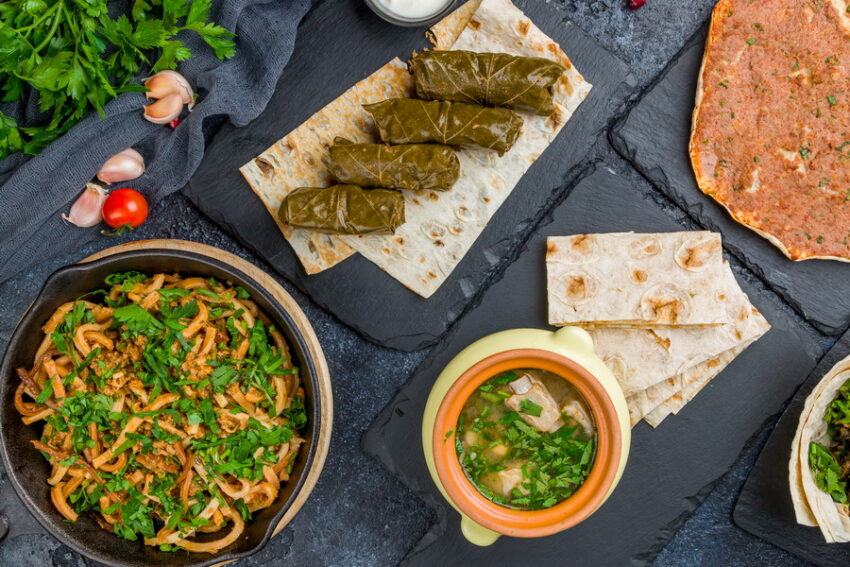
Food has this incredible, almost magical way of holding onto a culture’s heartbeat, and nowhere is that truer than in Armenia. If you ever have the chance to sit down at an Armenian table, you will quickly realize it is never just about refueling. It is an hours-long, laughter-filled celebration of history, family, and a level of hospitality that is hard to find anywhere else in the world.
Because of the country’s dramatic landscape where sun-drenched valleys meet rugged, snow-capped peaks, the kitchen changes entirely with the calendar. There is no such thing as an out-of-season ingredient here. Instead, families naturally shift from the smoke-filled, outdoor gatherings of July to the slow-simmered, comforting hearths of January. If you love food, exploring Armenian cuisine is like taking a walk through the seasons. Let’s look at how the menu changes throughout the year.
The Sizzle of Summer: Charcoal, Fresh Herbs, and Open Skies
When summer hits, life in Armenia moves completely outdoors. Go to any local market, and you will see mountains of purple basil, tarragon, giant heirloom tomatoes, and sweet, fragrant peaches. This is the season for gathering under the trees, and everything revolves around the grill.
You cannot have an Armenian summer without khorovats—traditional barbecue. Huge chunks of pork, lamb, or chicken are marinated simply with salt, onions, and a few local spices, then threaded onto heavy metal skewers and grilled over open wood coals. But the real magic happens with the sides. Whole eggplants, bell peppers, and tomatoes are placed directly onto the hot coals until their skins blacken and blister. They are peeled right there by the grill, chopped up, and tossed with fresh herbs to make a smoky salad that pairs perfectly with the meat.
To beat the midday heat, everyone drinks tan, an incredibly refreshing mix of sour yogurt (matsun), cold water, salt, and sometimes a bit of wild mint. It is the ultimate summer refresher.
Autumn’s Harvest: Golden Pumpkins and Stuffed Treasures
As the summer heat gives way to a crisp autumn breeze, the kitchen shifts toward warmth and preservation. This is the time of year when families get together to make fruit jams, pickle vegetables, and dry fruits for the winter ahead.
The absolute star of autumn is ghapama, a festive dish so deeply loved that there is literally a famous folk song written about it. A whole pumpkin is hollowed out and stuffed to the brim with a rich mix of rice, chopped almonds, walnuts, and a colorful blend of dried apricots, raisins, and prunes. It is drizzled with honey, baked until the pumpkin flesh is completely tender, and then sliced open at the table like a blossoming flower. It looks and tastes like autumn on a plate.
This is also the peak season for tolma (or dolma). While tender grape leaves are used in the spring, autumn tolma features hollowed-out cabbage leaves, eggplants, apples, and tomatoes stuffed with seasoned minced meat and rice, simmered slowly until everything melts together.
Winter Comfort: Slow-Simmered Rituals and Healing Broths
Winter in Armenia can be bitterly cold, especially up in the mountains. To fight off the frost, the food becomes rich, heavy, and deeply comforting designed to warm you up from the inside out.
The ultimate winter tradition is a soup called khash. It is way more than just a meal; it is a full-blown ritual. Made by boiling cow’s hooves overnight without any salt or seasoning until the broth is thick and rich, it is traditionally served bright and early on weekend mornings. When the steaming bowl hits the table, you customize it yourself with tons of crushed garlic, salt, and handfuls of dried lavash bread. It is almost always enjoyed with close friends and a shot of cold vodka to kick start a freezing day.
For something a bit more low-key but just as comforting, there is harissa. This is a thick, savory porridge made from cracked wheat and shredded chicken, slow-cooked for hours and stirred constantly until it reaches a smooth, velvety texture. Served with a big pat of melting butter pooling in the center, it is pure comfort food.
Holiday Feasts: The Art of Armenian Hospitality
No talk about Armenian cuisine is complete without looking at the massive feasts prepared for New Year and Christmas. In Armenia, the holiday table is the ultimate sign of hospitality. Families keep their tables completely loaded with food for an entire week because neighbors, friends, and relatives will drop by unannounced at any hour.
The centerpiece of the sweet table is gata, a traditional sweet bread. It changes shape depending on the town you visit, but the classic version is a flaky pastry stuffed with koritz—a rich filling made of flour, butter, and sugar. During the holidays, a coin is often baked inside the dough. Whoever finds it in their slice is said to have good luck for the whole year.
Alongside the gata, you will find pasuts tolma (a cold Lenten tolma stuffed with beans and lentils), platters of cured meats like basturma, and endless bowls of home-dried fruits.
Whether it is a smoky summer barbecue under the sun or a slow-cooked winter broth while the snow falls outside, the food here is deeply tied to the land and the passage of time. No matter what season you find yourself traveling through this beautiful country, eating like a local is the fastest way to truly understand the warm, welcoming heart of Armenia.