
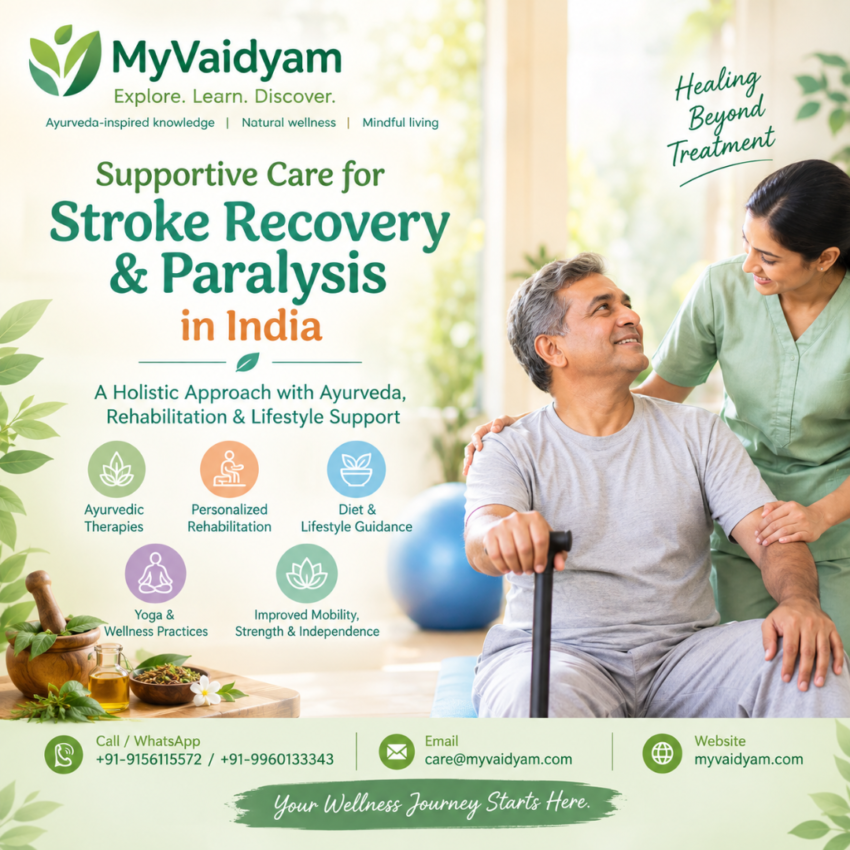
Stroke recovery can be a long and individualized journey. Depending on the area of the brain affected, a person may experience weakness, difficulty walking, speech or swallowing problems, balance issues, changes in coordination, or reduced ability to perform everyday activities. Rehabilitation is an important part of recovery and is generally tailored to the person’s abilities and goals. The American Stroke Association’s 2026 rehabilitation guidance emphasizes timely, individualized and multidisciplinary rehabilitation for adults recovering from stroke.
For families exploring traditional wellness approaches, Ayurvedic Stroke Treatment in India may be considered as a complementary part of a broader recovery plan. Similarly, Paralysis Ayurvedic Treatment in India may involve rehabilitation-focused care designed to support mobility, strength, balance and independence. These approaches should be planned with qualified healthcare professionals and should not replace emergency stroke treatment, prescribed medicines, neurological care, or evidence-based rehabilitation.
What Happens After a Stroke?
A stroke can affect different parts of the brain, so its effects vary significantly from one person to another. Some individuals may experience weakness on one side of the body, while others may have difficulties with speech, coordination, memory, balance, or daily activities.
The recovery process often begins after the person becomes medically stable. According to the World Health Organization, rehabilitation following stroke can include physiotherapy, occupational therapy, speech and language therapy, and cognitive or psychological support.
Because every person’s condition is different, recovery goals should be established following an appropriate medical and functional assessment.
How Can Ayurveda Be Considered During Stroke Recovery?
Ayurveda follows an individualized approach that considers a person’s overall condition, daily routine, diet, physical abilities and wellness needs. Ayurvedic Stroke Treatment in India may be explored as supportive care alongside conventional stroke management and rehabilitation.
Depending on professional assessment, Ayurvedic practitioners may consider traditional oil therapies, gentle body therapies, breathing practices, yoga-based activities, dietary guidance and lifestyle recommendations. The suitability of any traditional therapy depends on factors such as the person’s medical condition, mobility, medications and stage of recovery.
It is important that families discuss complementary therapies with the treating medical team, particularly during the early period following a stroke.
Why Is Rehabilitation Important for People With Paralysis?
Paralysis or significant weakness following a stroke can make ordinary activities difficult. Getting out of bed, walking, dressing, eating, speaking or using the affected hand may require additional support and retraining.
A structured rehabilitation program focuses on helping a person regain as much independence as possible. The American Stroke Association notes that rehabilitation can address movement, communication, cognition, balance and everyday activities, with therapy adapted to individual needs.
When families investigate Paralysis Ayurvedic Treatment in India, they may encounter programs combining neurological supervision, physiotherapy, occupational therapy, speech therapy and supportive wellness practices. The appropriate combination depends on the person’s functional assessment and recovery goals.
What Ayurvedic Therapies May Be Included in a Supportive Program?
Traditional Ayurvedic care can vary according to the practitioner and the person’s condition. Some programs may consider therapies such as Abhyanga, selected oil applications, Swedana, gentle movement, yoga and breathing exercises.
However, these therapies should not be assumed to be suitable for every stroke survivor. A person with swallowing difficulties, unstable blood pressure, severe weakness, balance problems or other medical complications may require specific precautions.
For this reason, Ayurvedic Stroke Treatment in India should be viewed as individualized supportive care rather than a standardized treatment that is appropriate for everyone.
The timing and intensity of traditional therapies should be determined by qualified professionals after considering the person’s medical history and current condition.
How Can Physiotherapy Support Recovery?
Physiotherapy is commonly used to work on movement, strength, coordination, balance and functional mobility after stroke. Depending on individual needs, exercises may focus on transferring from a bed to a chair, standing, walking, improving limb movement or performing controlled activities.
Rehabilitation can continue beyond the initial hospital period. The American Stroke Association explains that stroke recovery may continue for months or years, and rehabilitation plans can change as a person’s abilities and goals develop.
For people considering Paralysis Ayurvedic Treatment in India, it is therefore useful to look beyond a single therapy and consider whether the overall program includes appropriate assessment, rehabilitation, monitoring and long-term support.
Can Diet and Daily Habits Support Stroke Recovery?
Nutrition and lifestyle can form an important part of long-term stroke care. Depending on medical advice, individuals may be encouraged to maintain a balanced diet, remain appropriately active, get adequate rest and follow recommendations for managing cardiovascular risk factors.
People recovering from stroke may also need help adapting their homes and daily routines. Simple changes can sometimes make activities safer and easier, particularly when there are mobility or balance difficulties.
Any Ayurvedic herbs, supplements or major dietary changes should be discussed with a qualified healthcare professional because some products can interact with prescription medicines or may not be appropriate for a particular medical condition.
What Should Families Look for When Choosing Care in India?
Families researching stroke or paralysis care should look at the overall structure of the program rather than focusing on one therapy alone.
Important factors can include:
- Medical assessment and appropriate neurological care
- Qualified rehabilitation professionals
- Individualized physiotherapy
- Speech and language support when required
- Occupational therapy for daily activities
- Safe mobility and balance training
- Appropriate nutritional guidance
- Regular monitoring of progress
- Communication between different members of the care team
- A clear plan for continuing care at home
WHO describes stroke rehabilitation as a multidisciplinary process intended to improve functional ability, independence and quality of life.
Therefore, Paralysis Ayurvedic Treatment in India should ideally be considered within a comprehensive rehabilitation framework rather than as a single therapy or procedure.
How Can MyVaidyam Help People Explore Ayurvedic Wellness Options?
MyVaidyam provides information about Ayurveda-focused treatment and wellness options in India. People exploring Ayurvedic Stroke Treatment in India can use MyVaidyam to learn about traditional approaches, wellness programs and treatment options available through participating Ayurvedic centres.
For individuals and families researching recovery support, it can also be useful to understand how Ayurvedic wellness practices may fit alongside appropriate medical rehabilitation. The objective should be to create an individualized plan based on the person’s condition, functional abilities, medical requirements and recovery goals.
Stroke recovery requires patience and consistency. Ayurvedic Stroke Treatment in India may be explored as complementary wellness support, while professional rehabilitation remains an important component of recovery. A coordinated approach can help address movement, communication, daily activities, balance and other challenges that may follow a stroke.
Recovery after stroke is not identical for everyone. Some people may regain functions quickly, while others require structured rehabilitation over a longer period. Medical supervision, physiotherapy, occupational therapy, speech therapy, lifestyle management and family support can all have important roles depending on individual needs.
When families explore Paralysis Ayurvedic Treatment in India, they should consider comprehensive rehabilitation, professional assessment and ongoing support rather than relying on a single treatment approach. Ayurveda can be explored as a complementary wellness system when appropriate and when coordinated with the person’s medical care.
For people interested in traditional approaches, qualified practitioners can help determine whether Ayurvedic therapies are suitable based on the individual’s health status and recovery stage. The emphasis should remain on safe, personalized and continuous care.