
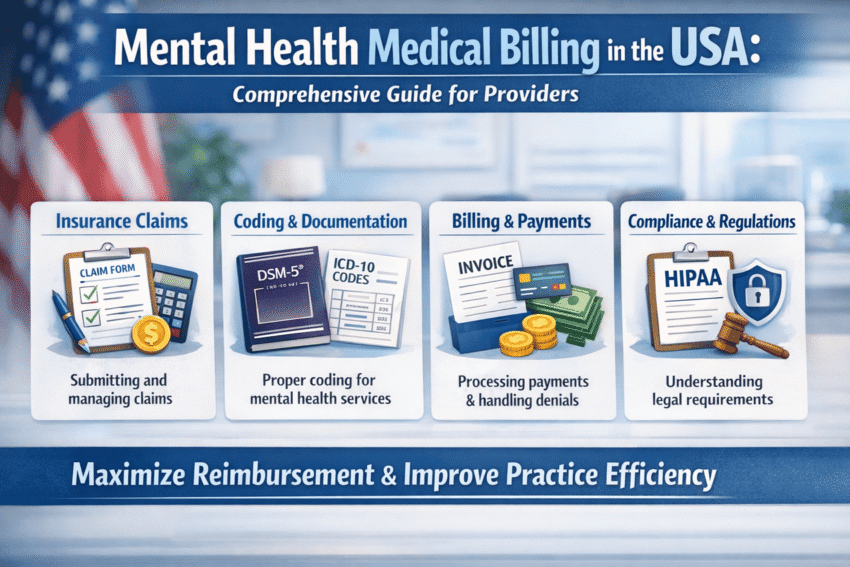
Mental health professionals play a critical role in improving the well-being of individuals and communities. However, the administrative side of running a therapy practice can be complex, especially when it comes to billing for mental health therapists. Insurance rules, coding updates, credentialing requirements, and documentation standards make the billing process more challenging than many providers expect.
Many therapy practices lose revenue due to claim denials, incorrect coding, or incomplete documentation. Understanding how mental health medical billing works helps therapists maintain compliance, reduce errors, and ensure consistent cash flow.
This guide explains the essential components of billing for mental health services, common challenges therapists face, and how modern mental health billing solutions help practices operate more efficiently.
Why Mental Health Billing Requires Specialized Knowledge
Mental health billing differs from general medical billing in several important ways. Therapy sessions, psychiatric evaluations, and behavioral health services have unique CPT codes, documentation requirements, and payer rules.
Key factors that make mental health billing complex include:
-
Strict documentation requirements for therapy sessions and treatment plans
-
Frequent updates in coding and billing for mental health services
-
Variations in insurance coverage for behavioral health treatment
-
Authorization and medical necessity requirements from payers
-
Special rules for billing Medicare for mental health services
Because of these complexities, many practices rely on mental health billing specialist companies to manage claims and reduce administrative burdens.
Understanding Billing for Mental Health Therapists
At its core, billing for mental health therapists involves translating therapy services into standardized codes that insurance companies recognize. These codes are then submitted with supporting documentation to receive reimbursement.
Typical steps involved in billing mental health services include:
Patient registration and insurance verification
Before treatment begins, insurance coverage must be verified to confirm benefits, copays, and eligibility.
Provider credentialing
Therapists must be properly credentialed with insurance payers before submitting claims. Many practices rely on mental health billing and credentialing services to complete this process.
Medical coding
Therapy sessions must be coded correctly using CPT and ICD-10 codes. Accurate coding and billing for mental health services ensures claims are processed without delays.
Claim submission
Claims are submitted electronically through clearinghouses or directly to insurance companies.
Payment posting and denial management
Payments must be recorded and any denied claims must be corrected and resubmitted.
Without a structured workflow, these steps can quickly become overwhelming for small therapy practices.
Common Challenges in Mental Health Medical Billing
Many therapists experience billing challenges that affect their revenue cycle. These issues often arise due to limited billing expertise or constantly changing payer policies.
Some of the most common challenges include:
Incorrect CPT coding
Errors in coding therapy sessions can result in claim rejections or reduced reimbursements.
Insurance authorization issues
Some insurers require prior authorization for behavioral health treatment, which delays payments if not handled properly.
Medicare compliance requirements
Billing Medicare for mental health services involves strict documentation and coding rules.
Delayed credentialing
Therapists who are not properly credentialed cannot submit claims to insurance payers.
Complex insurance policies
Coverage for behavioral health services varies widely between insurers.
These challenges are one reason many clinics work with a mental health billing company that specializes in behavioral health reimbursement.
Benefits of Outsourcing Mental Health Billing
Managing billing internally requires trained staff, updated software, and ongoing monitoring. For many therapy practices, outsourcing mental health billing offers a more efficient solution.
Outsourced billing for mental health practices provides several benefits:
Reduced administrative workload
Therapists can focus more on patient care rather than paperwork.
Improved claim accuracy
Experienced billing teams ensure claims are coded correctly and submitted on time.
Faster reimbursements
Professional billing services reduce claim denials and payment delays.
Regulatory compliance
A mental health billing services company stays updated with insurance regulations and coding updates.
Better revenue cycle management
Professional billing teams track claims, follow up with insurers, and manage accounts receivable.
Because of these advantages, outsourcing mental health billing and coding has become a common strategy for therapy practices across the United States.
How Mental Health Billing Services Support Therapy Practices
Professional billing services for mental health clinics provide end-to-end support for therapy practices.
Typical services offered by mental health billing specialist companies include:
Insurance verification and benefit checks
Claims preparation and electronic submission
Coding audits and compliance checks
Denial management and claim resubmission
Payment posting and reporting
Credentialing and payer enrollment
These services help therapy practices maintain a stable revenue cycle while reducing operational stress.
Many providers search for the best mental health billing services or the best mental health billing services company when they realize how much time billing consumes in their daily operations.
Choosing the Right Mental Health Billing Company
Selecting the right partner is critical for a therapy practice. Not all billing companies for mental health offer the same level of expertise.
When evaluating a mental health billing company, therapists should consider the following factors:
Industry specialization
A company experienced in behavioral and mental health billing services understands therapy-specific coding and payer requirements.
Technology and reporting tools
Modern billing systems provide real-time financial reporting and claim tracking.
Compliance knowledge
The provider must stay updated with HIPAA regulations and insurance policy changes.
Transparent pricing
Some clinics look for a cheap outsource mental health billing company, but quality and accuracy should remain the priority.
Dedicated support
Reliable communication and dedicated account managers are essential for smooth operations.
A top mental health billing company will focus on improving reimbursement rates while maintaining strict compliance standards.
Key Components of Effective Mental Health Billing Solutions
Efficient mental health billing solutions rely on a combination of technology, expertise, and structured workflows.
Essential components include:
Accurate medical coding
Coding accuracy ensures claims reflect the correct therapy services performed.
Electronic claim submission
Automated systems reduce manual errors and speed up claim processing.
Denial management systems
Tracking denied claims helps identify patterns and prevent recurring issues.
Revenue cycle analytics
Detailed reports help clinics track performance and identify revenue gaps.
Credentialing management
Mental health billing and credentialing services ensure therapists remain enrolled with insurance payers.
These tools allow therapy practices to maintain financial stability while focusing on patient care.
Why Many Therapists Prefer Outsourced Billing
Independent therapy practices often operate with limited administrative staff. Managing billing internally can lead to delays, errors, and financial losses.
Outsourcing mental health billing allows therapists to benefit from experienced billing professionals who specialize in medical billing for mental health.
Many clinics choose the best outsource mental health billing and coding services because they provide:
Greater billing accuracy
Reduced claim rejection rates
Improved cash flow management
Access to experienced billing professionals
Outsourced billing teams also handle complex payer communications, saving valuable time for therapists and clinic staff.
Future Trends in Mental Health Billing
The demand for behavioral health services continues to grow across the United States. As a result, the mental health billing industry is also evolving.
Key trends shaping the future of mental health billing include:
Increased adoption of telehealth billing models
Greater integration of billing software with electronic health records
Automation in claim processing and payment tracking
Advanced analytics for revenue cycle optimization
These innovations will continue to improve the efficiency of billing services for mental health providers.
How Professional Billing Support Strengthens Practice Growth
As therapy practices expand, billing responsibilities become more complex. Partnering with an experienced mental health billing services company helps providers scale their operations without administrative challenges.
Professional billing teams handle insurance communication, coding compliance, and claim management, allowing therapists to focus on delivering quality patient care.
Healthcare organizations such as 247 Medical Billing Services support therapy practices with comprehensive healthcare administration support including medical billing services, medical coding services, medical billing and coding services, revenue cycle management, and credentialing services. These integrated solutions help mental health providers streamline operations and maintain financial stability.
Conclusion
Accurate billing for mental health therapists is essential for maintaining a successful therapy practice. From insurance verification and coding to claim submission and denial management, each step requires specialized expertise.
Many practices choose to partner with mental health billing specialist companies to reduce administrative burdens and improve revenue performance. Whether a clinic manages billing internally or works with a mental health billing company, understanding the fundamentals of billing for mental health services is critical for long-term success.
By implementing efficient workflows and leveraging professional billing support, therapy practices can focus on what matters most—helping patients achieve better mental health outcomes.
Frequently Asked Questions
What is billing for mental health therapists?
Billing for mental health therapists refers to the process of submitting therapy services to insurance companies using standardized medical codes to receive reimbursement for treatment.
Why is mental health billing different from general medical billing?
Mental health billing involves unique CPT codes, therapy session documentation, and payer policies that differ from traditional medical billing processes.
What services do mental health billing companies provide?
Mental health billing companies manage insurance verification, coding, claim submission, denial management, payment posting, and credentialing for therapy practices.
Is outsourcing mental health billing beneficial for small therapy practices?
Yes, outsourcing mental health billing helps small practices reduce administrative workload, improve claim accuracy, and maintain consistent cash flow.
How do mental health billing services reduce claim denials?
Professional billing teams ensure proper documentation, accurate coding, and timely claim submission while also following payer guidelines to reduce errors.
What should therapists look for in the best mental health billing company?
Therapists should look for industry expertise, compliance knowledge, transparent pricing, strong reporting systems, and reliable customer support when choosing a billing partner.