
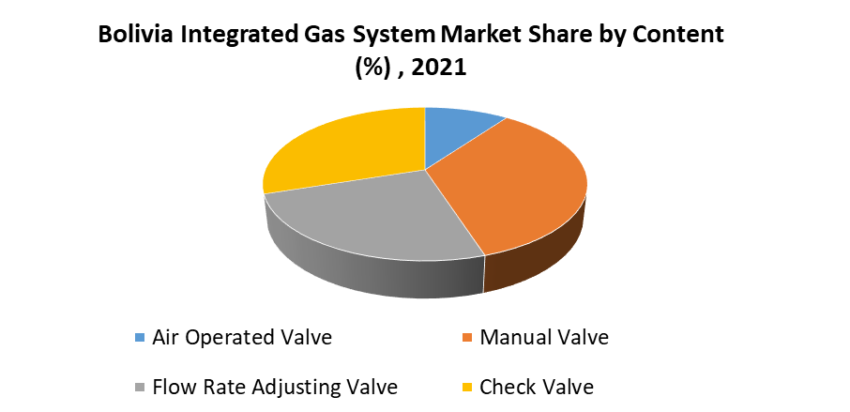
The Bolivia Integrated Gas System Market is experiencing a strategic transformation, according to a comprehensive new study published by Stellar Market Research. Valued at robust baseline levels, the market is poised for steady expansion through the forecast period, driven by the critical need to optimize hydrocarbon extraction, upgrade legacy pipeline grids, and secure regional energy exports across South America.
Key Findings from the Report
-
Market Valuation & Growth: The Bolivia Integrated Gas System Market is projected to expand at a compound annual growth rate (CAGR) of 5.8% throughout the forecast period.
-
Dominant Segment: Pipeline infrastructure and transportation networks dominate revenue generation, accounting for over 45% of total market share due to extensive cross-border supply contracts.
-
Fastest-Growing Segment: Digital automation and real-time SCADA monitoring systems represent the fastest-growing segment, propelled by the push for leakage reduction and operational efficiency.
-
Regional Hubs: Santa Cruz and Tarija remain the leading operational epicenters, hosting primary gas processing plants and compression infrastructure.
-
Emerging Zones: Chuquisaca and surrounding exploration blocks are gaining traction as high-potential emerging regions for secondary recovery systems.
-
Demand Indicators: Rising domestic industrial consumption and fulfillment of long-term export obligations to neighboring Brazil and Argentina continue to anchor baseline volume demands.
-
Investment Relevance: High capital allocation is moving toward brownfield optimization and maintenance technologies rather than purely greenfield extraction.
For further information, click the following link:https://www.stellarmr.com/report/req_sample/Bolivia-Integrated-Gas-System-Market/582
Market Drivers and Restraints
-
Driver 1: Regional Energy Security Demands: Persistent energy needs in neighboring Southern Cone economies compel continuous investment in robust, uninterrupted gas delivery pathways.
-
Driver 2: Infrastructure Modernization: Aging pipelines necessitate immediate technological retrofitting to minimize fugitive emissions and optimize transmission pressure.
-
Driver 3: Monetization of Marginal Fields: Adoption of integrated modular gas processing units allows smaller fields to become commercially viable, driving market breadth.
-
Restraint 1: Regulatory and Fiscal Uncertainty: Complex state-controlled frameworks and shifting fiscal terms can occasionally elongate project payback periods for foreign investors.
-
Restraint 2: Upstream Decline Pressures: Natural depletion rates in historic giant fields require continuous, high-risk capital expenditures to maintain baseline feedstocks.
Technology, Regulation, and Sustainability Trends The integration of Internet of Things (IoT)-enabled sensors, automated pressure control valves, and predictive maintenance algorithms has fundamentally altered operational workflows across Bolivia’s gas networks. On the regulatory and environmental front, compliance pressures are mounting to curb methane emissions and align with global ESG frameworks. Operators are increasingly adopting flare-reduction technologies and investing in cleaner processing methodologies to satisfy both national environmental mandates and the sustainability criteria of international financing institutions.
Regional Insights
-
Leading Region (Tarija & Santa Cruz): These departments remain the heartland of Bolivia’s gas matrix, housing major extraction fields, mega-processing plants (such as Margarita and Incahuasi), and primary export compression nodes. Their established infrastructure gives them a commanding market share.
-
Emerging Region (The Chaco Region & Chuquisaca): Driven by targeted exploratory blocks and localized state-backed development programs, these areas are witnessing a surge in secondary pipeline tie-ins and modular gas processing investments, establishing them as growth hotspots.
Recent Industry Developments
-
YPFB (2025): Launched a comprehensive digital twin pilot project for the main pipeline corridors to optimize transport efficiency and reduce operational downtime by 14%.
-
TechnipFMC (2025): Secured a major contract for upgrading compression facilities in southern Bolivia, introducing advanced low-emission turbine technologies.
-
Bolivian Ministry of Hydrocarbons (2024): Implemented new regulatory incentives aimed at accelerating secondary recovery and marginal field integration through public-private partnerships.
-
Shell Bolivia (2024): Expanded technological cooperation frameworks with local operators to deploy real-time methane monitoring arrays across key distribution hubs.
-
Baker Hughes (2023): Introduced automated sub-surface safety and flow-control packages tailored for mature high-pressure gas wells in the Andean foothills.
Competitive Landscape The competitive ecosystem of the Bolivia Integrated Gas System Market features a mix of state-owned entities and global technology leaders. Yacimientos Petrolíferos Fiscales Bolivianos (YPFB) commands central oversight, cooperating closely with international energy corporations such as TotalEnergies, Repsol, Petrobras, and Shell. Strategic positioning among top players focuses on joint ventures for technological transfer, engineering services localization, and supply-chain resilience to navigate local logistical challenges.
Analyst Commentary
“The Bolivia Integrated Gas System Market is navigating a crucial pivot from pure volume extraction to efficiency-driven optimization,” said a Senior Research Analyst at Stellar Market Research. “Stakeholders that align their strategies with digital automation, emissions reduction technologies, and smart pipeline management will capture disproportionate value as the region seeks to maximize the lifespan of its hydrocarbon assets.”
Future Outlook Through the forecast period, the market will experience a deepening integration of advanced data analytics and automated control systems to offset natural upstream declines. While regulatory evolution will remain a key determinant of foreign direct investment, the underlying imperative for cross-border energy trade and domestic supply reliability ensures a stable trajectory for infrastructure enhancement, green-leaning operational tweaks, and targeted private-sector participation.
For further information, click the following link:https://www.stellarmr.com/report/req_sample/Bolivia-Integrated-Gas-System-Market/582
About Stellar Market Research
Stellar Market Research is a multifaceted market research and consulting company with professionals from several industries. Some of the industries we cover include medical devices, pharmaceutical manufacturers, science and engineering, electronic components, industrial equipment, technology and communication, cars and automobiles, chemical products and substances, general merchandise, beverages, personal care, and automated systems. To mention a few, we provide market-verified industry estimations, technical trend analysis, crucial market research, strategic advice, competition analysis, production and demand analysis, and client impact studies.
Address
Phase 3, Navale IT Zone, S.No. 51/2A/2, Office No. 202, 2nd floor, Near, Navale Brg, Narhe, Pune, Maharashtra 411041
Email
sales@stellarmr.com
Mobile
+91 9607365656