
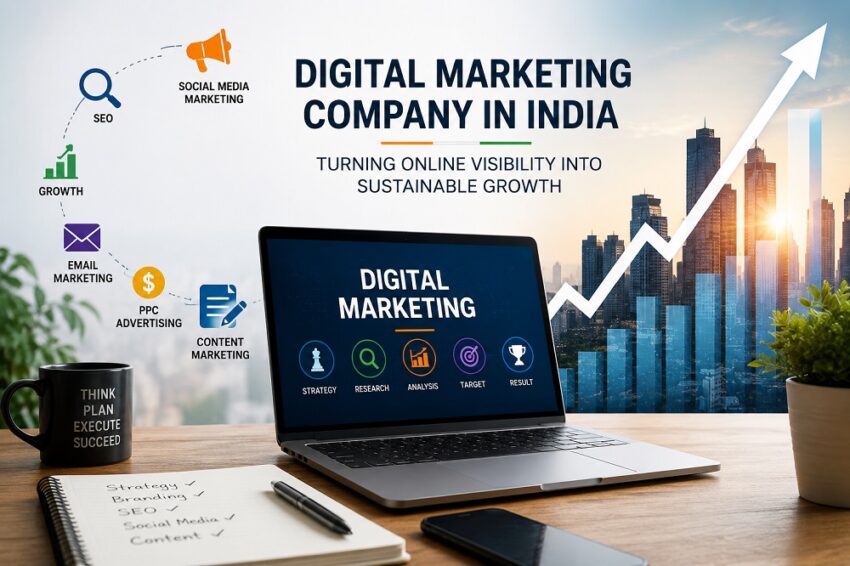
The way people discover, compare, and buy from businesses has changed dramatically. A customer may hear about a brand on Instagram, search for it on Google, read a few reviews, watch a video, compare competitors, and finally make a purchase through a website or messaging platform. What looks like a simple buying decision is actually a long digital journey.
This is where a digital marketing company in India can make a real difference. Instead of treating online promotion as a collection of disconnected activities, the right partner brings search, content, social media, paid advertising, analytics, and conversion strategy together around one clear business objective.
Why Online Visibility Matters More Than Ever
Think about the last time you wanted to buy something unfamiliar. Chances are, you searched online before making a decision.
Your customers are doing the same thing.
They may search for solutions on Google, discover brands through Instagram or YouTube, ask questions through AI-powered tools, or look at reviews before contacting a business. Digital discovery is becoming increasingly fragmented, which means companies can no longer depend on a single channel for visibility.
Recent industry discussions around India’s 2026 marketing landscape point toward AI-powered search, short-form video, regional-language content, social discovery, and first-party data becoming increasingly important.
The goal, therefore, isn’t simply to “be everywhere.” It is to appear in the places where your potential customers are actually making decisions.
From Visibility to Real Business Growth
Getting more website visitors sounds impressive, but traffic alone doesn’t pay the bills.
A business needs the right visitors.
For example, a hundred people searching specifically for your service can be far more valuable than thousands of visitors who have no intention of buying. This is why effective digital marketing starts with understanding customer intent.
A good strategy asks questions such as:
- Who is the ideal customer?
- What problem are they trying to solve?
- What do they search for?
- Which platforms influence their decisions?
- What makes them trust one company over another?
- What might stop them from making an inquiry or purchase?
Once these questions are answered, marketing becomes less about chasing numbers and more about creating useful connections.
SEO Builds Visibility That Can Last
Search engine optimization remains one of the strongest foundations for long-term digital growth.
Paid advertising can bring visitors quickly, but organic search can continue generating relevant traffic long after a piece of content is published. The challenge is that SEO has changed. Simply repeating keywords across a page is no longer a sustainable approach.
Modern search focuses increasingly on helpful information, user intent, technical quality, authority, and overall experience. At the same time, AI-powered search is changing how people consume information, with users increasingly receiving direct answers rather than simply browsing traditional search results.
A successful SEO strategy therefore combines useful content, technical optimization, strong website architecture, credible information, and genuine value for readers.
Content Should Sound Human
There is more content online than anyone could possibly consume.
That makes originality important.
People don’t want another generic article that sounds as though it was written only to rank on Google. They want practical answers, relatable examples, useful insights, and information they can trust.
Human-focused content can tell a company’s story, answer customer questions, explain complicated products, and demonstrate expertise without sounding like a sales pitch.
AI can certainly help marketers research, organize, and produce content more efficiently. But the strongest brands still need human judgment, experience, personality, and original ideas. Current marketing conversations increasingly emphasize this balance between AI-assisted efficiency and authentic human creativity.
Paid Advertising Delivers Speed
Organic growth takes time. Paid advertising can provide an immediate way to reach carefully selected audiences.
Search ads can capture people who are actively looking for a product or service. Social advertising can introduce a brand to specific demographics, interests, or customer segments. Remarketing can reconnect with people who visited a website but weren’t ready to purchase the first time.
But paid campaigns shouldn’t be treated as a simple “spend money and get leads” exercise.
Successful advertising requires continuous testing. Headlines, visuals, audiences, landing pages, offers, and calls to action all need to be evaluated. More importantly, businesses should measure what happens after the click.
A cheap click that never becomes a customer isn’t necessarily a good result.
Websites Need to Convert, Not Just Look Good
Your website is often the point where interest becomes action.
A visitor may arrive through search, social media, an advertisement, or a recommendation. If the website is confusing, slow, difficult to navigate, or unclear about what to do next, valuable traffic can disappear.
A conversion-focused website should answer basic questions quickly:
What does the company offer?
Who is it for?
Why should someone trust it?
What makes the offering different?
What should the visitor do next?
Clear navigation, compelling content, mobile-friendly design, fast loading, strong calls to action, testimonials, and simple enquiry forms can make a significant difference.
The Growing Role of AI in Marketing
Artificial intelligence is changing how marketing teams work.
It can help identify patterns in customer behavior, speed up research, personalize communication, automate repetitive tasks, and support content creation. AI-powered search is also changing the way brands think about online visibility.
For businesses, this means traditional SEO should increasingly be complemented by content that is clear, authoritative, well structured, and easy for both people and search systems to understand.
Still, technology should support strategy rather than replace it.
A machine can identify patterns, but understanding a customer’s emotions, motivations, concerns, and expectations requires context.
Choosing the Right Marketing Partner
Not every agency approaches digital marketing in the same way.
Before choosing a digital marketing company in India, businesses should look beyond promises of rankings, followers, or huge traffic numbers.
Ask how the agency defines success.
A reliable partner should be interested in the business model, target audience, competition, sales process, and long-term objectives. They should be comfortable discussing metrics such as qualified leads, conversion rates, customer acquisition costs, revenue, and return on marketing investment.
Communication matters too. You should know what is being done, why it is being done, and how progress will be measured.
What Sustainable Growth Really Looks Like
Sustainable growth is not about becoming famous overnight.
It is about becoming consistently visible to the right audience.
It means gradually increasing qualified website traffic, generating better leads, improving conversion rates, building stronger customer relationships, and creating a recognizable brand.
There will always be algorithm changes, new platforms, changing customer preferences, and emerging technologies. A sustainable strategy is flexible enough to adapt without abandoning the fundamentals.
That adaptability is especially important in India’s fast-changing digital environment, where AI search, social commerce, regional content, and mobile-first behavior continue to influence how consumers discover brands.
Conclusion
Digital marketing works best when it is treated as a long-term business investment rather than a quick promotional activity. The objective isn’t simply to attract attention. It is to attract the right attention, build trust, encourage action, and create relationships that continue beyond the first interaction.
A capable digital marketing company in India can help businesses bring these moving parts together through a strategy built around measurable objectives and genuine customer needs.