
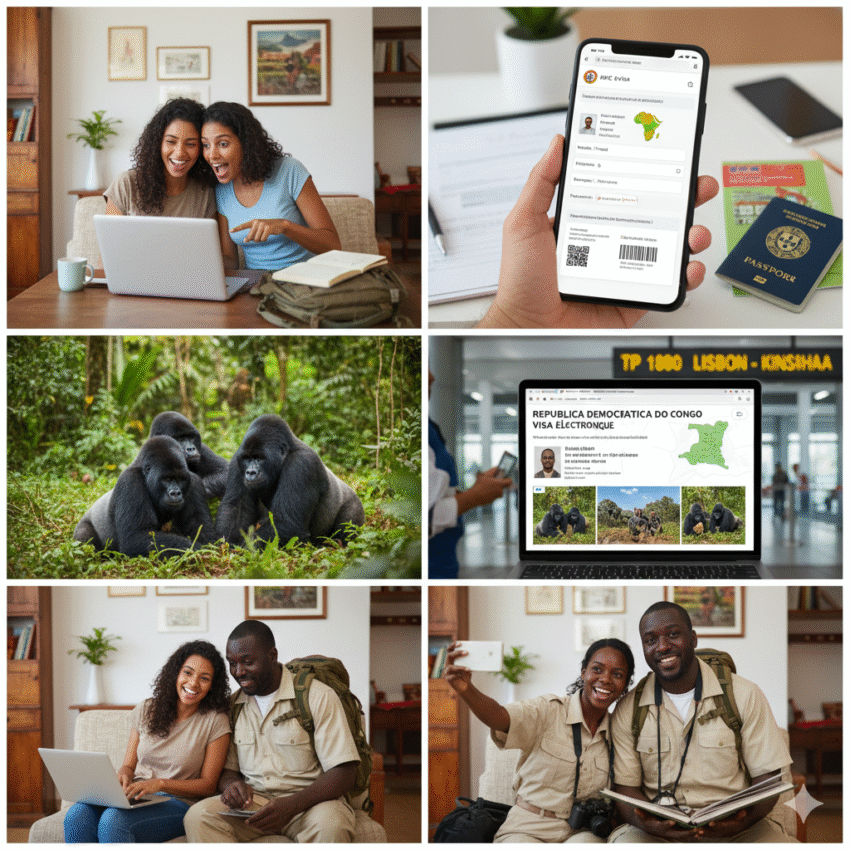
Planning a trip from the historic streets of Lisbon or the sunny coasts of Porto to the heart of Africa? The Democratic Republic of the Congo (DRC) is a land of immense natural beauty, home to the world’s second-largest rainforest, the majestic Congo River, and the world-famous Virunga National Park. For Portuguese citizens, the journey to this vibrant nation begins with securing the right travel authorization.

The DRC eVisa system has been enhanced to provide a more streamlined entry process, allowing travelers to apply entirely online. This removes the traditional hurdle of visiting a physical embassy. In this comprehensive guide, we cover everything about the DRC eVisa For Portugal Citizens, processing times to local survival tips to ensure your Congolese adventure is both safe and seamless.
Do Portuguese Citizens Need a Visa for the DRC?
Yes. Every citizen of Portugal holding an ordinary passport is required to obtain a valid visa before entering the Democratic Republic of the Congo. While diplomatic or service passport holders may enjoy certain reciprocal exemptions, tourists, business travelers, and those visiting family must apply for the Ordinary Flying eVisa (also known as the Visa Volant). This document acts as a pre-authorization that allows you to fly into the country and receive your entry stamp at the border.
What are The Immigration Rules in DRC for Tourists?
When you land in Kinshasa or Lubumbashi, you will present your printed eVisa to the DGM officer. They will verify your documents and place a stamp in your passport.
- Initial Validity: The eVisa usually allows for a single entry.
- Extensions: If your trip exceeds 7 days, you must head to the DGM headquarters in the city center. It is advisable to hire a local guide or fixer to assist with the extension paperwork, which can grant you an additional 30 to 90 days of legal stay.
What is the DRC Ordinary Flying eVisa?
The “Visa Volant” is specifically designed for travelers entering via major international gateways, most notably N’djili International Airport in Kinshasa.

Unlike a traditional sticker visa obtained at a consulate, the eVisa is an electronic document. It is crucial to understand that the eVisa typically grants an initial stay of 7 days. If you intend to stay longer, this “flying visa” serves as the legal bridge that allows you to enter the country so you can apply for a long-stay extension at the Direction Générale de Migration (DGM) offices once you are on the ground.
How Many Days Does DRC eVisa Processing Take?
The Congolese government offers tiered processing speeds to accommodate both long-term planners and last-minute travelers. When applying for DRC Visa, you can choose from the following options:
- Normal Processing:11 – 13 Working Days
- Best for those who have planned their trip months in advance.
- Rush Processing:8 – 11 Working Days
- A middle-ground option for those who need their documents within two weeks.
- Super Rush Processing:5 – 8 Working Days
- The fastest available option for urgent business or personal travel.
“Working days” exclude Saturdays, Sundays, and both Portuguese and Congolese public holidays. We recommend applying at least 20 days before your flight.
Which Documents are Required for DRC eVisa to Portuguese Citizens ?
To avoid delays or rejection, your digital uploads must be high-resolution and clearly legible. The following documents are required for DRC Visa:
- Valid Passport Copy: A clear, color scan of your bio-data page. Your passport must have at least two blank pages and be valid for 6 months beyond your intended date of departure from the DRC.
- Recent Passport Photo: A digital photo taken within the last six months against a plain white background. Ensure your face is centered and you are not wearing glasses or headgear (except for religious reasons).
- The Motivation Letter: This is perhaps the most important part of the application. It must be written in French (or with a French translation) and addressed to the Director General of the DGM.
- Content: You must clearly state the purpose of your visit (tourism, business, or visiting family), your detailed itinerary, arrival/departure dates, and the name of your host or hotel.
How to Apply for the DRC eVisa Online?

The application process is designed to be user-friendly. Follow these steps:
- Data Entry: Enter your personal information exactly as it appears on your Portuguese passport.
- Upload Stage: Attach your scanned documents (PDF or JPG format).
- Fee Payment: Pay the processing fee using a secure international credit or debit card.
- Approval: Once approved, you will receive a PDF via email. You must print this document; a digital version on your phone may not be accepted by airline check-in counters or immigration officers.
What are Most Common Reasons for DRC eVisa Rejection?
Rejections can be frustrating and costly. Most rejections are due to:
- Inconsistencies: Discrepancies between the name on the passport and the name on the application.
- Poor Image Quality: Uploading “photos of photos” or blurry scans that the automated system cannot read.
- Vague Motivation Letters: Failing to provide a specific address of where you will stay or not clearly stating your dates of travel.
- Lack of Funds: Occasionally, applicants may be asked to show proof of sufficient funds to support their stay.
Is the DRC Safe for Portuguese Tourists?
Safety is a primary concern for any traveler to Central Africa.
- Kinshasa & Major Cities: These are generally safe during the day, but petty crime is common. Always use registered taxis and avoid walking alone at night.
- Eastern Regions: North Kivu, South Kivu, and Ituri are currently prone to civil unrest. Travelers should only visit these areas for specific purposes (like gorilla trekking in Virunga) with highly reputable, armed-escort tour operators.
- Travel Advisories: Always check the latest updates from the Portuguese Ministry of Foreign Affairs (Portal das Comunidades) before departure.
How Can I Buy SIM Cards & eSIMs in DRC?
Internet access is vital for navigating and staying in touch.
- Buying a SIM: You can purchase a local SIM card (Vodacom, Airtel, or Orange) at the airport or in major shopping centers. You will need your passport for registration.
- eSIM: If your phone supports it, an eSIM from a provider like Airalo or Holafly can be set up before you leave Lisbon, though local physical SIM cards usually offer better rates for large data packages.
What are Healthcare Facilities for Tourists in DRC?

Healthcare in the DRC is limited, especially outside the capital.
- Hospitals: In Kinshasa, the HJ Hospitals and Ngaliema Medical Center are the most reliable for foreigners.
- Insurance: Comprehensive travel insurance with medical evacuation coverage is non-negotiable.
How are taxis and transportation in DRC?
- Taxis: Never hail a taxi on the street. Use “Hotel Taxis” or trusted private car services recommended by your accommodation.
- Public Transport: Avoid “spirit” buses or crowded public vans due to safety and theft risks.
- Ride Sharing Apps: Apps like Hoja or Ubaiz are beginning to gain traction in Kinshasa, providing a safer, tracked alternative to street taxis.
- Internal Flights: To travel between Kinshasa and Goma or Lubumbashi, use reputable airlines like Congo Airways or CAA. Avoid smaller, unregulated bush planes.
What Are The Currency Used and ATM Availability in DRC?
- ATMs: ATMs in major cities usually dispense USD. Visa is the most widely accepted card; Mastercard and Amex have very limited support.
- Dual Currency: The DRC uses both the Congolese Franc (CDF) and the US Dollar (USD).
- USD Requirements: If bringing USD, the bills must be pristine—no tears, marks, or folds—and must be printed after 2013. Older bills are often rejected by locals and banks.
What to Do If I Lose My Documents in DRC?
Losing your passport or eVisa can be stressful.
- Contact the Police: Get a police report immediately.
- Contact the Embassy: Portugal does not have a large consular network in every city, so contact the Embassy of Portugal in Kinshasa immediately for an Emergency Travel Document.
- Digital Backups: Always keep copies of your eVisa and passport on a secure cloud drive.
What are The Children’s Travel Rules in DRC?
The DRC takes child protection seriously. Minors (under 18) must have:
- Their own individual passport and eVisa.
- A birth certificate (translated into French).
- If traveling with only one parent, a notarized letter of consent from the other parent is mandatory to prevent child trafficking issues at the border.
Final Thoughts
The Democratic Republic of the Congo offers an experience unlike any other on earth—from the rumba beats of Kinshasa to the volcanic landscapes of the East. By following this guide, you’ll be well-prepared for the bureaucracy so you can focus on the beauty of the “Heart of Africa.”