
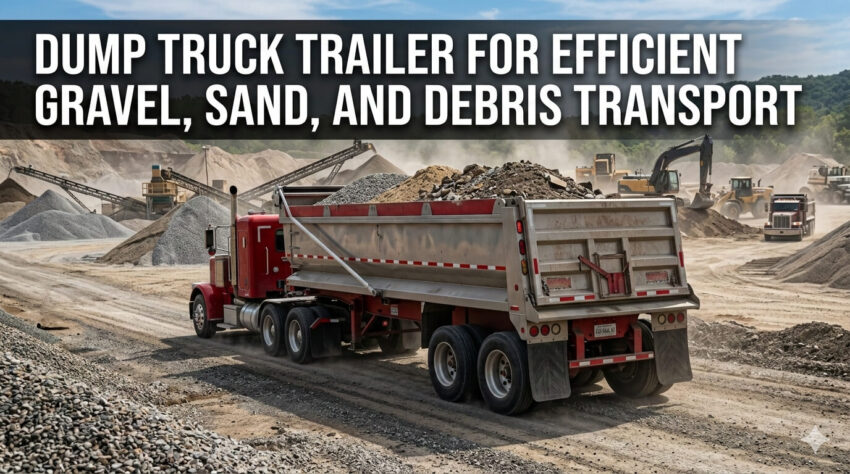
Some jobs look simple until you actually start doing them. Moving gravel is a good example. At first it sounds easy—load it up, haul it somewhere else, dump it. Done. But anyone who’s handled piles of stone, sand, or demolition debris knows the reality. The material is heavy. Messy. And unloading it by hand? Yeah… that gets old quickly.
That’s usually the point where people start looking into a dump truck trailer. Somewhere between the third shovel full of wet sand and the tenth wheelbarrow run, the idea of pressing a button and letting gravity handle the unloading suddenly sounds pretty appealing.
Contractors, landscapers, property owners… they all run into this moment eventually. A trailer that lifts its own bed and drops the load where it needs to go just makes life easier. Not fancy. Just practical.
And once someone starts using one regularly, hauling gravel or clearing construction debris feels like a different job entirely.
Why Dump Trailers Work So Well for Loose Materials
Loose materials behave differently from solid equipment. A tractor or pallet stays in place during transport. Gravel and sand? They shift. They settle into corners. They stick to trailer floors in annoying little piles.
A hydraulic dump truck trailer handles those materials without much fuss. The bed lifts upward, usually powered by a hydraulic system, and the load slides out the back. Most of the time it empties in seconds.
Watching it happen the first time is kind of satisfying, honestly. The trailer tilts slowly. Then the pile moves… and suddenly the entire load is on the ground.
No shoveling. No dragging heavy buckets around.
Construction crews dumping broken concrete love this feature. Same story with landscapers hauling mulch or soil.
Moving Gravel Without the Headache
Gravel seems harmless sitting in a neat pile at a supply yard. Once it’s in a trailer though… it’s another story.
A dump truck trailer for gravel hauling makes that process far less frustrating. Gravel is dense, and it spreads evenly across the trailer bed while driving. Trying to unload it manually takes real effort.
The hydraulic lift does the hard part instead.
One contractor I talked with mentioned that his crew used to spend almost forty minutes unloading gravel with shovels after every trip. Once they started using a dump trailer, the unloading process took less than two minutes.
That kind of time difference adds up over a long workday.
Sand Transport Gets Much Simpler
Sand brings its own set of problems. It shifts more than gravel and tends to settle tightly in the corners of a trailer.
A dump truck trailer for sand transport helps because the steep angle of the raised bed encourages sand to slide downward in one motion. Gravity does most of the work.
Still, wet sand can cling to the trailer floor sometimes. Anyone who has hauled it before knows the feeling—thinking the trailer is empty and then realizing there’s a stubborn mound stuck near the front.
It happens.
Still easier than scooping everything out by hand.
Construction companies moving foundation sand or masonry supplies depend on dump trailers pretty heavily for this reason.
Clearing Debris After Construction or Storm Damage
Debris hauling might be one of the most common uses for dump trailers. Job sites generate mountains of scrap material. Broken wood. Drywall pieces. Old roofing. Random piles of rubble that appear out of nowhere.
A heavy duty dump truck trailer for debris removal handles these messy loads pretty well.
Load it up during the day, then drive to a disposal site and raise the bed. The entire pile slides out the back.
No crawling inside the trailer trying to drag junk out piece by piece. No wrestling with tangled boards.
Land clearing projects use them constantly too. Tree limbs, rocks, dirt piles, leftover brush—it all ends up in the trailer.
Some loads look chaotic while loading… yet they still dump cleanly once the bed lifts.
Helpful for Landscaping Projects Too
Landscaping crews move materials constantly. Mulch deliveries. Soil loads. Decorative stone. Sometimes all of that happens on the same job.
A dump truck trailer for landscaping becomes part of the routine pretty quickly.
Mulch piles get delivered to job sites faster. Soil can be dumped directly where garden beds are being built. Gravel pathways get filled in without hauling buckets across the yard.
I once watched a landscaping team finish a driveway gravel job in half the time they originally planned. Their trailer simply backed up and dumped the entire load exactly where it needed to go.
Clients appreciate that kind of speed.
Less noise. Less mess.
Weight Capacity Matters More Than People Expect
Loose materials pile up quickly. A few cubic yards of gravel or sand can weigh several tons.
A high capacity dump truck trailer handles those heavy loads without feeling overwhelmed. Most models are built with strong frames and thick steel beds that handle repeated hauling without bending or cracking.
Farmers often use these trailers for moving soil, manure, feed materials, or crushed rock for road repairs.
Construction crews rely on them for hauling asphalt chunks, dirt piles, and demolition waste.
Different industries. Same basic idea.
Big loads moving around all day.
Hydraulic Lifting Makes the Job Faster
The hydraulic system inside a hydraulic dump truck trailer does more work than people realize.
A pump powers a lift cylinder that pushes the trailer bed upward slowly. The angle increases until the load begins sliding out the rear gate. Some trailers even allow controlled dumping so materials spread more evenly on the ground.
This helps when laying gravel roads or filling trenches.
Instead of one giant pile, the material spreads while the truck creeps forward.
Watching experienced operators do this is interesting. They barely touch the controls, yet the gravel spreads almost perfectly across the ground.
Years of practice, probably.
Small Crews Benefit the Most
Large construction companies already have heavy equipment. Loaders, dump trucks, full hauling fleets.
Smaller crews and independent contractors often rely on dump truck trailers for sale as a more practical solution.
One pickup truck plus a dump trailer can handle a surprising amount of work.
Property owners clearing land. Small demolition teams. Weekend builders working on home projects. Many of them find dump trailers more flexible than renting larger trucks every time material needs to be moved.
It becomes part of the workflow after a while.
Load it. Haul it. Dump it. Move on.
Work Moves Faster With the Right Trailer
Hauling loose materials will probably never feel glamorous. Gravel still weighs a ton. Sand still sticks to everything. Debris piles always seem bigger than expected.
Still… a trailer that dumps its own load changes the rhythm of the workday.
Trips become quicker. Crews spend less time shoveling. Materials land exactly where they need to go.
And somewhere during that first smooth unload—watching the bed lift and the load slide out—you might catch yourself thinking the same thing many people say after buying one.
“Should’ve done this sooner.”