
Beautiful Weddings Don’t Have to Cost the Earth
Most couples want their wedding flowers to look stunning. But more and more, they also want those flowers to mean something beyond the day itself.
Eco-friendly luxury wedding floral arrangements are no longer a compromise. They are a deliberate, beautiful choice. Today’s sustainable florals use premium blooms, thoughtful sourcing, and zero-waste design methods — without sacrificing an ounce of elegance. If you care about both beauty and responsibility, this guide is for you.
Why Sustainable Wedding Florals Are Growing Fast
The floral industry has a waste problem. Most cut flowers travel thousands of miles before they reach a vase. Conventional florals often involve pesticides, plastic packaging, and floral foam — a synthetic product that never breaks down.
Couples planning weddings in 2025 are paying attention to this. Search interest in sustainable wedding flowers has grown sharply over the past two years. The shift isn’t just trend-driven. It comes from a genuine desire to celebrate love without leaving behind unnecessary damage.
The good news — sustainable and luxurious are not opposites. When a skilled florist sources locally grown peonies or arranges orchids in a foam-free design, the result looks just as breathtaking. Often more so.
What Makes a Floral Arrangement Truly Eco-Friendly
Not every “green” claim holds up. Here is what actually matters when evaluating sustainable wedding florals.
Locally sourced blooms travel shorter distances. They arrive fresher, last longer, and carry a smaller carbon footprint. Seasonal flowers grown nearby — like dahlias in late summer or ranunculus in spring — bring natural beauty without the environmental weight of long-distance imports.
Certified sustainable farms follow specific growing standards. They reduce pesticide use, protect soil health, and manage water responsibly. Flowers from these farms cost slightly more, but the difference in quality and ethics is real.
Foam-free design is one of the most important shifts in modern floristry. Traditional floral foam is made from non-biodegradable plastic. Skilled designers now use chicken wire, pin frogs, and reusable vessels instead — with zero loss in visual quality.
Biodegradable packaging replaces plastic wrap with kraft paper, cotton ribbon, and compostable materials. It sounds like a small detail. At scale, across an entire wedding, it adds up to a meaningful difference.
How Eco-Friendly Choices Work Across Every Wedding Floral Element
Bridal Bouquets
Your bouquet is the most personal floral element of the day. It travels with you. It shows in every photo. Sustainable bridal bouquets use garden roses, peonies, sweet peas, and seasonal wildflowers — all sourced with intention. The result feels gathered, alive, and genuinely romantic.
Foam-free hand-tied bouquets allow stems to drink naturally and hold their shape beautifully. Add linen or raw silk ribbon instead of synthetic wrap, and every detail reflects the same care.
Ceremony Floral Arrangements Wedding Design
Ceremony florals set the first impression. A floral arch, altar arrangement, or aisle design built with locally grown blooms and reusable structural supports creates the same visual drama as a conventional build — but with a cleaner footprint.
Asymmetrical altar installations are a strong trend right now. They feel artistic rather than rigid, and they use fewer stems to achieve more visual impact. That combination works perfectly for sustainable design.
Aisle ground florals — clusters of blooms placed at eye level along the ceremony path — create an immersive, layered look. Use seasonal flowers here. They look most natural and photograph beautifully in outdoor settings.
Centerpieces and Reception Floral Arrangements Wedding Styling
Reception centerpieces take up the largest portion of any wedding floral budget. Sustainable choices here make the biggest difference — both environmentally and financially.
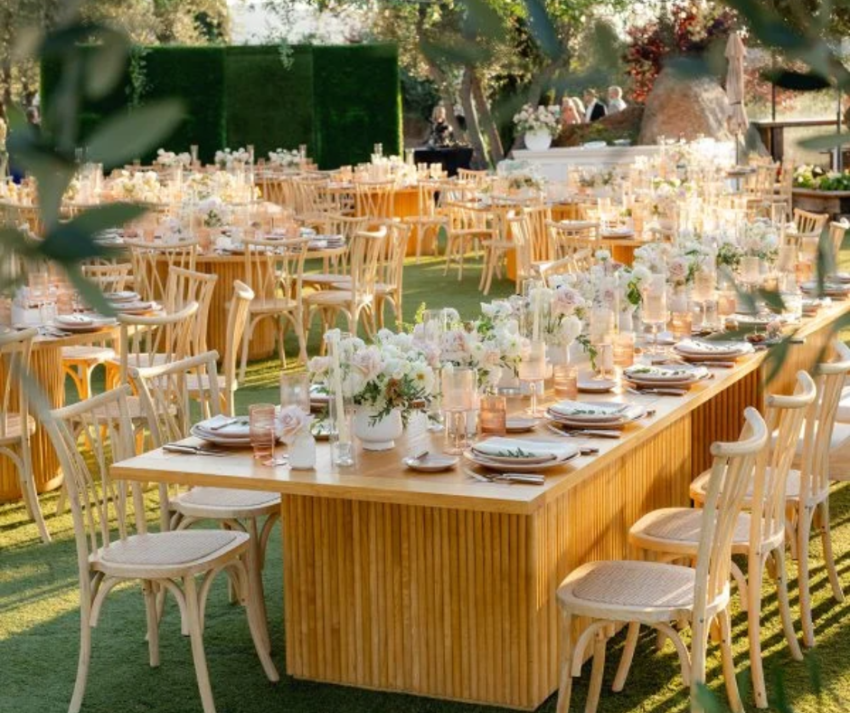
Low, lush centerpieces built with seasonal blooms and generous greenery look full and expensive without relying on imported rarities. Eucalyptus, ruscus, and Italian ruscus add volume, texture, and depth at a fraction of the cost of premium focal flowers.
Mixing light and dark tones within a centerpiece adds a dimension that reads as intentional and refined. Pairing soft blush peonies with deep burgundy ranunculus, for example, creates visual richness without over-engineering the design.
One smart move many couples miss — repurpose ceremony florals at the reception. An arch cluster can frame a sweetheart table. Aisle pedestals move easily to the bar or entrance. This cuts costs and reduces overall stem count without reducing impact.
Floral Installations
Hanging floral installations are among the most dramatic elements in modern wedding design. Floral chandeliers, ceiling garlands, and floating flower clouds all create that unforgettable sense of arrival when guests enter a reception space.
Built with reusable frames and foam-free mechanics, these installations are fully sustainable. Lightweight blooms like hydrangeas, baby’s breath, and wisteria work especially well overhead. They hold their shape without heavy support and photograph with a soft, dreamlike quality.
Dried and Preserved Flowers: A Sustainable Option Worth Considering
Dried florals have moved well past the rustic, farmhouse aesthetic. In 2025, preserved pampas grass, dried lunaria, and freeze-dried garden roses appear in high-end wedding designs regularly.
They last indefinitely. They require no water. They travel without refrigeration. And when combined with fresh blooms in a mixed arrangement, they add texture and depth that fresh-only designs can’t achieve.
For couples who want a keepsake bouquet without the freezer bag — preserved flowers are a genuinely beautiful solution.
Eco-Friendly Luxury Wedding Floral Arrangements: What to Ask Your Florist
Before you book, ask these questions directly.
Where do your flowers come from? A florist who sources locally or from certified sustainable farms will answer this confidently and specifically.
Do you design without floral foam? The answer tells you how current and committed they are to sustainable practice.
Can ceremony florals be repurposed at the reception? A good florist plans for this from the start and builds it into the design.
What packaging do you use? Biodegradable materials should be standard, not an upgrade.
These questions separate florists who genuinely practice sustainable design from those who simply use the language.
Your Wedding Can Be Both Stunning and Responsible
Sustainability in wedding florals is not about scaling back. It is about choosing better — better sources, better materials, better methods. The flowers look just as beautiful. The arrangements carry the same luxury. And the day feels even more meaningful when the choices behind it reflect your values.
Eco-friendly luxury wedding floral arrangements are the future of high-end wedding design — and that future is already here. If your wedding date is approaching and your floral vision deserves both elegance and intention, don’t wait. Premium sustainable florals book fast, especially for peak wedding season. XO Bloom designs full-service wedding florals — from bridal bouquets to large-scale installations — with sustainability at the core of every arrangement. Visit us to start planning your wedding florals today.
FAQs
- Are eco-friendly wedding flowers more expensive than conventional ones? Not always. Locally sourced, seasonal blooms often cost less than imported varieties. The overall cost depends on design complexity, bloom selection, and scale. A skilled florist can build a sustainable floral plan within most wedding budgets.
- What flowers are best for eco-friendly wedding arrangements? Seasonal, locally grown blooms are the best choice. Peonies, garden roses, dahlias, ranunculus, and wildflowers all work beautifully. Availability varies by season, so work with your florist to match your wedding date to what grows naturally nearby.
- Is foam-free floral design as sturdy as traditional floral foam? Yes. Professional florists use chicken wire, pin frogs, and reusable armatures to build foam-free designs. These mechanics support stems just as effectively — and allow flowers to hydrate more naturally, which actually extends their vase life.
- Can dried flowers be used in luxury wedding designs? Absolutely. Preserved pampas grass, dried lunaria, and freeze-dried garden roses appear regularly in high-end wedding florals in 2025. They add texture, depth, and longevity — and they work beautifully alongside fresh blooms in mixed arrangements.
- How far in advance should I book wedding florals? For peak wedding season — spring and summer — book at least six to nine months in advance. Sustainable florists who source from local farms have limited seasonal availability. The earlier you book, the more design options remain open to you.