
Water bodies across urban and rural landscapes are facing increasing pressure from excessive vegetation growth, invasive plant species, and floating debris. As lakes, reservoirs, irrigation canals, and rivers become choked with uncontrolled biomass, their ecological balance, water flow capacity, and overall usability decline rapidly. Addressing this challenge requires more than manual removal methods or temporary fixes — it demands precision-engineered mechanical systems designed for sustained performance.
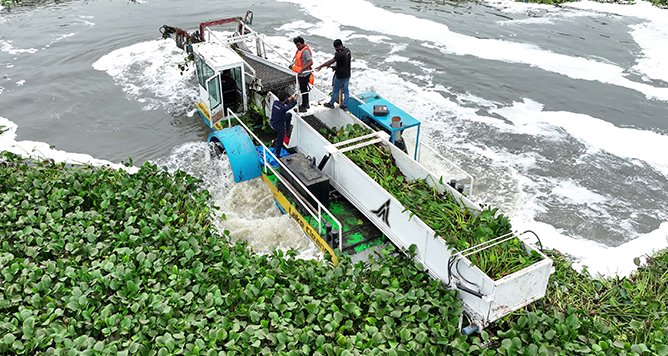
A Professional Aquatic Weed Harvester plays a vital role in restoring ecological balance in such environments. Unlike traditional clearing methods that are labour-intensive and inconsistent, mechanised harvesting ensures uniform cutting, collection, and transfer of aquatic vegetation. This approach not only improves operational efficiency but also significantly reduces downtime in large water bodies.
The real advancement in this sector lies in capacity and operational endurance. A High Capacity Aquatic Weed Harvester is specifically designed to manage dense weed infestation across expansive surfaces without frequent unloading interruptions. Its structural build, conveyor system integration, and balanced buoyancy allow it to operate effectively even in heavily overgrown zones. Such machines are particularly valuable in large reservoirs and municipal lakes where vegetation density can quickly spiral out of control during peak growth seasons.
Beyond vegetation control, modern systems are now being engineered with multi-functional adaptability. Many water bodies suffer not only from rooted weeds but also from floating waste such as plastics, organic debris, and surface litter. Integrating the capability of a floating trash collector into harvesting operations enhances environmental impact. By simultaneously removing weeds and floating debris, the overall water quality improves faster, and the risk of secondary pollution is reduced.
From a sustainability standpoint, mechanised aquatic management contributes to long-term ecosystem stability. Removing invasive species prevents oxygen depletion and improves light penetration, supporting healthier aquatic life. Moreover, collected biomass can be repurposed for composting or bioenergy applications, turning waste into a resource rather than a disposal challenge.
Operational design also plays a crucial role. Stability in varying water depths, efficient propulsion systems, corrosion-resistant materials, and optimised cutting mechanisms are essential components of a reliable harvesting solution. When these elements are engineered with precision, the result is consistent performance across seasons and geographic conditions.
Importantly, mechanised harvesting is not merely about removal — it is about waterway restoration strategy. Planned harvesting cycles help prevent regrowth, maintain navigability, and ensure uninterrupted irrigation or recreational use. With growing awareness about water conservation and environmental stewardship, adopting structured aquatic management systems is becoming less of an option and more of a necessity.
In conclusion, advanced aquatic harvesting technology represents a shift towards proactive water ecosystem management. By combining large-scale vegetation control with debris removal capability, these systems provide a comprehensive and practical approach to restoring and maintaining vital water resources for communities and industries alike.