
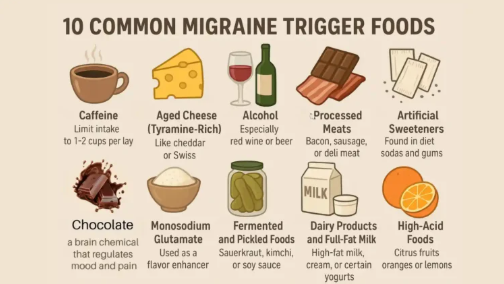
Migraines can disrupt your day, making work, exercise, or social activities difficult. While triggers vary, certain foods are known to provoke headaches.
In this article, you will learn which foods that trigger migraines, why they affect some people, and what safer alternatives you can include in your diet to reduce attacks.
Understanding Migraine Triggers
How Food Impacts Migraines
Certain chemicals in foods, like tyramine, MSG, and nitrates, can alter blood flow in the brain, leading to migraine symptoms.
Individual Sensitivities
Migraine triggers are personal. A food causing headaches for one person may be safe for another. Keeping a food diary can help identify patterns.
Common Foods That Trigger Migraines
Aged Cheeses
Cheeses like cheddar, blue cheese, and parmesan contain high levels of tyramine, a known migraine trigger.
Processed Meats
Bacon, hot dogs, and deli meats contain nitrates and nitrites, which may increase headache risk.
Chocolate
Chocolate contains caffeine and phenylethylamine, which can provoke migraines in sensitive individuals.
Caffeinated Beverages
While small amounts may relieve migraines, excessive caffeine can trigger rebound headaches.
Alcohol
Red wine and beer are common triggers due to tannins, histamines, and sulfites.
Artificial Sweeteners
Aspartame and sucralose may trigger migraines in some people.
MSG (Monosodium Glutamate)
MSG, found in processed foods and some restaurant meals, can induce headaches in sensitive individuals.
Pickled and Fermented Foods
Sauerkraut, kimchi, and pickles contain high tyramine, increasing migraine risk.
Safer Food Alternatives
Fresh Fruits and Vegetables
Leafy greens, berries, and citrus fruits provide nutrients without triggering headaches.
Lean Proteins
Chicken, turkey, and tofu are low-risk protein sources that rarely provoke migraines.
Whole Grains
Oats, brown rice, and quinoa maintain energy levels without increasing migraine susceptibility.
Herbal Teas
Ginger, peppermint, and chamomile teas may help prevent headaches and soothe mild symptoms.
Healthy Snacks
Nuts, seeds, and yogurt are generally safe alternatives to processed or trigger-prone foods.
Tips to Reduce Food-Related Migraines
- Keep a detailed food diary to track triggers
- Eat regular, balanced meals to maintain stable blood sugar
- Hydrate consistently throughout the day
- Avoid skipping meals, which can provoke headaches
- Read labels carefully for additives, preservatives, and MSG
When to Seek Medical Advice
- Migraines become frequent or severe
- Over-the-counter medications no longer relieve symptoms
- You experience visual changes, numbness, or weakness alongside headaches
FAQ Section
- Can food alone trigger migraines?
Yes, for some individuals, certain foods or additives can directly provoke migraine attacks. - Are all cheeses risky for migraines?
Aged cheeses are more likely triggers due to tyramine, but fresh cheeses are generally safer. - Is chocolate always a migraine trigger?
No, it only affects sensitive individuals; keeping a food diary helps identify your triggers. - Does caffeine help or worsen migraines?
Moderate caffeine may relieve headaches, but excessive intake can cause rebound migraines. - Can alcohol trigger migraines immediately?
Yes, especially red wine and beer due to histamines, tannins, and sulfites. - Are artificial sweeteners dangerous for migraine sufferers?
Some individuals are sensitive to aspartame or sucralose, which can provoke headaches. - How can I safely identify trigger foods?
Track your diet in a migraine diary, noting symptoms and timing after meals. - Are fermented foods always risky?
They contain tyramine, so sensitivity varies; start with small amounts to test tolerance. - Can hydration prevent food-related migraines?
Yes, staying hydrated helps reduce migraine frequency and severity. - Should I consult a doctor about dietary triggers?
Yes, especially if migraines are frequent, severe, or affect your daily life.