
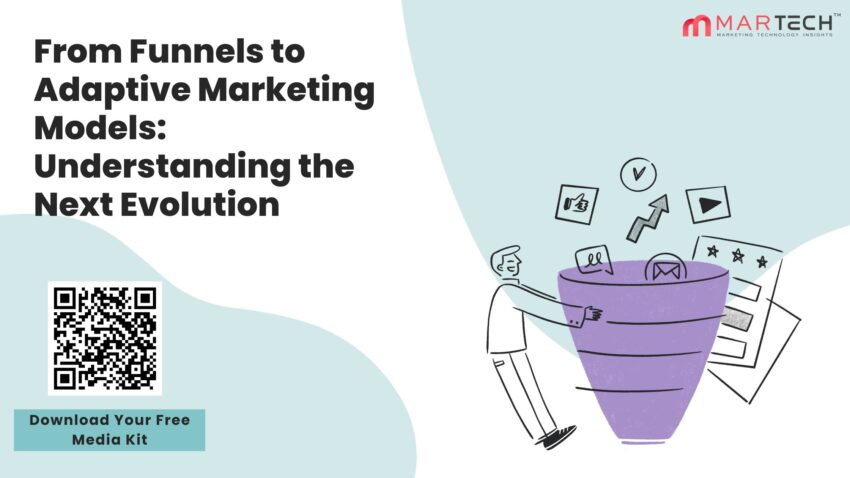
For decades, marketing strategy revolved around the funnel—a linear model guiding buyers from awareness to purchase. But modern customer behavior no longer follows predictable paths. Buyers move across channels, revisit decisions, and engage anonymously before committing. As a result, organizations are shifting toward adaptive marketing models that respond dynamically to behavior and context. This evolution marks a fundamental change in how growth strategies are designed and executed.
Why the Traditional Funnel Is Losing Relevance
The classic funnel assumes sequential progression: awareness, consideration, decision, and conversion. While useful conceptually, it struggles to reflect today’s nonlinear journeys.
Modern buyers conduct independent research, pause evaluation, involve additional stakeholders, and switch channels frequently. They may enter at multiple stages simultaneously or revisit earlier phases after engaging with sales. Static funnels cannot capture these behaviors, leading to misaligned messaging and missed opportunities. Adaptive models recognize that customer journeys are fluid rather than fixed.
Adaptive Marketing Responds to Real-Time Behavior
Adaptive marketing replaces predefined paths with dynamic engagement driven by signals and context. Instead of forcing customers through stages, systems adjust experiences based on observed actions.
For example, a prospect demonstrating high-intent behavior may receive product-focused messaging immediately, while early researchers continue receiving educational content. AI and analytics enable real-time adjustments to content, channels, and timing. Marketing shifts from campaign execution to continuous orchestration.

Data and Signals Become the New Navigation System
In adaptive models, behavioral data and intent signals guide decision-making. Engagement patterns, content interactions, and account activity provide insight into customer readiness.
These signals help marketers determine when to accelerate engagement, when to nurture, and when to involve sales teams. Rather than relying on assumptions tied to funnel stages, adaptive marketing uses live data to personalize journeys at scale. The result is more relevant interactions and improved conversion efficiency.
Cross-Functional Collaboration Drives Adaptability
Adaptive marketing requires closer alignment between marketing, sales, product, and customer success teams. Customer engagement becomes a shared responsibility across the lifecycle.
Insights from sales conversations inform marketing messaging, while product usage data shapes retention campaigns. This integrated approach ensures customers experience consistent engagement regardless of touchpoint. Organizational alignment becomes as important as technological capability.
Continuous Optimization Replaces Campaign Cycles
Traditional marketing operated in campaign cycles—plan, launch, measure, repeat. Adaptive models operate continuously.
Performance signals trigger ongoing optimization, allowing teams to refine targeting, messaging, and channel mix in real time. Marketing becomes an evolving system rather than a series of isolated initiatives. Continuous learning improves efficiency and responsiveness to market change.
Challenges in Transitioning to Adaptive Models
Moving beyond funnels requires cultural and operational change. Teams must rethink metrics, invest in integrated data infrastructure, and adopt experimentation-driven workflows.
Success depends on balancing automation with strategic oversight. Adaptive systems need governance to maintain brand consistency and avoid fragmented experiences.
Implementation Checklist
Map current customer journeys to identify nonlinear behaviors. Integrate behavioral and intent data across platforms. Replace rigid funnel metrics with engagement and progression indicators. Align marketing, sales, and customer success workflows. Implement real-time analytics for continuous optimization. Encourage experimentation and iterative learning.
Takeaway
The shift from funnels to adaptive marketing models reflects the reality of modern buying behavior—where success comes from responding intelligently to customer signals rather than forcing journeys into predefined paths.
About Marketing Technology Insights
Marketing Technology Insights is a leading digital publication dedicated to delivering timely news, expert analysis, and in-depth insights on the global marketing technology ecosystem. The platform serves B2B marketers, CMOs, growth leaders, and GTM teams seeking clarity in an increasingly complex martech landscape.
Marketing Technology Insights helps decision-makers stay informed about how emerging technologies, data-driven strategies, and AI-powered platforms are reshaping modern marketing.
About Marketing Technology Insights Coverage
Marketing Technology Insights focuses on the technologies, platforms, and strategies that drive measurable marketing and revenue outcomes. Our editorial coverage spans the full martech lifecycle — from awareness and demand generation to pipeline acceleration and customer experience.
Our core coverage areas include:
- Marketing Technology News: Product launches, partnerships, acquisitions, and platform innovations
- B2B Marketing & GTM Strategies: Account-based marketing, revenue operations, and growth frameworks
- Data, Analytics & AI: Marketing analytics, automation, personalization, and AI-driven decisioning
- Customer Experience & Engagement: CX platforms, omnichannel marketing, and journey orchestration
- Enterprise & SaaS Marketing: Insights for mid-market and enterprise marketing leaders
Our Editorial Approach
Marketing Technology Insights combines industry reporting with practical analysis to help marketers understand what matters, why it matters, and how to act on it. Our content is designed to be actionable, credible, and relevant for real-world marketing teams.
We work closely with technology providers, marketing leaders, and industry analysts to surface insights that go beyond announcements — highlighting impact, use cases, and strategic implications.
Who We Serve
Marketing Technology Insights is trusted by:
- B2B marketers and demand generation leaders
- CMOs and marketing executives
- Revenue, growth, and GTM teams
- Martech vendors and SaaS providers
- Analysts, consultants, and industry influencers
Get in Touch
For media inquiries, press releases, or partnership opportunities:
Media Contact: Contact us
To submit news, contribute insights, or advertise with us, visit: