
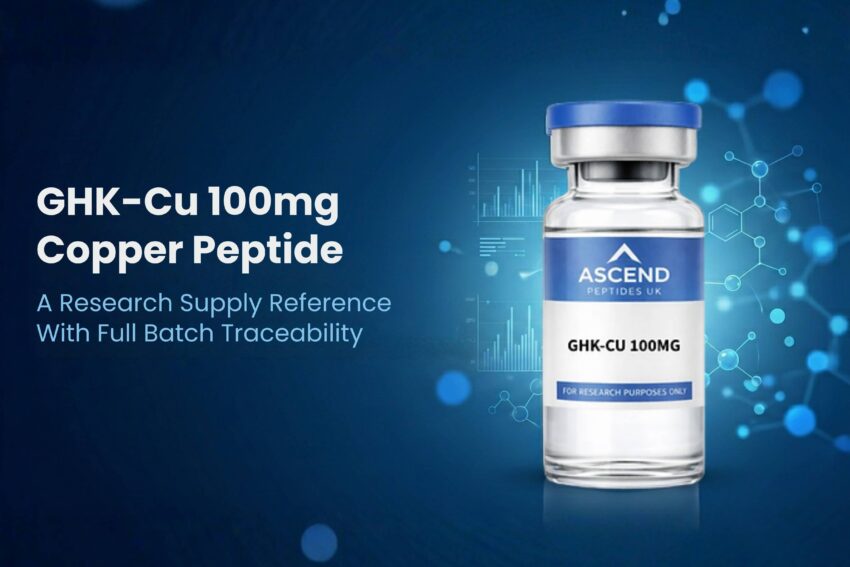
In peptide research, consistency carries as much importance as the compound itself. Researchers working with copper peptides often focus on structural stability, analytical transparency, and traceable sourcing because even small inconsistencies can influence signaling analysis and experimental interpretation.
Among the most studied compounds in this category is GHK-Cu, a copper-binding tripeptide frequently explored in dermal and collagen-focused research models. Its interaction profile, combined with its well-documented peptide structure, has made it a recurring subject in controlled laboratory studies involving cellular signaling and extracellular matrix investigation.
This guide explores the role of GHK-Cu 100mg research within modern peptide studies, focusing on peptide chemistry, copper-tripeptide structure, analytical verification, and the growing importance of full batch traceability. From synthesis records to HPLC reporting and dispatch protocols, every stage contributes to the reliability researchers expect from research-grade peptide sourcing.
Understanding the Structure of GHK-Cu
GHK-Cu is a copper-binding tripeptide composed of glycine, histidine, and lysine complexed with copper ions. In research environments, this structure is studied for its interaction with cellular communication pathways and extracellular matrix signaling.
Structural components:
- Glycine
- Histidine
- Lysine
- Copper ion complex
The copper-binding capability plays a central role in how researchers examine signaling activity within controlled dermal research environments.
Why structure matters in peptide studies:
- Influences receptor interaction behavior
- Affects peptide stability during analysis
- Supports consistent signaling observation
- Impacts extracellular matrix research models
In GHK-Cu 100mg, structural integrity remains one of the most closely monitored factors throughout sourcing and laboratory preparation.
Why GHK-Cu Continues to Attract Research Interest
Copper peptides have gained attention because of their role in cellular communication studies and collagen-related signaling pathways.
Common areas of investigation:
- Dermal research models
- Collagen study pathways
- Extracellular matrix signaling
- Copper-peptide interaction analysis
- Cellular communication behavior
Researchers often explore how the copper tripeptide structure behaves under controlled conditions where signaling consistency and structural stability can be carefully observed.
The Importance of Batch Traceability in Peptide Research
One of the strongest indicators of supply reliability is full batch traceability. In peptide sourcing, traceability creates a transparent chain from synthesis through dispatch.
Full batch traceability typically includes:
- Batch ID assignment
- Synthesis documentation
- Analytical testing records
- HPLC report verification
- Packaging and dispatch tracking
For researchers, this level of documentation strengthens confidence in experimental consistency and supports reproducibility across studies.
How Batch ID Systems Support Research Accuracy
A batch ID does far more than label a vial. It connects the peptide to its analytical and production history.
What researchers can verify through batch IDs:
- Production timeline
- Testing documentation
- Purity analysis records
- Handling and storage history
- Dispatch tracking information
This level of visibility helps researchers maintain structured records throughout long-term peptide studies.
In GHK-Cu 100 mg research, traceable batch systems are especially valuable because they support consistency between experimental phases and repeated analytical testing.
HPLC Reports and Why They Matter
HPLC analysis plays a major role in peptide verification. Researchers rely on these reports to evaluate purity and structural consistency before introducing a compound into experimental workflows.
What HPLC reports help confirm:
- Peptide purity profile
- Presence of impurities
- Structural consistency
- Analytical quality standards
Why this matters:
- Cleaner experimental data
- Better reproducibility across studies
- Reduced variability in signaling analysis
- Stronger confidence in comparative research
For peptide-focused laboratories, HPLC reporting has become a core part of responsible sourcing practices.
Copper Tripeptide Research in Dermal Studies
Within dermal research environments, GHK-Cu is frequently studied for how copper peptide signaling interacts with extracellular matrix pathways.
Areas commonly explored:
- Cellular signaling behavior
- Matrix communication pathways
- Collagen study models
- Copper-peptide interaction patterns
Researchers often focus on how signaling pathways respond under controlled conditions where peptide structure and environmental variables remain stable.
Why Purity Standards Influence Experimental Outcomes
Purity directly affects the reliability of signaling analysis. Structural inconsistencies or contaminants can alter interaction patterns and create unnecessary variability in research data.
High-purity sourcing supports:
- Stable signaling observation
- Cleaner receptor interaction data
- Stronger reproducibility across experiments
- More accurate comparative studies
This is why GHK-Cu 100mg research sourcing often includes detailed analytical verification alongside traceable production records.
Storage and Handling Considerations
Peptide stability depends heavily on handling conditions from synthesis through laboratory preparation.
Standard research handling practices:
- Temperature-controlled storage
- Controlled solubilization procedures
- Protection from environmental exposure
- Aliquot preparation for consistency
Researchers prioritize these handling standards because peptide structure can shift under unstable environmental conditions.
Why Researchers Value Transparent Supply Chains
The peptide research space has become increasingly quality-focused. Researchers now expect more visibility into sourcing standards, analytical testing, and production documentation.
Transparent sourcing typically includes:
- Accessible HPLC reports
- Batch traceability records
- Structured quality control procedures
- Clear storage and dispatch standards
This transparency helps researchers evaluate sourcing quality before beginning experimental work.
GHK-Cu and Collagen Signaling Research
Collagen-related signaling pathways remain one of the most explored areas connected to copper peptides.
Researchers often investigate:
- Extracellular matrix communication
- Peptide signaling interactions
- Structural protein pathway behavior
- Copper-associated cellular response patterns
Within these models, consistency of peptide structure becomes essential for interpreting signaling responses accurately.
At this stage of experimentation, GHK-Cu 100 mg research relies heavily on verified analytical documentation and repeatable sourcing standards.
The Role of Research-Grade Supply Standards
Research-grade peptides are expected to meet strict analytical and handling criteria before entering laboratory environments.
Typical research-grade standards include:
- Verified purity analysis
- Controlled manufacturing conditions
- Structured storage protocols
- Batch-specific documentation
- Analytical reporting systems
These standards support stronger consistency across receptor signaling and collagen-focused studies.
What Researchers Typically Verify Before Ordering
Experienced peptide researchers often evaluate several factors before selecting a supplier.
Key verification points:
- Batch traceability availability
- HPLC report access
- Purity verification standards
- Handling and storage protocols
- Dispatch consistency
This process helps reduce sourcing uncertainty and improves confidence in long-term experimental reliability.
FAQs About GHK-Cu 100mg Research
1. What is GHK-Cu used for in research?
GHK-Cu is commonly studied in dermal research, collagen signaling pathways, and extracellular matrix communication models.
2. Why is batch traceability important in peptide sourcing?
Batch traceability helps researchers verify production history, analytical testing, and handling records for consistency.
3. What does an HPLC report show?
An HPLC report helps confirm peptide purity, structural consistency, and analytical quality standards.
4. Why is copper tripeptide structure important?
The copper-binding structure influences signaling behavior and stability during controlled research studies.
5. What defines a research-grade peptide supply?
Research-grade sourcing typically includes verified purity testing, traceable batch records, and controlled handling standards.
Conclusion
The value of GHK-Cu in research environments extends beyond peptide structure alone. Researchers rely on consistency, analytical transparency, and traceable sourcing to support reliable signaling analysis and long-term experimental accuracy.
Through detailed batch ID systems, verified HPLC reporting, controlled handling practices, and structured supply documentation, GHK-Cu 100mg research becomes part of a more dependable research framework. These standards strengthen confidence in peptide integrity and support cleaner interpretation across dermal research and collagen-focused studies involving copper tripeptide signaling pathways.