

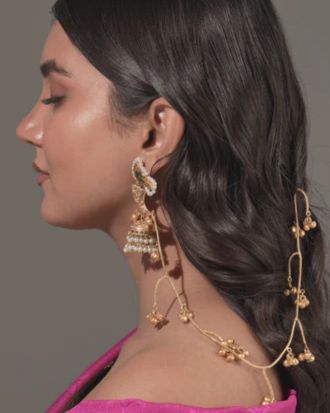
The materials from which jewelry is made are fundamental to its beauty, its meaning, and its value. Indian jewelry has one of the world’s richest material traditions — the use of gold, silver, gemstones, enamel, and lac in intricate combination has produced some of history’s most extraordinary objects.
Understanding the materials used in gold silver Kundan jewelry USA and similar Indian jewelry helps you make better purchasing decisions and appreciate more deeply what you are wearing.
Gold in Indian Jewelry
Gold has been central to Indian jewelry for at least five thousand years. In Indian culture, gold is not simply a valuable metal — it carries deep spiritual, auspicious, and social significance. It is associated with the goddess Lakshmi and with prosperity and good fortune. It is given at weddings, births, and religious ceremonies. It is invested in as stored wealth to be passed through generations.
Indian jewelry traditionally uses higher-karat gold than Western jewelry — 22-karat gold (91.7% pure) is standard for fine Indian jewelry, compared to the 14-18 karat gold more common in Western markets. This higher purity gives Indian gold jewelry its distinctive warm, rich yellow color that lower-karat gold cannot quite match.
Silver in Indian Jewelry
Silver has a different but equally rich role in Indian jewelry tradition. Certain communities and regions have historically preferred silver over gold — in Rajasthan especially, tribal and folk jewelry traditions produced extraordinary silver pieces that are now recognized as significant art objects.
Silver is also the metal of choice for specific types of Indian jewelry — anklets, for instance, are traditionally silver in Hindu practice, as gold (associated with the goddess Lakshmi) is considered inappropriate for the feet.
The Kundan Technique
Kundan is less a material than a technique — but it is such a defining technique in Indian luxury jewelry that it deserves detailed attention. The process involves setting stones — traditionally uncut or polished diamonds, but increasingly all types of gemstones — within a framework of 24-karat gold foil.
The process begins with a lac base, which is shaped to the desired form and gives the piece its body. Metal strips are worked into this base to create the framework for stone setting. Stones are placed by hand, and fine gold foil is then pressed and worked around each stone to hold it securely. The reverse of many Kundan pieces is finished with Meenakari enamel work, making them beautiful from both sides.
The result is a piece of extraordinary visual richness — dense with color and detail, warm with the glow of gold, and impressive in its technical complexity.
Authentic Indian Jewelry USA — How to Verify Authenticity
As Indian jewelry has grown in international popularity, the market has also seen an increase in pieces that use Indian aesthetic elements without genuine Indian craftsmanship behind them — machine-made pieces with printed or cast “traditional” motifs that lack the hand-worked quality of authentic Indian jewelry.
Genuine handmade Indian jewelry shows its human origin in subtle ways — slight irregularities in surface work, the feel of hand-set stones, the weight and warmth of genuine metal. When in doubt, ask detailed questions about where and how pieces are made, and look for brands that can speak specifically about the artisans and traditions behind their work.